Back to the Classics Challenge 2019

lassics

I’ve decided to participate in Karen @Books and Chocolate’s Back to the Classics Challenge 2019, it seems like a good idea as it’ll be a way of concentrating on unread books that I already have in the house. There are twelve categories – see below – and I intend to read one from each category, just for a wee bit of fun – I know, it takes all sorts! See my reading choices below the categories.

THE CATEGORIES:

1. 19th Century Classic. Any classic book originally published between 1800 and 1899.
1. Pinocchio by Carlo Collodi

2. 20th Century Classic. Any classic book originally published between 1900 and 1969. All books in this category must have been published at least 50 years ago. The only exceptions are books that were published posthumously but were written at least 50 years ago.
2. The Left Hand of Darkness by Ursula Le Guin

3. Classic by a Woman Author.
3. A Tree Grows in Brooklyn by Betty Smith

4. Classic in Translation. Any classic originally written in a novel other than your native language. You may read the book in your native language, or its original language (or a third language for all you polyglots!) Modern translations are acceptable, as long as the book was originally published at least 50 years ago. Books in translation are acceptable in all other categories as well.
4. The Earth by Emile Zola

5. Classic Comic Novel. Any comedy, satire, or humorous work. Humor is very subjective, so if you think Crime and Punishment is hilarious, go ahead and use it, but if it’s a work that’s traditionally not considered humorous, please tell us why in your post. Some classic comic novels: Cold Comfort Farm; Three Men in a Boat; Lucky Jim; and the works of P. G. Wodehouse.
5. An Infamous Army by Georgette Heyer

6. Classic Tragic Novel. Tragedies traditionally have a sad ending, but just like the comedies, this is up for the reader to interpret. Examples include The Grapes of Wrath, House of Mirth, and Madame Bovary.
6. The Trial by Franz Kafka

7. Very Long Classic. Any classic single work 500 pages or longer, not including introductions or end notes. Omnibus editions of multiple works do not count. Since page counts can vary depending on the edition, average the page count of various editions to determine the length.
7. Is He Popinjoy? by Anthony Trollope

8. Classic Novella. Any work of narrative fiction shorter than 250 pages.
8. The Awakening by Kate Chopin

9. Classic From the Americas (includes the Caribbean). Includes classic set in either North or South America or the Caribbean, or by an author originally from one of those countries. Examples include Their Eyes Were Watching God by Zora Neale Hurston (United States); Wide Sargasso Sea by Jean Rhys (Jamaica); or One Hundred Years of Solitude (Columbia/South America).
9. One Hundred Years of Solitude by Gabriel Garcia Marquez

10. Classic From Africa, Asia, or Oceania (includes Australia). Any classic set in one of those continentss or islands, or by an author from these regions. Examples include Palace Walk by Naguib Mahfouz (Egypt); The Makioka Sisters by Junichiro Tanizaki (Japan); On the Beach by Nevile Shute (Australia); Things Fall Apart by Chinua Achebe (Nigeria).
10. Pied Piper by Nevil Shute

11. Classic From a Place You’ve Lived. Read locally! Any classic set in a city, county, state or country in which you’ve lived, or by a local author. Choices for me include Giant by Edna Ferber (Texas); Sister Carrie by Theodore Dreiser (Chicago); and Buddenbrooks by Thomas Mann (Germany).
11. Waverley by Walter Scott

12. Classic Play. Any play written or performed at least 50 years ago. Plays are eligible for this category only.
12. The Tempest by William Shakespeare

Have you read any of these ones? It isn’t too late to join in with this challenge – go on, I dare you!

The Bride of Lammermoor by Sir Walter Scott

The Bride of Lammermoor cover

My copy of The Bride of Lammermoor by Sir Walter Scott  was published by Richard Edward King and is apparently a first edition, but not worth all that much. Presumably thousands of them were printed. I had to cut a few of the pages so I suspect that I’m the first person to finish this edition. It was first published in 1819 but in its day it was a historical novel, set after King James VII had been deposed.

The story begins with the funeral of the Master of Ravenswood, he had lost his title because he had been on the Jacobite side, and after a protracted battle with a devious lawyer he has lost almost all of his property. Edgar his son and the new laird of Ravenswood is left with only a ruin to live in with a couple of old loyal family servants who would no doubt never have been able to get a job elsewhere.

Edgar despises the lawyer Sir William Ashton, seeing him as the reason for his family’s downfall, and to make matters worse Sir William is now living on the old Ravenswood family estate. While visiting his old nanny in a cottage on the estate Edgar meets Lucy Ashton and becomes infatuated with her. Their relationship develops but when Lucy’s manipulative and controlling mother learns of it she’s determined to put a stop to it.

This story has elements of lots of old tales – Romeo and Juliet being obvious but Scott used a lot of traditional Scottish Border folk tales and ballads in his books apparently. Despite this being a tragic romance there’s quite a bit of humour involved, and I really enjoyed this one.

Lucy keeps rather a low profile for most of the book but this tale seems to have been very popular in many countries and it was even made into an opera by Donizetti in 1835, based loosely on the book.

Down and Out in Paris and London

Down and Out in Paris and London by George Orwell was published in 1933.

In 1928 George Orwell moved to Paris and ended up living the life of a poverty stricken down and out. No doubt it was all good copy for his writing, in this book he describes what it was like to be jobless and starving in Paris. He had in fact had his money stolen and I’m sure that he would have been able to get more money from friends if he had really become desperate so the experience wouldn’t have been quite the same as your average down and out.

Eventually he got a job as a dishwasher in a posh hotel, a nightmarish and exhausting existence, he describes the disgusting insanitary conditions in the unseen background of such establishments – not for the squeamish, but honestly for anyone who has had any sort of experience in catering none of it will be particularly shocking. I know that one head chef in a hotel frequented by the Queen in the 1970s routinely spat in the frying pan fat to see if it was hot enough!

Going for days on end with no food and having to pawn the clothes on his back in an attempt to survive must have been no fun, but Orwell must always have had the ability to get money from someone as he must have had friends who would have helped him out if he had asked, unlike the rest of the down and outs.

When he did borrow money to return to London so that he could compare the two cities and the experiences of destitute men he had a lot to learn about the rules that tramps had to stick to if they didn’t want to end up in prison. It seems it was easier to get food as a tramp in England, there were religious groups who would provide bread, margarine and tea – in return for being preached at. No mention of soup kitchens though which surprised me, bread and marg seems to be what tramps lived on in London.

They were only allowed to stay in a ‘spike’ for one night before having to move on to the next one, usually about 14 miles away, walking was the only way to get there, otherwise you would be sleeping on the Thames embankment if you were lucky. A ‘spike’ seems to have been a section of the local workhouse. Tramps weren’t allowed to sit down, they had to keep on the move, literally tramping around. Begging would land you in prison if you were caught at it. There were very few female tramps, almost certainly because they could usually get some sort of live-in employment as a servant.

Due to the fact that all your time was taken up tramping around it wasn’t possible to get any work, not that there would have been many jobs around then anyway. There were various types of dosshouses that you could get a bed of sorts in if you had some money. Sadly the other men were often old soldiers from World War 1, the accommodation was always filthy and usually so crowded that they were breathing into each other’s faces. As George Orwell died of tuberculosis it’s a fair bet that he contracted the disease whilst being down and out in Paris and London.

Ninety years or so on from when this was written things don’t seem to be a lot better for some poor souls in our society – a sobering thought.

Redgauntlet by Sir Walter Scott

Redgauntlet cover

Redgauntlet by Sir Walter Scott was first published in 1824. I’ve wanted to read this one for ages, but I can’t say that it is one of my favourites. Scott is of course very wordy, and I usually get used to that very quickly, but this one seemed like an awful long road to reach what the author wanted to say which was that the Jacobite cause was well and truly over and the Hanoverian King George sitting in London had no need to fear any other Jacobite rebellions. Scott was actually very much involved with the British royal family, he masterminded George IV’s visit to Edinburgh in 1822 and even designed the clothes that he wore for it. Yes we have Scott to blame for all that tartanry and fol-de-rol lace and velvet, although thankfully nobody has been keen to emulate that king completely as George IV insisted on wearing pink tights with his kilt!

Anyway, back to the book – young Darsie Latimer is a bit of a harum scarum and while on an adventure on the Solway Firth close to the English border he ends up getting kidnapped by Redgauntlet. His good friend Alan Fairford hears about this and decides to ride to his aid, despite the fact that he is in the middle of his first court case as a lawyer.

Darsie had no idea who his parents were but it turns out that the Border laird Redgauntlet himself is related to Darsie and Redgauntlet has been busy trying to gather together some people that he thinks might be interested in taking part in another Jacobite rebellion. He tells Darsie exactly who he is, and that his father had been executed for his involvement in the 1745 rebellion. Darsie isn’t interested in joining the cause, not even when he knows that Charles Edward Stewart is there. There’s a bit of romance in there as you would expect, and a man dressed up as a woman to avoid detection, a standard Jacobite rouse!

My favourite Scott novel is still The Pirate.

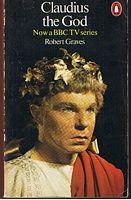
Claudius the God by Robert Graves

Claudius the God cover

Claudius the God by Robert Graves was first published in 1934 and is of course the sequel to I,Claudius. You can read what I thought about that one here.

I think inevitably Claudius the God wasn’t as gripping a read as I, Claudius probably because that one featured so many power crazy emperors, executions, murders and poisonings were constants so it was all go.

The story is of course being told by Claudius and when he reluctantly dons the purple robes of emperor (he wanted to bring back the Roman republic) he tries to put the country on an even keel by melting down all the gold statues that Caligula had had made when he was completely mad. Claudius is very popular amongst soldiers and ordinary people, but the senators aren’t so keen on him and a few of them had already tried to grab power before the army declared him emperor.

This book is Claudius’ account of what he did and why he did it. In some cases he behaved just as badly as previous emperors although he acknowledged his mistakes, the end result was still miscarriages of justice. The worst mistake he made though was to trust his wife Messalina. Despite the fact that he had seen how his grandmother Livia had abused the power given to her by her husband Emperor Augustus, Claudius gave Messalina just as much power as he had, giving her a duplicate of his seal so she could and did do whatever she wanted. As she was just as evil as Livia, she caused mayhem but poor Claudius had no idea of her real character at all.

Herod Agrippa features quite a lot and of course it was Claudius who invaded Britain so that is very interesting although I have no idea how true that account is. Did they use elephants and camels in the invasion terrifying the British who had never seen such animals before?

It seems that Claudius was wise in many ways, or maybe it was just that he was well read and ‘stood on the shoulders of giants’. But in many ways he was completely naive.

This book was one of my 20 Books of Summer and also counts towards my James Tait Black Memorial Prize Challenge as it won that prize in 1934.

Kim by Rudyard Kipling

Kim Cover

I was in a St Andrews bookshop a few months ago when an American chap was buying an ancient set of Rudyard Kipling books and praising Kipling ‘to the skies’. Well, I had only read the Just So Stories, Puck of Pook’s Hill and Rewards and Fairies – way back in nineteen canteen – as my mother used to say for some reason.

So I thought that maybe I was missing something and it was about time I got into Kipling, I have a lovely Folio Books copy of Kim so when I realised that Kafka’s The Castle was not going to be good bedtime reading I decided to givew Kim a go. Unfortunately I soon discovered that Kim and the Castle actually have quite a lot in common. They’re both basically about a quest.

Kim is a young orphaned boy. His father was an Irishman in the British Army and his mother was also white so despite the fact that he has been living as an Indian and speaks English with an Indian lilt, he is in fact a ‘sahib’. He forms a relationship with a wandering holy man from Nepal who is searching for a special river. Kim becomes the holy man’s disciple and helps him with begging for food as they continue on their travels.

But Kim is also looking for something, he had a vision of a red bull and knows that it has a special meaning for him, so he is searching for it. When he finds the red bull on a flag flying in a British Army camp he discovers that his father had been an Irish soldier and when the officers realise that Kim has been living as a native they decide that he must go to school to be trained up possibly as a surveyor.

After three years at school during which time the lama travels around on his own, eventually the two are able to continue their travels again.

I read on to the end but I can’t say that I found Kim to be an entertaining or even informative read, but as always when I read a disappointing classic I’m quite glad that I did read it and now know what it’s about.

I read this for the Classics Club Challenge.

The Castle by Franz Kafka

The Castle cover

I have been  studiously ignoring our copy of The Catle by Franz Kafka since Jack read it way back in 1976 – or around about then.

The Castle was first published in Munich in 1926, in German of course and called Das Schloss. Despite being born in Prague, German was Kafka’s first language. He died of tuberculosis in 1924 and his friend Max Brod published Kafka’s books posthumously. The family was Jewish and his sisters died in Nazi concentration camps. I was dismayed when I realised that the book is unfinished, for some reason Kafka just didn’t finish it, possibly deliberately given the theme of the book but he apparently spoke about how he intended it to end and his notes are at the end of the book.

It’s apt that he didn’t reach the end of the book as that sort of echoes the book itself. The main character only has an initial ‘K’ – originally K had been ‘I’ throughout the book, so presumably the author was writing from his own frustrating experiences of life.

K is a young land surveyor and he has been given employment at The Castle, he isn’t a local so has had to travel there and he knows nothing of the neighbourhood. The first chapter is: It was late in the evening when K arrived. The village was deep in snow. The Castle hill was hidden, veiled in mist and darkness, nor was there a glimmer of light to show that a castle was there. On the wooden bridge leading from the main road to the village K stood for a long time gazing at the illusory emptiness above him.

The Castle is too far away to reach in the darkness and K stays at a local inn overnight. The locals are fairly sceptical about him being a land surveyor and having been given work at The Castle. The whole town is ruled by The Castle, so it seems and you can’t just pitch up at The Castle and expect to gain entrance.

The entire book is about K’s efforts to get to The Castle and so start his work of land surveying, but the locals say there is no need for such a thing. Every time K thinks he might be getting somewhere he doesn’t, and he ends up in a worse position than he was before. There are plenty of bizarre characters but none of them are what you would call likeable.

The Castle is about how it feels to be entangled with supposed authority and bureaucracy and will be recognisable to anyone unfortunate enough to have had dealings with such entities as the local council, the sorts of places and people where the right hand doesn’t know what the left hand is doing. It’s also about people’s position in a community giving them a status and the appearance which is very different from the reality.

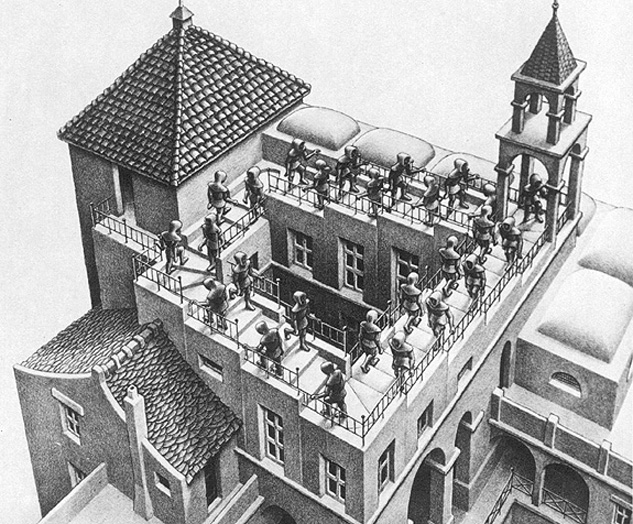
To begin with The Castle reminded me of a literary version of that Escher artwork with never ending stairs – below

Escher stairs

or a game of snakes and ladders, just when you think you might be getting somewhere you end up back at the beginning. I can’t say I enjoyed reading The Castle, I was glad that I got to the end of it before it completely did my head in.

However – I am glad that I read the book, but I’m not at all sure about reading The Trial which is Kafka’s other well known book.

Oblomov by Ivan Goncharov

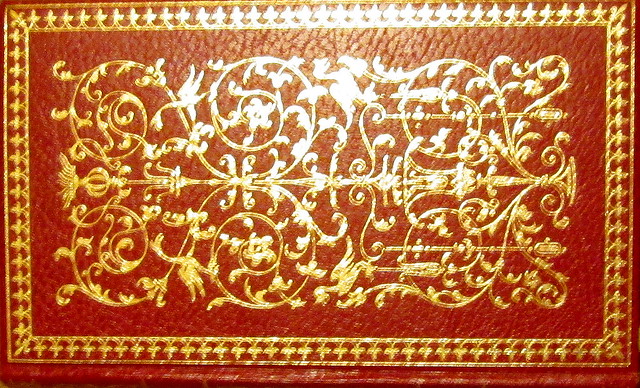
I’ve had Oblomov by Ivan Goncharov sitting on a shelf for over 20 years (maybe even 30) and when I bought it I hadn’t even heard of the book before. I freely admit I was drawn to the book by its binding, so I was pleased to read fairly recently that Oblomov is a book that is well thought of by others, so I was quite chuffed when I got it in this spin.

Lovely Book Cover

I can’t say I absolutely adored it but I did really like the book.

Oblomov is a likeable character, in fact there isn’t a bad boen in his body. As a young man who got a position in a government office when he left his home in the country he had the usual ambitions of hoping that it would lead to better things, but he quickly became disillusioned by the work and more or less took to his bed. He has classic signs of depression and even after he inherits the family country estate he just can’t get up the energy required to sort out the problems of running it. He has great intentions of building roads and bridges there, repairing houses and building a school for his peasants’ children. He lies in bed day dreaming of everything he will do there, but when it comes to it he can’t get up the energy required to get up and get dressed.

When Oblomov falls in love with a beautiful young girl he can hardly believe that she is interested in him, she rouses him out of his langour, he must get out and about to meet her. Despite being besotted by her Oblomov worries that he isn’t cut out for marriage, passion means expending energy and he has his doubts that he can manage much of that.

Oblomov is a kind and easy-going soul and he puts up with people that others wouldn’t give the time of day. This leads to him being targetted by a ghastly sponger who goes to Oblomov’s apartment to eat his food and drink his wine, even ‘borrowing’ his clothes and money, neither of which are ever seen again of course. Money from his estate is sent to Oblomov but he is so feckless that it disappears in no time, either given away or pilfered by servants.

His kind nature ends up in him being abused financially which leads to him having to move to a poor area of the city where he becomes the lodger of relatives of the sponger and they set about bleeding him dry of money.

Meanwhile Sophie has come to realise that Oblomov is never going to shake himself out of his torpor for long enough to be a decent husband and part of Oblomov is relieved as he prefers to spend his time just sleeping and eating anyway. His landlady is a wonderful cook and as we all know – the way to a man’s heart is through his stomach, so he had been getting very attached to her.

Things take a turn for the worse when his landlady’s brother blackmails Oblomov, saying he has damaged his sister’s reputation and this ends up with the brother and the sponger being in control of Oblomov’s estate.

The cavalry rides in in the shape of Oblomov’s German childhood friend who realises what has been going on and sorts the whole mess out.

An Eye for an Eye by Anthony Trollope

An Eye for an Eye by Anthony Trollope was published in 1879. That was a bit of a surprise to me as it read more like something which he would have written in his earlier years. It seems that it was actually written in 1870 but was held back from publication then. So far this is the Trollope which I’ve found to be the least enjoyable, but at least it is a slim volume.

The setting is Ireland and an English country estate called Scroope. Fred Neville is the heir to the estate and earldom after his uncle’s only son died prematurely, the son had been a bit of a waster who married a prostitute and broke his aristocratic parents’ hearts.

It’s expected that Fred will do the right thing and marry into the aristocracy, someone from his own class and religion, but Fred has a different idea. Whilst his regiment is in Ireland he starts up a liason with completely the wrong sort of girl. Kate O’Hara lives in a teeny cottage above a cliff, she lives there with her mother and their only friend is a Roman Catholic priest. Fred promises to marry her and on the strength of that promise Kate ends up in big trouble.

Trollope always has something to say in his novels, other than just the story, he was very much for women having equality with men and often wrote about prejudices and unfairness in society. Here are a few excerpts:

There are women, who in regard to such troubles as now existed at Ardkill Cottage, always think that the woman should be punished and that the man should be assisted to escape. The hardness of heart of such women, – who in all other views of life are perhaps tender and soft natured, – is one of the marvels of our social system.

and … in her heart of hearts she approved of a different code of morals for men and women. That which merited instant, and as regarded this world, perpetual condemnation in a woman, might in a man be easily forgiven.

Trollope was obviously aware of the prejudice against Irish people as his uncle and aunt are appalled at the thought of him being mixed up with a poor Irish Catholic. Mind you Trollope’s Irish blood doesn’t seem to have held him back in his very successful Post Office/Civil Service career.


Mr Harrison’s Confessions by Elizabeth Gaskell

I’ve read a lot of Gaskell’s novels including Cranford – way back when… but I don’t remember ever seeing Mr Harrison’s Confessions which is a prequel to Cranford. As soon as I started reading it I realised that when the BBC did their fairly recent dramatisation of Cranford they sensibly used this book too.

It’s an amusing tale of what happens when a young doctor moves to the rural village of Duncombe. He is given a very warm welcome by all but especially those who have daughters to marry off, and in no time he finds himself in a tricky situation – or three, and all because he heeded Mr Morgan, his medical mentor’s advice.

It’s a very quick read at just 106 pages and I’ll be counting it on my Classics Club reading list.