Peace Celebration, Moscow – a jigsaw puzzle.

The first jigsaw puzzle of the winter season has been completed. It was a lot easier than we thought it would be, but still challenging enough to be fun. The design has so many different and often unique shapes to the pieces which helped a lot.

The original artwork was painted by Sir Claude Francis Barry. If you’re interested in seeing more of his work you can do so here.

Complete Jigsaw

Jigsaw – Peace Celebrations, Moscow

It’s definitely winter as it’s jigsaw season here again. I bought this one in a charity shop, so I hope all the pieces are there. Mind you buying one new and wrapped in plastic is no guarantee that all the pieces are there, and once I finished a puzzle and had several bits leftover – from a very different puzzle!

Jigsaw Puzzle, Box

Anyway, I was attracted by this one which is titled Peace Celebrations, Moscow and it’s from a painting by Sir Claude Francis Barry. It’s painted in the Pointillist style.

Unfinished Jigsaw

I’ve been doing it mainly from the bottom upwards and it hasn’t been as difficult as I feared it might be, but now that I’ve reached the fireworks it’s becoming trickier. One thing I like about this puzzle is that the pieces are all different shapes, that makes it more interesting and slightly easier to find the correct piece I think.

The Runaway by Elizabeth Anna Hart – 20 Books of Summer

 The Runaway cover

The Runaway by Elizabeth Anna Hart was first published in 1872 and then again in 1936 but my copy is a Persephone which was published in 2002.

Clarice is a 15 year old girl who is living with her father in quite a grand country house, but her mother is dead. She has a governess but lacks a friend of her own age. She’s a bit of a romantic, wishing she could have lived in the more exciting times of the past, in the times of the Charlses maybe.

Almost as soon as she says it a girl pops out of the hedge in front of her. Olga has run away from her school where she was badly treated according to her. There’s no doubt about it – Olga is a handful and I suspect her schoolteachers sighed with relief when she left it.

Clarice is enthralled by her new friend who is half Danish and half Scottish with a father in a Highland regiment (all very apt for Victorian times) and Clarice agrees to hide her in the house and feed her. Unfortunately Olga just can’t stop being naughty though and appears as a ghost in front of the governess and maid and Clarice realises that Olga is too much for her to cope with, she’ll have to track down Olga’s granny somehow as her parents are abroad – with the regiment.

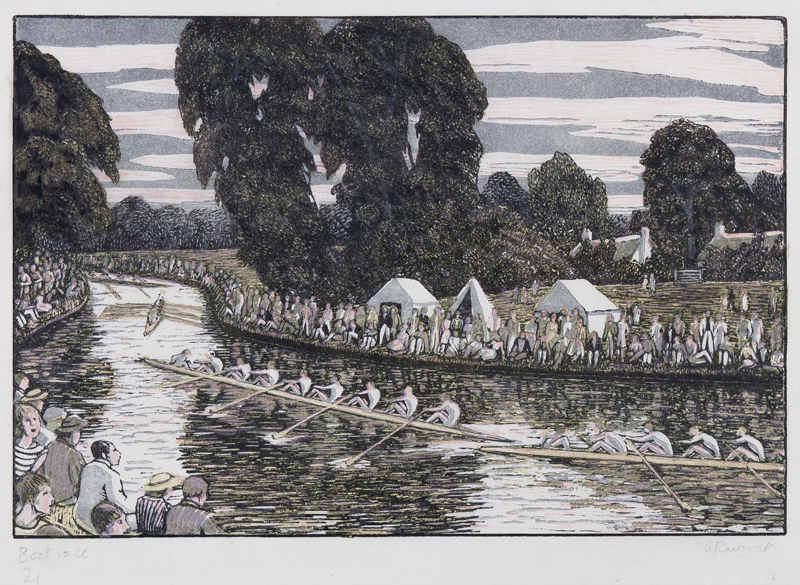
I can see why this was chosen by Persephone, as it features a very unusual portrayal of a Victorian teenage girl, but I must admit that if this one had been the first Persephone book that I had read I would have thought more than twice about buying another one. It was mildly entertaining but wasn’t great. However the book is beautifully illustrated with lots of wood block prints by Gwen Raverat nee Darwin who was Charles Darwin’s granddaughter. You can see some of her work here.

I particularly liked the image below, but it’s nothing to do with this book.

Raverat

Marian Clayden Exhibition at Drum Castle

It can be quite surprising what you see when you visit castles in Scotland. When we went to Drum Castle in Aberdeenshire – I have to say a couple of years ago now, I didn’t expect to see an exhibition of textiles and clothes by Marian Clayden who I hadn’t heard of before but is very well known in her field of textiles and weaving. You can see my earlier posts on Drum Castle here.

Marian Clayden designs

The photos really don’t do her work justice as you can’t see the textures so well. The fabric is mainly silk and velvet, absolutely sumptuous looking.

Marian Clayden textile

Marian Clayden dress designs

Marian Clayden, designs

Marian Clayden was born in Preston, Lancashire which had a thriving textile industry back in the day, so her family was involved in various crafts, but I think we can safely say that Marian picked up that baton and ran with it. You can read about her life here.

Marian Clayden design

She trained as a teacher but after having a couple of kids and being stuck at home she decided to try dyeing some textiles in her kitchen, using skills she had learned in her teacher training. Moving to San Francisco in 1967 must have influenced her hugely – with all of those flower power people and bright colours around the place.

Marian Clayden  designs

Her career took off and there were exhibitions of her work all over the world. Sadly she died in 2015 but her work lives on in major collections all over the world in places such as the V&A in London and the Metropolitan in New York. We were just incredibly lucky to stumble across this exhibition in a Scottish Castle.

Marian Clayden

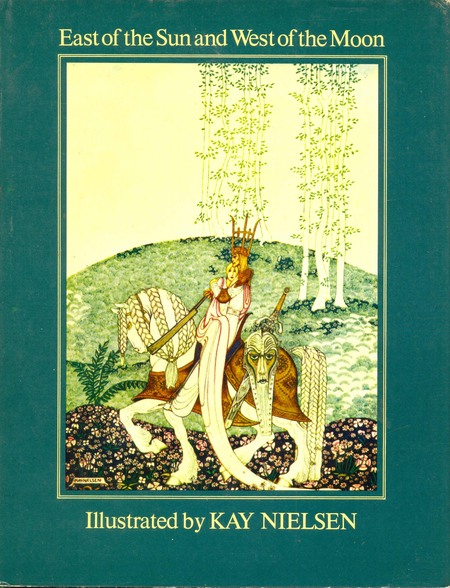
East of the Sun and West of the Moon illustrated by Kay Nielsen

East of the Sun and West of the Moon cover

It must be quite a few years since I bought my copy of East of the Sun and West of the Moon – Old Tales from the North – illustrated by Kay Nielsen, but I’ve only just got around to actually reading the six fairy tales within it although I’ve often admired the illustrations. You can get the ebook free from Project Gutenberg here. These folk legends were collected by Asbjornsen and Moe in the 19th century.

Like most fairy tales they feature princesses, kings, godmothers, talking animals and quests, but as these tales are from Norway they also all feature trolls which are obviously a big thing in Scandinavian society which explains the presence of troll related ornaments all over tourist gift shops there. I really enjoyed the tales, but not quite as much as the artwork.

The artist Kay Nielsen was a stage designer, illustrator, painter of murals, a theatre art director and he was influenced by the British artist Aubrey Beardsley. In the 1930s he moved from Denmark to the USA where he worked for Walt Disney but it wasn’t a happy time for him and his wife and they ended up moving back to Denmark. He seems to have been a kind and gentle man, well-loved by his friends but was somehow tinged with Scandinavian melancholy.

If you want to see some of his beautiful work have a look here.

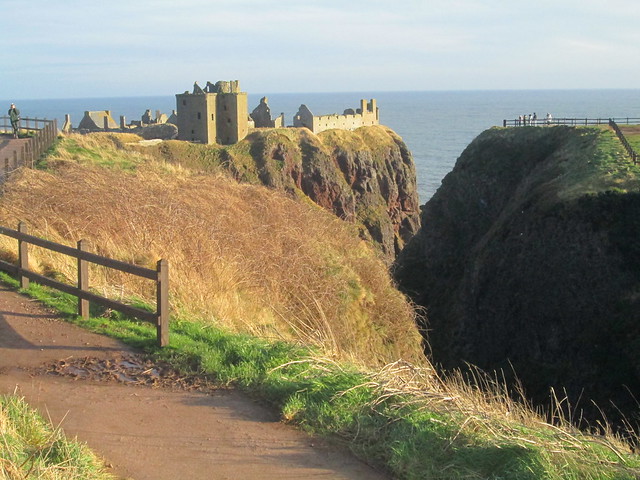
Dunnottar Castle, Aberdeenshire, Scotland

On Friday morning we left home to travel up to Aberdeen so that Jack could go to a football match there the next day, but we stopped off at Dunnottar Castle near Stonehaven on the way. We had never been there before, but since we visited it seems to be popping up everywhere as it featured on a TV programme yesterday and when I visited the National Gallery of Scotland in Edinburgh today I saw a beautiful atmospheric painting of it by Waller Hugh Paton, see below.

Dunnottar Castle

Dunnottar Castle, Aberdeenshire, Scotland

This castle is not for the faint-hearted or those who aren’t too good on their feet as there are lots of steps leading down towards the castle and then yet more steps leading up to it, the ground is uneven, but it all adds to the atmosphere. The location is fantastic as the castle is built on the edge of cliffs, 160 feet high above the North Sea with wonderful views out of the windows of what is now a ruin. It must have been an amazing place to live in in its heyday though and the lady of the castle had a wooden balcony at her bedroom window although I’m not sure that I would have fancied sitting on a balcony hanging over the sea.

Dunnottar Castle from path

Given the location and rockiness it’s not surprising that Dunnottar has long been a fortification with the Picts having a wooden fort there before a stone castle was built in the early 1300s. King Aethelstane of Wessex made a raid on the place in 934 but in the year 900 it was the Vikings who were having a go at King Donald II here. Mary, Queen of Scots visited – where didn’t she visit I ask myself, but at least she wasn’t imprisoned here. I took lots more photos, but I’ll keep those for another day.

Dunnottar Castle, Aberdeenshire, Scotland

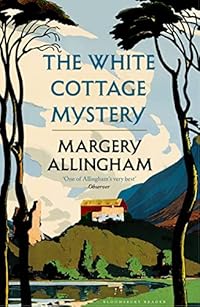
The White Cottage Mystery by Margery Allingham

The White Cottage Mystery cover

The White Cottage Mystery by Margery Allingham was first serialised in the Daily Express in 1927 and was published as a book the following year. I read a Bloomsbury Reader paperback which I borrowed from the library.

I’ve previously only read Allingham’s Campion books which I do generally enjoy, especially the later ones, but I liked this one even more and it’s a shame that she didn’t write more books featuring Inspector Challenor of Scotland Yard, with his son Jerry as his side-kick. This one begins just as I like with the murder being committed very early on.

Jerry is driving along a Kentish road, enjoying the change from London when he turns into a good Samaritan, offering a lift to a young woman who is struggling with a large basket having just got off a bus with it. He drops her off at the White Cottage which is situated close to an ugly vast pile of a private house. As Jerry is in conversation with the local policeman they hear a loud gunshot and so begins the mystery.

The victim is Eric Crowther, owner of the ugly house, but it seems that despite there being lots of people around within the two houses, nobody can give any information as to how Crowther ended up shot in the White Cottage and certainly nobody is sorry to see the back of him. There’s an embarrassment of riches suspect-wise and as Jerry has fallen for the young lady that he helped, he’s worried that she is involved in the murder.

This book certainly doesn’t read like the first effort at a murder mystery that it is, and I really liked the relationship between Inspector Challenor and his son Jerry.

Bloomsbury has chosen to go down the same route as the British Crime Classics Library and based the book cover on the vintage railway poster below, although it seems to have been slightly changed by Emma Ewbank.

Wales

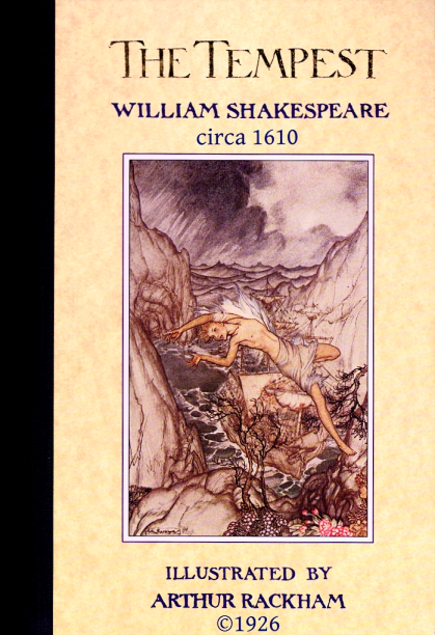
The Tempest by William Shakespeare

The Tempest cover I actually began reading The Tempest ages ago and got half way through it before being distracted by something else, so when I eventually got back to it I started from the beginning again. This is probably the last play that William Shakespeare wrote, way back in 1610-1611.

Prospero was the Duke of Milan but he wasn’t really interested in ruling his kingdom as he was obsessed by honing his skills as a magician. Prospero was happy to allow his younger brother Antonio to take over all the power that he should have had, but in time Antonio decided that he wanted to have his brother’s title too, so he deposed Prospero who managed to escape with his three year old daughter Miranda, helped by his trustworthy servant Gonzalo.

When the play begins twelve years have passed since Prospero and Miranda landed on an island somewhere in the Mediterranean, and Prospero has been practising his magic arts aided by the books he managed to take with him and Ariel who is a spirit, he/she had been held captive on the island by a witch who had lived there earlier along with her son Caliban. Prospero has been able to send a huge storm to blast a ship which has his treacherous brother on board, among many others, including Ferdinand who is the son of the King of Naples who was also on the ship. Ferdinand thinks he is the only survivor of the shipwreck and when he and Miranda meet it’s love at first sight. But when Prospero meets Ferdinand he sets him to work for him, hauling firewood around, that’s not something that the heir to a throne is used to doing.

Meanwhile, elsewhere on the island some of the other survivors who had been returning from a wedding are plotting to kill King Alonso, but Ariel gets wind of the plot and foils it. There’s a lot of confusion and some drunkeness among the survivors – but what can I say except – All’s well that ends well except that’s another of his plays.

That’s the thing about reading Shakespeare, you keep coming across phrases that have become part of the English language, and often you don’t realise that they were first written by Shakespeare, and of course other writers have borrowed them. The phrase – this rough magic appears a few times to which I say Step forward Mary Stewart. His words have found their way into our psyche whether we realise it or not. I expect we’ve all heard from Act 4 scene 1:

We are such stuff
As dreams are made on, and our little life
Is rounded with a sleep

It’s thought that he was inspired to write this play on hearing of what happened to a fleet of nine ships which set sail for Virginia. The ship the Sea Adventure was separated from the other ships during a storm and washed up near Bermuda, stuck between two rocks. The crew and most of the cargo and fittings managed to get ashore safely, but it was assumed that they had all perished and it was some time before they managed to continue their journey to Virginia.

Shakespeare knew some of the people involved and was able to read an original letter from William Strachey which described the strange experiences of those who had been shipwrecked.

It seems that nothing changes as I know that writers today often get their ideas from things that they see in the news.

Anyway – that’s The Tempest under my belt – so to speak. It’s a great read and I can only imagine how enthralling it must have been for the original audience and will definitely try to watch a modern version of it, but not too modern as I prefer my Shakespeare to come with period costumes and stage sets. I just love Arthur Rackham’s illustrations.
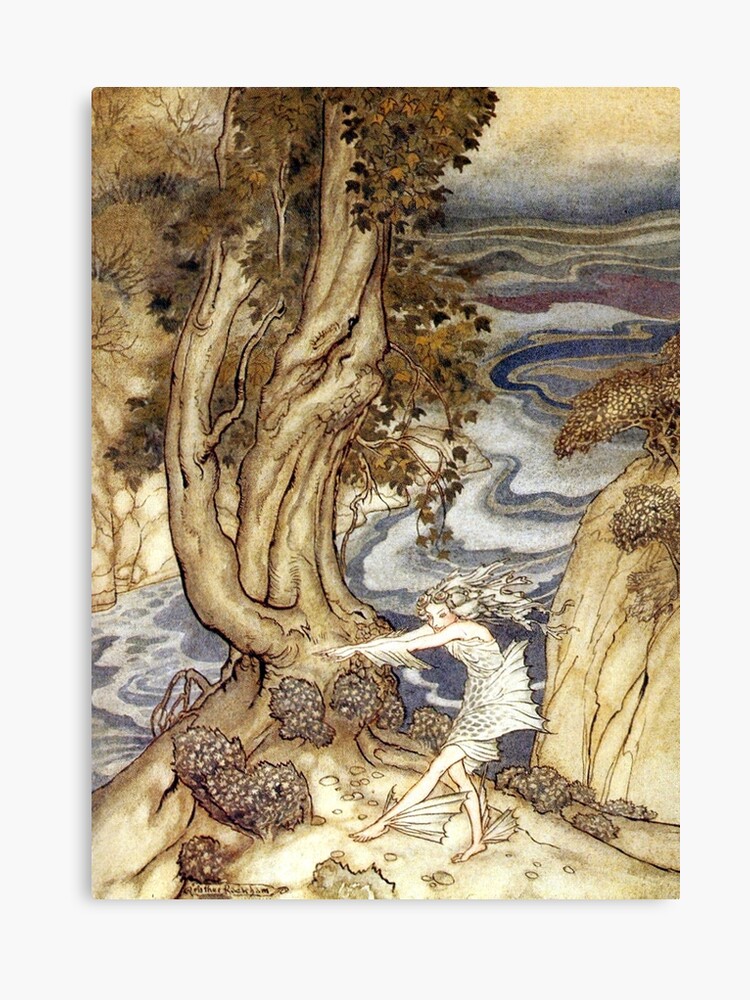
 

The Tempest

Men of Bannockburn, Dunfermline and Tall Tales – exhibitions

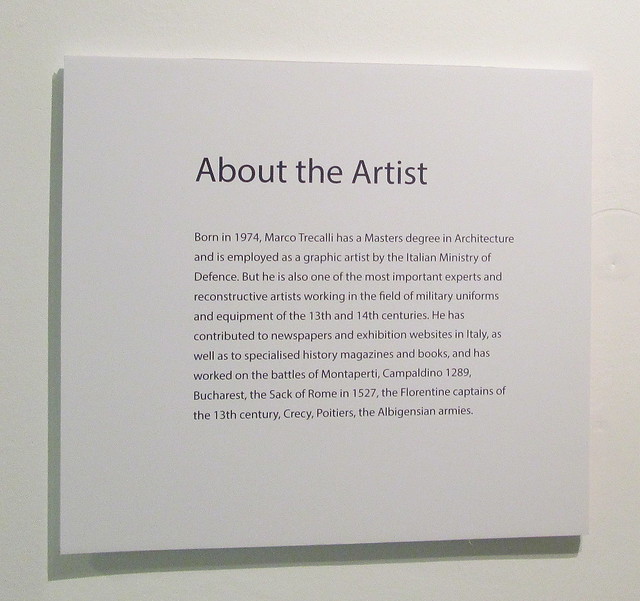
I had just finished one of those FutureLearn online courses when I noticed that there was an exhibition of art called Men of Bannockburn on at the library/museum in Dunfermline. The art consists of life size illustrations of some of the main knights involved in the battle. The works are by the artist Marco Trecalli who as well as being an artist is also an expert on 13th and 14th century military equipment and uniforms.

Men of Bannockburn

Click on the photos if you want to read the details, that should enlarge them for you.

Men of Bannockburn

Men of Bannockburn , Dunfermline. Marco Trecalli

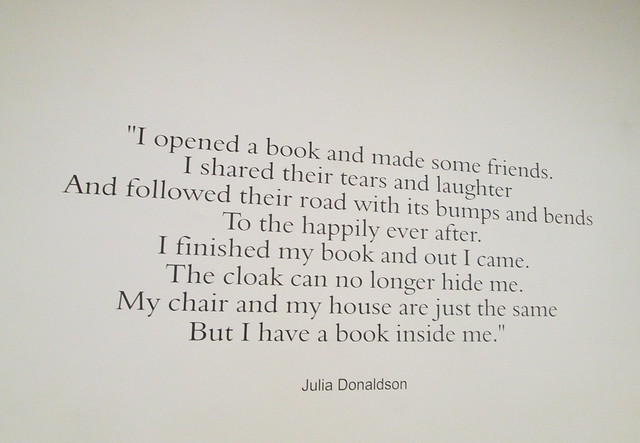
In another room there was an exhibition called Tall Tales, aimed at encouraging children to read. There were quite a few kids in there so I couldn’t take photos of any of the exhibits, but I liked the bookish sentiments on the walls. I doubt if any were read by kids though, mainly because they were at adult height! But they were too busy playing in the Beanstalk house made of books anyway.

Tall Tales, Dunfermline, Fife

Books quote, Tall Tales, Dunfermline

book house

I’m so late getting around to writing this post that I suspect both exhibitions are finished now, but they’ll probably move on elsewhere eventually.