James Tait Black Memorial Prize – a personal challenge

I’m sure that like me you will have noticed some books with James Tait Black Memorial Prize in brackets after the title. For a good wee while now I’ve been thinking about trying to work my way through the list of winners of this prize that was set up in 1919. You might be interested in this Edinburgh University link The prizes were founded in 1919 by Mrs Janet Coats Black in memory of her late husband James Tait Black, a partner in the publishing house of A & C Black Ltd.

1919 Hugh Walpole, The Secret City
1920 D. H. Lawrence, The Lost Girl
1921 Walter de la Mare, Memoirs of a Midget
1922 David Garnett, Lady into Fox
1923 Arnold Bennett, Riceyman Steps
1924 E. M. Forster, A Passage to India
1925 Liam O’Flaherty, The Informer
1926 Radclyffe Hall, Adam’s Breed
1927 Francis Brett Young, Portrait of Clare
1928 Siegfried Sassoon, Memoirs of a Fox-Hunting Man
1929 J. B. Priestley, The Good Companions
1930 E. H. Young, Miss Mole
1931 Kate O’Brien, Without My Cloak
1932 Helen de Guerry Simpson, Boomerang
1933 A. G. Macdonell, England, Their England
1934 Robert Graves, I, Claudius and Claudius the God
1935 L. H. Myers, The Root and the Flower
1936 Winifred Holtby, South Riding
1937 Neil M. Gunn, Highland River
1938 C. S. Forester, A Ship of the Line and Flying Colours
1939 Aldous Huxley, After Many a Summer Dies the Swan
1940 Charles Morgan, The Voyage
1941 Joyce Cary, A House of Children
1942 Arthur Waley, Translation of Monkey by Wu Cheng’en
1943 Mary Lavin, Tales from Bective Bridge
1944 Forrest Reid, Young Tom
1945 L. A. G. Strong, Travellers
1946 Oliver Onions, Poor Man’s Tapestry
1947 L. P. Hartley, Eustace and Hilda
1948 Graham Greene, The Heart of the Matter
1949 Emma Smith, The Far Cry
1950 Robert Henriques, Through the Valley
1951 Chapman Mortimer, Father Goose
1952 Evelyn Waugh, Men at Arms
1953 Margaret Kennedy, Troy Chimneys
1954 C. P. Snow, The New Men and The Masters
1955 Ivy Compton-Burnett, Mother and Son
1956 Rose Macaulay, The Towers of Trebizond
1957 Anthony Powell, At Lady Molly’s
1958 Angus Wilson, The Middle Age of Mrs. Eliot
1959 Morris West, The Devil’s Advocate
1960 Rex Warner, Imperial Caesar
1961 Jennifer Dawson, The Ha-Ha
1962 Ronald Hardy, Act of Destruction
1963 Gerda Charles, A Slanting Light
1964 Frank Tuohy, The Ice Saints
1965 Muriel Spark, The Mandelbaum Gate
1966 Christine Brooke-Rose, Such/Aidan Higgins, Langrishe, Go Down
1967 Margaret Drabble, Jerusalem the Golden
1968 Maggie Ross, The Gasteropod
1969 Elizabeth Bowen, Eva Trout
1970 Lily Powell, The Bird of Paradise
1971 Nadine Gordimer, A Guest of Honour
1972 John Berger, G
1973 Iris Murdoch, The Black Prince
1974 Lawrence Durrell, Monsieur: or, The Prince of Darkness
1975 Brian Moore, The Great Victorian Collection
1976 John Banville, Doctor Copernicus
1977 John le Carré, The Honourable Schoolboy
1978 Maurice Gee, Plumb
1979 William Golding, Darkness Visible
1980 J. M. Coetzee, Waiting for the Barbarians
1981 Salman Rushdie, Midnight’s Children
Paul Theroux, The Mosquito Coast
1982 Bruce Chatwin, On The Black Hill
1983 Jonathan Keates, Allegro Postillions
1984 J. G. Ballard, Empire of the Sun/Angela Carter, Nights at the Circus
1985 Robert Edric, Winter Garden
1986 Jenny Joseph, Persephone
1987 George Mackay Brown, The Golden Bird: Two Orkney Stories
1988 Piers Paul Read, A Season in the West
1989 James Kelman, A Disaffection
1990 William Boyd, Brazzaville Beach
1991 Iain Sinclair, Downriver
1992 Rose Tremain, Sacred Country
1993 Caryl Phillips, Crossing the River
1994 Alan Hollinghurst, The Folding Star
1995 Christopher Priest, The Prestige
1996 Graham Swift, Last Orders/
Alice Thompson, Justine
1997 Andrew Miller, Ingenious Pain
1998 Beryl Bainbridge, Master Georgie
1999 Timothy Mo, Renegade, or Halo2
2000 Zadie Smith, White Teeth
2001 Sid Smith, Something Like a House
2002 Jonathan Franzen, The Corrections
2003 Andrew O’Hagan, Personality
2004 David Peace, GB84
2005 Ian McEwan, Saturday
2006 Cormac McCarthy, The Road
2007 Rosalind Belben, Our Horses in Egypt
2008 Sebastian Barry, The Secret Scripture
2009 A. S. Byatt, The Children’s Book
2010 Tatjana Soli, The Lotus Eaters
2011 Padgett Powell, You and I
2012 Alan Warner, The Deadman’s Pedal
2013 Jim Crace, Harvest
2014 Zia Haider Rahman, In the Light of What We Know
2015 Benjamin Markovits, You Don’t Have to Live Like This

I’ve only read seven of them so I have a long way to go before completing this challenge. The winner is selected by the Professor of English Literature at Edinburgh University, assisted by PhD students. The absence of critics or any so called ‘celebrity’ judges, and the fact that this is the oldest literary prize in Britain make them among the most respected awards in publishing. There is a prize each year for fiction and also biography but I’m going to be concentrating on the fiction, although I am interested in reading some of the biographies – sometime.

The books that I’ve already read are in bold but those ones were read before I started blogging. Click the blue titles to see what I thought of them. As you can see I have a lot to get stuck into, I may just have bitten off more than I can chew, especially as there are some authors there that I’ve tried before and not liked, but I’m going to have a good go at it. It’s a long term reading plan obviously!
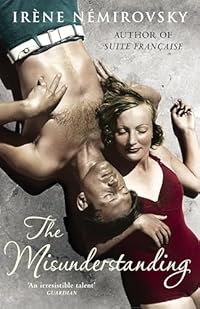
The Misunderstanding by Irene Nemirovsky

 The Misunderstanding cover

The Misunderstanding by Irene Nemirovsky was first published in France in 1926 and it was her first novel.

Yves Harteloup is a young man, an only child who had been brought up by his very wealthy parents to expect a very comfortable life, never needing to work or do anything for himself. The Great War put paid to all that, Yves had been a soldier and had survived in one piece, although nothing was ever going to be the same after his experiences. By the end of the war his parents were dead and as most of their investments had been in Germany and Belgium – their money was all gone. Yves finds himself having to work in an office, something he hates.

He looks forward to his summer holiday, deciding to go back to Hendaye a resort where he was very happy on childhood holidays with his parents. There he has a dalliance with Denise, a young mother with a wealthy husband, she has never had to think about money. When they begin their affair it comes as something of a shock to her to realise that Yves isn’t in the same financial situation, he still has the veneer of money about him because of his upbringing.

Back in Paris they continue to see each other, with Denise being clingy and obsessive. She’s a demanding woman, spoiled and self obsessed and Yves can’t ever satisfy her need for adoration.

He’s still socialising with Denise and her husband – in Paris nightclubs and restaurants, always paying his way and so getting deeper and deeper in debt. It’s all going to end in tears.

The Misunderstanding was being written at the same time as The Great Gatsby and so the era and types of people are similar, that generation that went a bit crazy after the First World War, it was a time of extreme poverty for some, and obscene wealth for others.

Irene Nemirovsky was only 23 when this book was published, it’s just as beautifully written as her later books. Tragically her life was cut short when she was murdered by the Nazis in Auschwitz when she was 39.

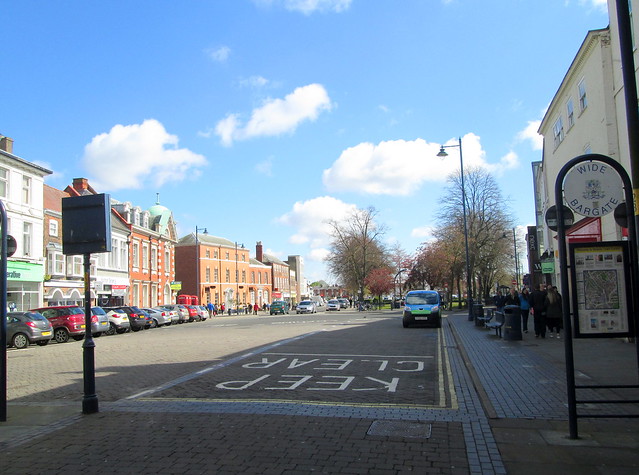
Boston, Lincolnshire, England

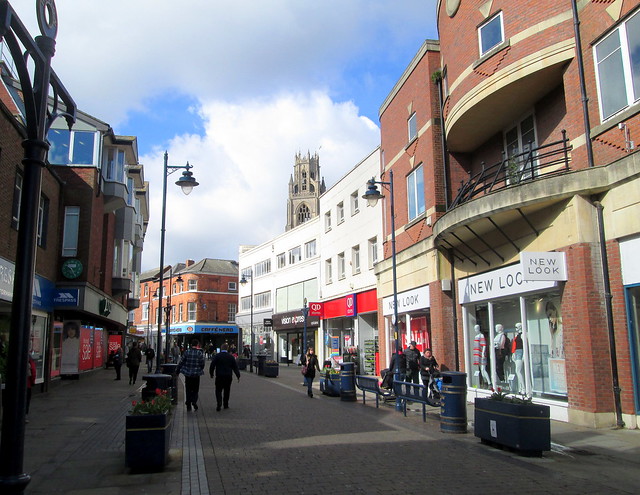
We are due to set off on another trip fairly soonish and I realised that I haven’t blogged about all the places we visited in May, so here are a few photos of the original Boston. We hadn’t been there before, it was bigger than I had expected.

Boston 10

It’s quite a nice place as I recall, although I don’t remember an awful lot about it.

Boston 9

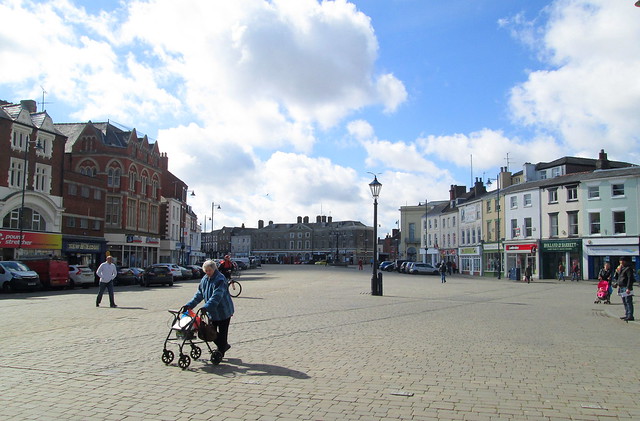
Apart from the fact that we did get some very strange and quite worrying looks from people as we were taking photographs. This is definitely not tourist country. They have a nice big sort of town square though as you can see, and it all looks very clean and tidy. I think I bought some books in a charity shop there – but that’s no surprise!

Boston 6

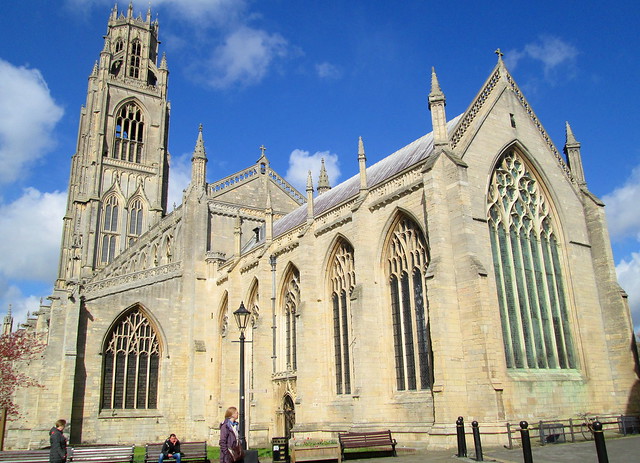
I do remember this huge church which is just about right in the centre of the place. It’s called St Botolph’s and is one of the biggest churches in England. From a distance I thought it must be a cathedral.

Boston 5

So there you go, I’m sure it’s quite different from that other Boston in MA. If you’re interested you can see more images of Boston here.

Scottish Highland Book Purchases

books 2

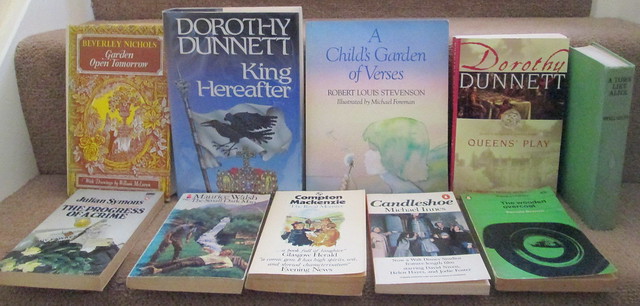
The photo above is of the books that I managed to buy on our brief jaunt up to the Highlands with Peggy. Some were bought at the Pitlochry railway station, a local charity has turned an old waiting room into a bookshop, and they have some great books at very reasonable prices. There’s also another second-hand bookshop just off the high street, well worth a look. I think it’s called Priory Books. I bought two there I believe.

Others I bought in Fort William in a second-hand bookshop just off the main street. It’s not that big but I’m always lucky there.

A few of these books jumped right to the top of my queue so I’ve already read three of them, but only managed to blog about one of them so far – Candleshoe.

Garden Open Tomorrow by Beverley Nichols
The Small Dark Man by Maurice Walsh
The River Monster by Compton Mackenzie
The Progress of a Crime by Julian Symons
The Wooden Overcoat by Pamela Branch
King Hereafter by Dorothy Dunnett (about Macbeth)
Quenn’s Play by Dorothy Dunnett
A Town Like Alice by Nevil Shute
Candleshoe by Michael Innes
A Child’s Garden of Verses by R.L. Stevenson (illustrated by Michael Foreman)

A decent haul I think but it is a wee bit worrying that within less than two weeks I bought 24 books, apart from anything else I need another bookcase now, or maybe I should perform a book cull, but I’ve done that before and ended up regretting getting rid of some books. I might have a six months cooling off period for them in the garage and see how I feel about them after that.

Have you bought many books recently?

Early September Garden in Fife

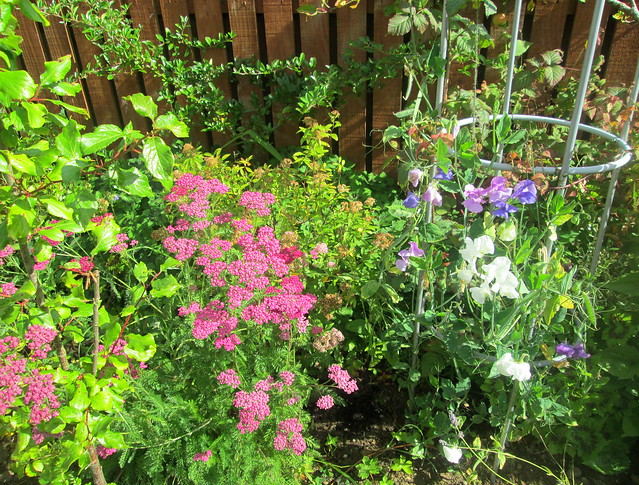
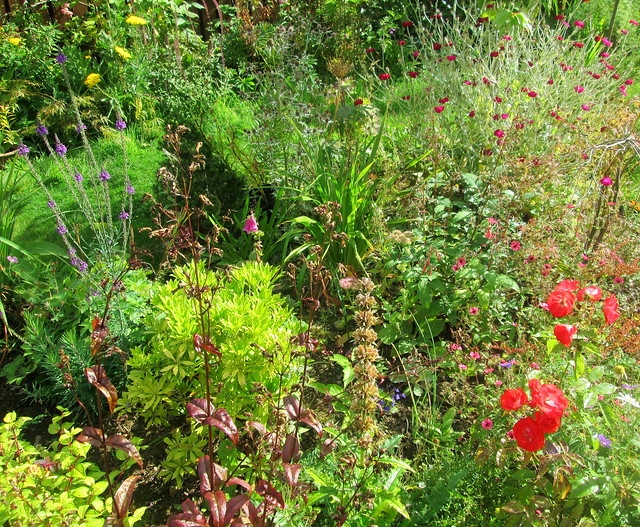
Some trees are beginning to get their autumn togs on already, but there’s still quite a lot of flower colour going on in my garden. The sweetpeas haven’t been great this year, I grew them from seed and they took ages to get going.

garden 3

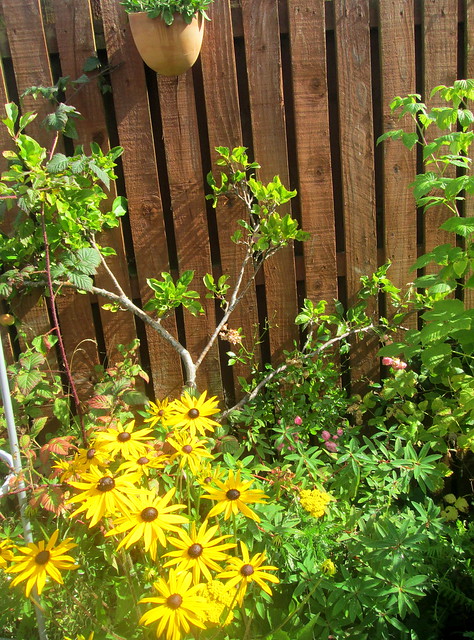
The rudbeckia below has been flowering for a long time, it’s definitely good value, especially if you get it dirt cheap from Morrisons as I did. The bees love it.

garden 4

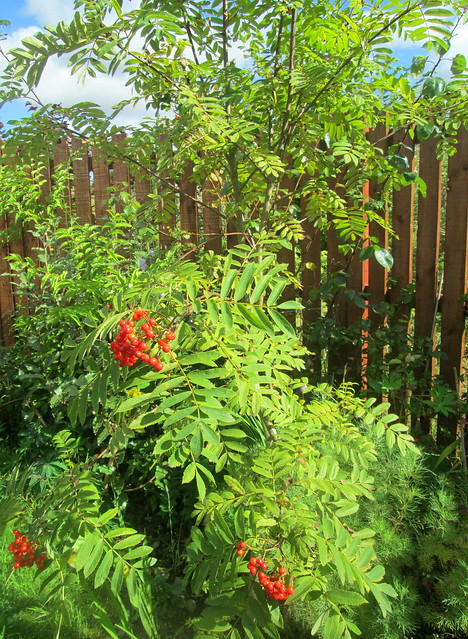
Every Scottish/Celtic garden should have a rowan tree (mountain ash) in it, to keep the witches away of course!

garden 5

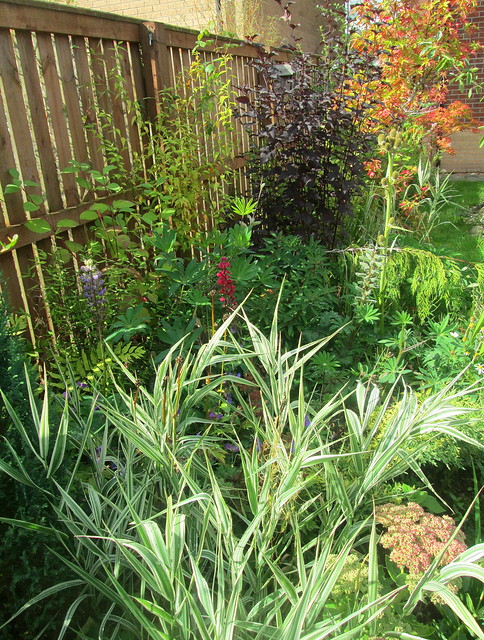
The striped grassy plant at the front of this photo is gardeners’ garters, so called because old gardeners used to use it to tie around their trouser legs to stop anything from shooting up there – like a rat! It grows very rampant, so I’m keeping an eye on it in case it decides to mount a take-over bid.

garden 9

There’s a plethora of plants in the photo below, a rose, fuchsia, pieris, lychnis and all sorts.

garden 6

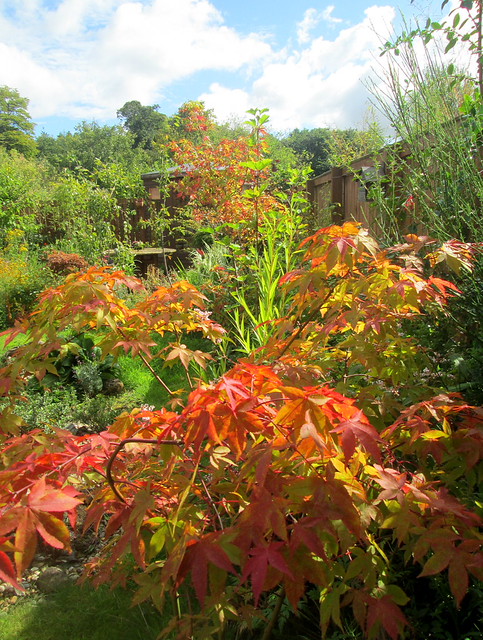
Although I’m not crazy on exotic plants (the kind you have to tie blankets around to get them through the winter) – I do love acers, they’re hardy here in the east of Scotland and grow well despite being so delicate looking.

garden 11

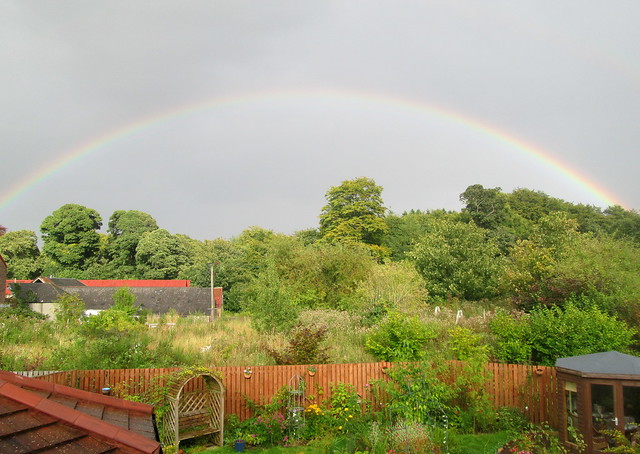
Peggy yells rainbow every time she sees one, that was quite often when she was in Scotland anyway, and she had to get a photo of them. Apparently they’re quite rare where she lives in the US, I thought I would copy her and take a photo of this one from my house, they are not rare here of course!

rainbow 2

It’s about ten days since I took those photos and since then I’ve had to have a bit of a garden tidy up and cut things back, but it’s still looking fairly decent.

I’ve been having a battle with ajuga, another plant from Morrisons, it cost me all of 99p and before I knew what was happening it had covered a third of my rockery having crossed over the grass to get there. What a monster of a wee plant it is, worse than mint! Don’t plant it whatever you do.

Spoonhandle by Ruth Moore

spoonhandle

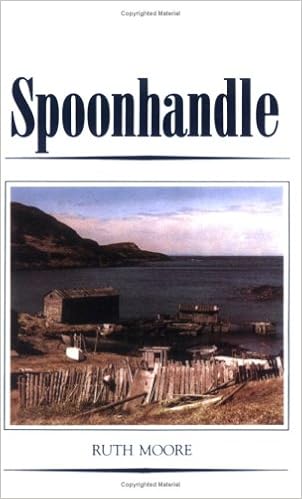
Spoonhandle by Ruth Moore was first published in 1946 and this is one of the books that Peggy brought from the US for me to read. I think that it’s probably quite difficult to find in the UK. Spoonhandle was made into a film called Deep Waters in 1948 and was made on location at Vinalhaven, Maine. I know that I read about this book on a blog but sadly I can’t remember which one, I really should write down the blog somewhere when I decide to actually read a recommended book.

Although the setting is Maine in the US I think that the themes will be recognisable in lots of places, especially those on scenic coastlines. The author dedicated it To Any American Town. Presumably because the so called march of progress always changes a way of life, or maybe I should say wrecks a way of life.

The main island is Big Spoon Island but there’s also Little Spoon Island and The Spoonhandle. Most of the land has been held in the same families for generations, ever since the place was first settled. Like any small communities there are prominent families who tend to rule the roost by way of owning more land or businesses and it’s the older members of the Stilwell family who are in that position. The two older siblings Agnes and Pete have money as they’re god. Pete owns the local store and takes every opportunity to short change his customers. Their two younger brothers Horace and Willie are so disgusted with Agnes and Peter that they have taken themselves off to live together on a small island, it was the only thing given to Willie by his father in his lifetime and Willie was left out of his father’s will. Pete has refused to give Horace what he is due from the will, and Willie and Horace (Hod) are having a very tough life, fishing in a rotting boat and in dire need of new fishing gear. They can barely afford to eat.

The ‘summer people’ have ‘discovered’ the area and one of them is determined to buy Willie’s island as a gift for his wife so they can build a home on it. But Willie is determined not to sell at any price.

Ann has grown up in the area but she’s been living in the city recently where she has been writing with some success, she’s come home to finish her second book. Her father is a bit of a macho man and his word is law within the family. He’s unimpressed with his daughter and really thinks that daughters should just get married, he sees her as a failure as apparently no man is interested in her.

This is the story of a changing way of life with the original landowners being duped out of their land by people richer than them and the locals ending up becoming employees of the incomers, losing their independence and way of life.

That all sounds quite depressing but it’s an enjoyable read with some great characters and lovely writing, and although I’ve never been to Maine, or even the US there are similarities with the Scottish fishing communities. I suppose I should say ex-fishing communities as most of the fishing villages in Fife are now at least 50 % owned by people renting out the properties for holiday lets and young people who have grown up there can’t possible afford the house prices nowadays.

I’ll definitely read more books by Ruth Moore in the future if I get the chance.

Wigtown Bookshops

bookshop 1

It’s a few weeks now since we visited the book town Wigtown, Scotland’s answer to Hay-on-Wye and I now can’t remember if these photos were all taken in the same bookshop. I think Jack took most of these photos, maybe all of them. And I think they were mainly taken in THE Book Shop.

bookshop

Anyway, you get the idea, lovely places to rake around in if you’re of a bookish type.

a bookshop

One of the bookshops did have a cat that sauntered out to meet us as we came through the front door, but quickly disappeared, obviously we weren’t of great interest to it – just more of those strange people completely ignoring it to stare at walls full of books.

a bookshop

It’s a remote part of Scotland and if you do decide to travel there don’t expect too much. I was very lucky and bought quite a few of books there but there’s very little else in the town apart from a few cafes and a couple of gift shops. As you can see in the photo below, it’s not exactly bustling.

Wigtown Street 3

Newton Stewart, Dumfries and Galloway

One of the places we visited for the first time during our recent trip down to Dumfries and Galloway was the town of Newton Stewart. It fits the bill for me as a good town as it has a lovely river running through it – the River Cree. Unfortunately like many such towns the river has fairly recently got too close and personal to the inhabitants, flooding quite badly.

River Cree, Newton Stewart

It was another blue sky day, we were really lucky with the weather.

River Cree, Newton Stewart

What more can you ask for? As well as the river there’s a great old bridge too. I grew up in a town that has a very similar bridge although that one goes over the River Leven, some of my happiest moments have been when I’ve been hanging over such bridges, scrutinising the water for fish, or watching the hoards of starlings doing that magical air dancing. Well that’s what they used to do at Dumbarton bridge anyway.

Newton Stewart bridge

Below you can see what the town and bridge looked like in 2012 when the town flooded. It looks terrifying.

If you’re interested in seeing what the surrounding area looks like you might like to take a look at Vanessa Dixon’s dashcam video, Creetown to Newton Stewart although it takes about ten minutes to reach Newton Stewart there is some nice scenery along the way.

The Land the Ravens Found by Naomi Mitchison

The Land the Ravens Found cover

The Land the Ravens Found by Naomi Mitchison was published in 1955 it is a children’s book and I’ve given it three stars on Goodreads. It’s the story of how some people in a Viking community based in Caithness, the far north of Scotland, decide that they are tired of the violent life in Caithness. There’s constant fighting and raiding going on. It’s decided that Iceland is the place to travel to and some of the people who are chosen to go are thralls, Scots and Irish who have been taken prisoner on earlier raids. They’ll be doing a lot of the rowing.

It’s a time when Christianity was beginning to get a toehold on the people and some were giving up the Norse gods for the new religion, causing some tension between those who wanted to keep to the old ways.

Aud the Deep Minded is a wise and respected woman, wealthy too, she’s one of the older women and is a Christian, she decides to organise the building of a ship that will sail them across the sea to Iceland where she hopes to settle down to a more peaceful way of life in her old age. After a scary voyage with the boat piled high with cattle and everything needed to build a new community, they reach Iceland and in time everyone is allotted some land and people pair up to start families. The few Icelandic people seem happy to have the incomers moving in, life has been harder for them and they have very little in the way of luxuries. It seems that their way of life might be improved by the foreigners and they can learn from each other.

My copy of this book is really nice, I suspect that it has never been read as the pages are pristine, lovely thick paper and I think that might be because at the beginning of the book the author throws so many characters at the reader, all with outlandish names, it makes it quite a confusing read to begin with.

However, this book has made me think that I would really like to read the original Icelandic sagas that Naomi Mitchison based this book on.

This is another book read for the Read Scotland 2016 Challenge, number 22.

Naomi Mitchison was an amazing woman who lived to the age of 101. You can read an obituary by Elizabeth Longford here. This one is more personal than the Guardian one below.

You can read her Guardian obituary here.

I’ve had a Virago copy of her book The Corn King and the Spring Queen (1931) for years and it’s about time I got around to reading it. Elizabeth Longford describes it as possibly the best historical novel of the 20th century. What an amazing thing to say, I’m now really looking forward to reading it and hoping I won’t be disappointed.

Read Scotland 2016 Challenge

I’ve reached my goal of reading 21 Scottish books for the Read Scotland 2016 Challenge. So here they are, in no particular order.

1. Beneath the Abbey Wall by A.D. Scott
2. The Factory on the Cliff by A. G. MacDonell
3. Lament for a Maker by Michael Innes
4. Night and Silence by Aline Templeton
5. A Life, Josephine Tey by Jennifer Morag Henderson
6. Fatty O’Leary’s Dinner Party by Alexander McCall Smith
7. Murder at the Loch by Eric Brown
8. The Moon King by Neil Williamson
9. Touch Not the Cat by Mary Stewart
10. Instructions for a Heatwave by Maggie O’Farrell
11. Water on the Brain by Compton Mackenzie
12. Fair Helen by Andrew Greig
13. Cork on the WaterMacdonald Hastings
14. The Hangman’s Song by James Oswald
15. Wildfire at Midnight by Mary Stewart
16. Crossriggs by Jane and Mary Findlater
17. A God in Ruins by Kate Atkinson
18. The Game of Kings by Dorothy Dunnett
19. Life After Life by Kate Atkinson
20. Murder of a Lady by Anthony Wynne
21. Candleshoe by Michael Innes
22.Nine Coaches Waiting by Mary Stewart
23.The Land the Ravens Found by Naomi Mitchison
24.England Their England by A.G. Macdonell
25.Kate Hardy by D.E. Stevenson
So I’ve completed the Isle of Skye level and I’m heading for the Orkney level. I’m not sure how many more books I have to read to get there though!