A God in Ruins by Kate Atkinson

 A God in Ruins cover

I enjoyed reading Life After Life not long ago although at times it did irk me, the constant re-starting of life which went on in it and what seemed like a waste of good fiction ideas which might have been taken further in a more ‘normal’ book. Anyway, Jack was keen for me to get around to reading A God in Ruins fairly quickly as he wondered what I would think of it – so here goes. I’m not going to say too much about the actual story for fear of spoiling it for anyone, suffice to say that as often occurs with Atkinson the story jumps around a lot from 1944 to contemporary times.

A God in Ruins by Kate Atkinson is a sort of continuation of Life After Life, the main character is Teddy Todd who is an RAF Halifax bomber pilot, he is the younger brother of Ursula who has such a busy existence in Life After Life.

Atkinson obviously had to do a lot of research into the experiences of pilots and their crews and she manages to write what seems to me to be incredibly realistic and absolutely terrifying bombing sorties as Teddy takes part in the carpet bombing of Germany in 1944. I’ve always thought that those men were made of stronger stuff than anyone today and this book just underlines it.

I loved this book it’s a real page turner, but it is like a palimpsest with rubbing out and rewriting of lives being involved when you get to the bottom of it. The whole story takes a very sad turn towards the end, but it makes you think how everything was changed in people’s lives, all those futures that people planned, but they just never happened as they had hoped they would.

If you want to know what Jack thought of the book have a look here.

I’m looking forward to her next book. I read this one for the Read Scotland 2016 Challenge. Although Atkinson was born in the north of England she has lived in Edinburgh for many years, and she uses Scots words, such as ‘hirpling’ meaning limping.

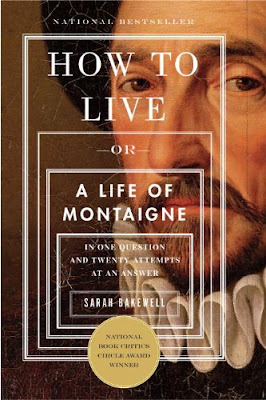
How to Live – A Life of Montaigne by Sarah Bakewell

How to Live - A Life of Montaigne cover

How to Live – A Life of Montaigne in one question and twenty attempts at an answer – by Sarah Bakewell was first published in 2010. It was Joan@Planet Joan who got me reading this book, and I’m so glad that she did as I found it to be really interesting and enjoyable. You can read what Joan thought about it here.

I knew very little about Montaigne and his Essays before reading this but now I feel an urge to read some of his Essays. Such is life, reading always leads to more books added to the list.

Michel de Montaigne was a French philosopher who lived from 1533 to 1592. I always think of educational fads as being a modern day thing but Montaigne’s father was keen to give his son an unusual education, which meant that Michel was taught Latin as his first language, as neither of his parents spoke Latin it meant that the only person he could communicate with well was his tutor. Despite this disadvantage (when he did go to school his Latin was no better than anyone else’s) Montaigne obviously flourished as a thinker.

His ideas are centuries ahead of his times and when you consider that he was living at a time of horrific religious wars and turmoil, it’s just amazing that he managed to keep on the right side of the Roman Catholic Church.

He was the first person to write in a stream of consciousness and Virginia Woolf gets a lot of mentions in this book as she was influenced by him.

Montaigne had a near death experience when he was a young man and after he recovered he could remember that although at the time of his accident he was thrashing around and clawing at his body in torment, internally he was actually feeling very calm. It was something which comforted him and so the first question and answer in this book is:
1 Q. How to live?
A. Don’t Worry About Death
I found this part comforting myself as I did witness a very traumatic death. I now live in hope that the person was internally calm.

4 Q. How to live?
A. Read a lot, forget most of what you read and be slow witted. – I feel I have perfected that part.

7 Q. How to live?
A. Question everything. All I know is that I know nothing, and I’m not even sure about that. – My thoughts exactly.

8. Q. How to Live?
A. Keep a private room behind the shop.
Virginia Woolf took this advice to heart! – Everyone needs some space of their own.

In his younger days Montaigne had taken part in local politics but he retired from it fairly early and went to live at his country estate, doing very little – on the surface anyway. He has been criticised for this attitude to life but when you consider that it seems to be a lot of overly ambitious people who feel the need to tinker with everything and so justify their existence, greasy poling their way up to power – who cause all the upheaval in the world, then sitting back and not doing too much sounds like a good plan to me.

Of course Montaigne was lucky in that he was well off and didn’t have to worry about where his next meal was coming from, but he had worked out what was important in life. This was a really interesting read and Montaigne has joined my virtual list of interesting dinner guests.

Have you read Montaigne’s Essays? Do you have a fantasy guest list?

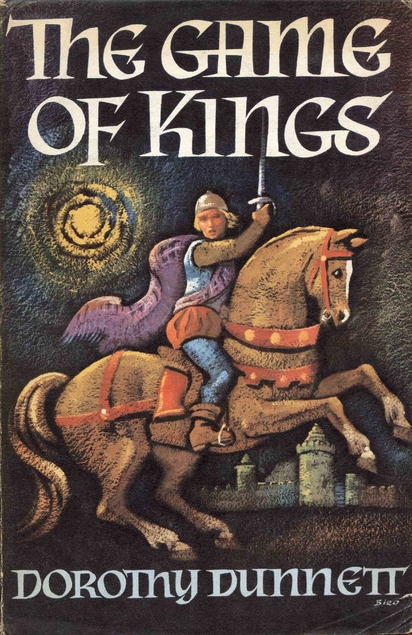
The Game of Kings by Dorothy Dunnett

The Game of Kings cover

The Game of Kings by Dorothy Dunnett was first published in 1962 and it appears in the 100 Top Scottish Books. It’s the first book in a series of six which are described by many as historical romance but I would say that romance keeps a fairly low profile, which is fine by me.

It took me about five days to read this book and it isn’t really one for bedtime reading, you have to concentrate on the storyline which has plenty of twists and turns. Quite early on I thought to myself that Dunnett’s writing reminded me of Sir Walter Scott, very wordy and convoluted. Then it dawned on me that she was writing about Scott’s ancestors, he was apparently very proud of his Border riever antecedents and Will Scott and his father Wat (Walter) feature quite a lot in this book.

The Scottish Border country in the past has been notorious for violence and double dealing, with the land constantly being fought over and changing hands from Scots to English. The upshot of all that is the people living in the Border country tended to be on neither side, except their own, so the Border families were well known for being on neither side and just looking out for themselves.

The year is 1547, it’s a time which is known as The Rough Wooing when Henry VIII was determined to arrange a marriage between his son Edward and the child Mary Queen of Scots and prevent her from marrying the French dauphin and thus forming an alliance with France.

It’s a time of intrigue and Francis Crawford of Lymond is back in Scotland after having been a galley slave on a French boat. He’s still an outlaw in Scotland as the evidence against him points to him being a traitor to his own country. He’s an awkward character and in some ways his own worst enemy but he has great charisma.

I really enjoyed The Game of Kings and I’ll definitely be reading the other books in the series. I especially like books which have a local setting for me and just about every place that was mentioned is known to me, with Dumbarton, especially, being mentioned a lot and that is of course the town I grew up in. I just had to imagine places as they would have been about 500 years ago, very easy when it’s places like Stirling, Linlithgow and Haddington.

Porter magazine and emaciated models

A wee while ago I signed one of those Change.org petitions in support of models who are being asked to starve themselves in the hope of being given a modelling job. I believe the petition was started by a young woman who was told that she wasn’t thin enough at size 8 (UK) they wanted her right down to the bone.

Every now and again I get updates as to how the petition is doing and about MPs and such who have taken an interest in the subject. I had been under the impression that the fashion industry was beginning to be a bit more responsible and humane. So it was with a huge shock and revulsion that I noticed the current issue of the fashion magazine Porter, while I was standing at a supermarket check out. It’s no exaggeration to say that I’ve seen healthier looking people on their death beds. The actual magazine cover looks worse than it does in the image below, the model’s skin is grey and she looks totally emaciated, she looks like she is too weak to focus her eyes, I believe the look used to be called heroin chic, but I just had a huge urge to track the model down and try to talk some sense into her, no career is worth looking like a concentration camp victim. I hope that for some odd reason she has had a horrific make-up job done on her.

Porter magazine

I believe that Porter is a fairly new glossy magazine and it prides itself on being – the fashion magazine for the stylish, intelligent woman of now.

So it seems bizarre that such an unattractive image was chosen for the front cover. I’ve had a look back at some previous covers and there has been nothing as bad as the one above, in fact the models are usually quite attractive and healthy looking. Hopefully this cover is just an aberration, or maybe it’s two fingers up to the people who are trying to get model agencies to change their evil ways.

I really think that it’s about time that magazine distributors told editors that they will not deal with covers that show stick thin models who look like death. Supermarkets shouldn’t be putting such images in front of their customers either. If I had a young daughter I’d hate her to think that that was a look she should emulate.

Susie Orbach said that – fat was a feminist issue, surely thin is too!

The Pilgrim Way at Ceres in Fife

A new long distance walking route is being publicised by Fife Council, I say new but as The Pilgrim Way was used by Catholic pilgrims on their way to St Andrews, long before the Reformation, it’s a very old route.

The Pilgrim Way is 70 miles long, so we just walked a wee bit of it yesterday, from Ceres up the Waterless Road towards Kennoway. You know you sometimes see signs on roads which say – last petrol for 20 miles – well the naming of Waterless Road is the mediaeval equivalent I suppose, a warning to travellers to stock up on water for themselves and animals as there is no drinking water on the route.

Waterless Road

The aconites are poking up through the leaf litter and the area has plenty of snowdrops too. Snowdrops were associated with the virgin Mary so they have probably always been here since the times when this route was used by pilgrims.

Aconite

Just a bit further up the road it’s all fields as you can see, they’re a bit boggy after all the rain. The landscape isn’t that great at the moment, in the summer it looks lovely when you look over in this direction from Hill of Tarvit House.

landscape  in Fife

And the white house in the photo below is Hill of Tarvit House, which you can see in a previous blogpost here if you’re interested.
landscape and Hill of Tarvit House

Then as we didn’t want to walk the five miles to Kennoway we just walked back down the road which leads back to the car park at Ceres, a wee village which has the claim to fame of having the oldest free Highland Games, they’ve had them every year since 1314 (apart from during wartime) when Robert the Bruce gave them a charter allowing them to have the games, in recognition of the village’s support at the Battle of Bannockburn. The photo below is of the field where the games still take place.

Village Green

When the weather is a bit warmer we’ll definitely be walking more of The Pilgrim Way which stretches from Culross to St Andrews, and if you were thinking that going on a pilgrimage was something terribly serious, think again. Pilgrimages were the only time that most ordinary workers could get away from work and home, so they were an exciting time where you were likely to meet strangers, fellow pilgrims and be away from the ever watchful eyes of family, neighbours and friends. Apparently it was common for young women to end up in trouble, having a pilgrimage pregnancy. Poor souls, they didn’t have much fun in life.

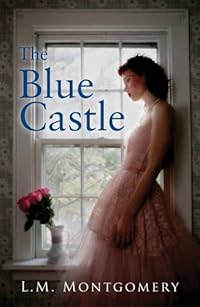
The Blue Castle by L.M. Montgomery

The Blue Castle cover

The Blue Castle by L.M. Montgomery was first published in 1926. By 1920 Montgomery had tired of writing about Anne of Green Gables and started writing various other series and stand alone books.

I loved The Blue Castle. The main character is Valancy Stirling a 29 year old woman who has never been valued by her family. Valancy committed the terrible sin of being born female instead of the boy her mother wanted, so being a disappointment to her mother from the beginning Valancy becomes the family whipping girl, valued and loved by nobody. Her father had died when she was a baby and her mother is an overbearing tyrant who won’t even allow her daughter to have a minute of time to herself. When Valancy goes to her spartan bedroom to fetch something her mother and aunt are shouting at her to come downstairs again, she must be darning and mending all day if possible, unless she’s in town running errands (messages) for the extended family. She has no nice clothes and one of her aunts has decreed that she must wear her hair in a particular old fashioned pompadour style which does nothing for her looks. The one thing she is happy about is her name – Valancy, but the family insist in calling her Doss. Apart from being born a girl she has also failed to get a husband, unlike her pretty cousin Olive who is the family golden girl.

To begin with I was quite sure that the Stirlings must be a Presbyterian family, everything about them is miserable and harsh. So I was surprised when they were described as being Anglican, I suspect that that was to avoid any trouble from the Presbyterians as Montgomery was married to a Presbyterian minister. The setting is of course Canada.

Valancy has no life at all and the only time she is allowed any time to herself is at bedtime, so she has built a fantasy life for herself in her dream home called The Blue Castle, it’s her imaginary home in Spain and it’s the only bit of joy she has in life. ‘Everything wonderful and beautiful was in that castle. Jewels that queens might have worn; robes of moonlight and fire; couches of roses and gold; long flights of shallow marble steps, with great white urns, and with slender mist clad maidens going up and down them; courts marble pillared where shimmering fountains fell and nightingales sang among the myrtles; halls of mirrors that reflected only handsome knights and lovely women, – herself the loveliest of them all, for whose glance men died.’

For quite a wee while Valancy had been worried that her heart was behaving oddly and it was getting worse. She plucks up courage to go to a local doctor about it, not the doctor that her family normally uses. The prognosis that she eventually gets from him spurs her on to begin to live her life for herself, much to the horror of her family who think that she has gone mad when she begins to answer her mother back instead of meekly doing everything she is told.

Being true to herself turns her whole life around, which was quite predictable but for me anyway there was an unexpected twist. I’m now looking forward to reading some more of Montgomery’s non Anne of Green Gables books.

It seems that Montgomery herself had a sad life, suffering from bouts of depression and having a husband who was also suffering from mental health problems. Her Blue Castle must have been the books that she wrote, taking herself out of the difficult situation and escaping from her duties as a minister’s wife. I suspect that most of you have already read this book but in case you haven’t and you want to give it a go you can read it here.

Not for the first time I find myself being quite thankful for the rigid discipline of Scottish Presbyterianism because it does have a wonderful effect on the imagination of those who have had it inflicted upon them. Without it we wouldn’t have had Peter Pan, Treasure Island, Winnie the Pooh, The Wind in the Willows, George MacDonald’s books and many more children’s classic tales as well as Anne of Green Gables of course.

Balbirnie Wood Walk

If you fancy stretching your virtual legs a bit and getting some good fresh air, come along on a walk through the Balbirnie Woods again.

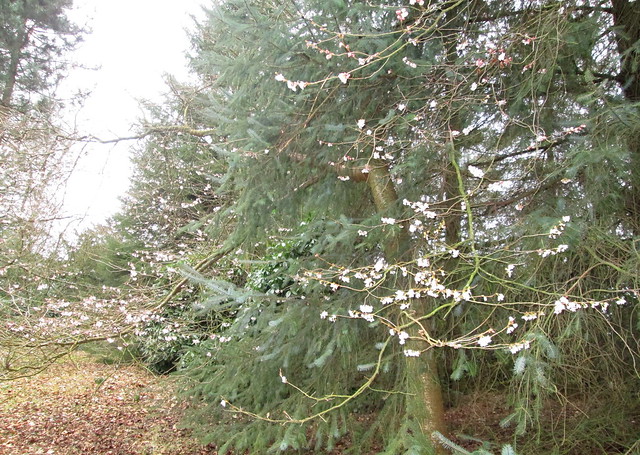
I’ve heard some people, mainly on the radio, complaining that they are being bothered by their allergies already but it’s hardly surprisng because the blossom trees have been in flower for a couple of weeks, and of course the willows are full of pollen around now. I think this rather spindly specimen is an almond tree.

blossom

We’ve lived on the edge of the woodland for nearly two years, I can hardly believe how fast the time has gone. To be fair, we still miss the Beveridge Park and esplanade walks we took when we lived in Kirkcaldy as woodland isn’t always the best place to walk through, it’s best avoided when it’s really windy, just in case a tree or part of one decides to bop you on the head!

landscape near Markinch
A couple of days ago we tried to ring the changes by going a different way through the woods thinking we would still end up where we always walk eventually, but we ended up in an area we had never been in before, which was a nice surprise, after a while one group of trees tends to look like another so it was a bonus to reach an area which had some good views of the surrounding countryside, as you can see from the photo above. The photo below is of the wee town of Markinch in the distance. The church spire belongs to the 12th century church, St Drostans.

landscape - Markinch in Fife

On the way back home and close to our house a buzzard swooped into one of the pines ahead of us. It’s still a thrill whenever I see a buzzard or any bird like that, even although it seems that there is now a very healthy population of them. Just about every time we go for a drive anywhere now we see buzzards sitting on fence posts and streetlights. I suppose it means there is plenty around for them to eat. So far I haven’t been able to get a decent photo of any though.
Balbirnie burn

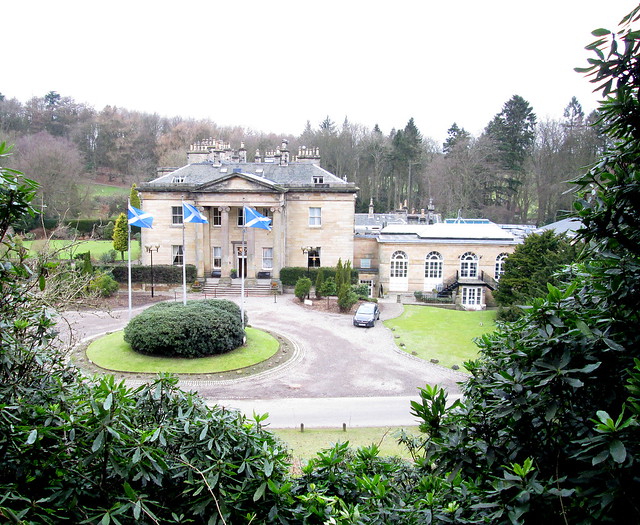
The snowdrops are reaching perfection now, you can’t see them all that well in the photo above though. Last year a commenter informed me that these snowdrops had been grown commercially 70 years or so ago, at a time when the Balbirnie Woods were part of the Balbirnie House estate, he had been employed as a young lad to pick them. Most of the land is now owned by the council and the big mansion house is now a popular venue for stylish weddings. Below is a photo of it from the woods just above, as you can see they’re keen on flying saltires/St Andrews flags. There can’t have been a wedding on as they don’t have the red carpet out.

Balbirnie House

The walk was quite a bit longer than we had planned and I was glad to get back home for a coffee and sit down before I had to start cooking the dinner.

I hope you enjoyed the walk.

Balbirnie House

To Bed with Grand Music by Marghanita Laski

To Bed with Grand Music cover

To Bed with Grand Music by Marghanita Laski was first published in 1945. It’s a very unusual book, for me anyway because although there aren’t really any likeable characters, it still manages to be a great read. Normally that’s a state of affairs that really puts me off a book as I want to be in the company of people that I would be happy to have as friends in real life.

The book begins with Graham and Deborah Robertson in bed, Graham is in the army and he’s about to leave for Egypt. Deborah is miserable at the thought of being without him and she desperately tries to get him to promise to be faithful to her, no matter how long they are apart. Graham is unwilling to give promises that he feels he may not be able to keep, but he does promise that he will never form any relationships with any other women. In other words it would be ‘wham bam, thank you ma’am’. Deborah has to be satisfied with that but she swears she will never look at another man.

Deborah’s mother Mrs Betts knows her daughter too well though and when she sees that Deborah is taking out her frustrations on her young son Timmy, the grandmother in her puts the child’s interests to the fore. Mrs Betts tells her daughter that she believes there are fundamentally two types of women in the world, the mother type and – the wife type. She hesitated over the second epithet, unable to say the word that was really in her mind. Basically Mrs Betts knows that her daughter can’t live without a man in her life, she is completely self-centred and is uninterested in Timmy.

The upshot is that Mrs Betts is able to manipulate Deborah very easily, Deborah jumps at her hints that she might be better getting some sort of war work and leaving Timmy’s upbringing to Mrs Chalmers who is her housekeeper. A local job is not good enough for Deborah though, once she has made up her mind to do war work it’s only London that she’s interested in and she moves into her old friend Madeleine’s flat and Mady helps her to get a job.

But Mady has a bit of a reputation and Deborah knows that Graham wouldn’t be happy about her living with Mady, so she keeps quiet about that and so begins a life of deception. In no time Deborah is being wined and dined every night in posh hotels and clubs. London was jumping during the war, especially if you had money. People lived life to the utmost, knowing that they could be dead at any minute.

Deborah has turned into a ‘good time gal‘ and she is having a great time, manipulating men who are happy to pay her in designer clothes and jewels, allowing her to feel that she is doing nothing wrong, after all she’s not accepting any money. She is handed from man to man, as they are called away to various different spheres of the war. Deborah is briefly appalled at her own behaviour but in no time she is able to justify everything that she is doing. Anything is acceptable if it means that she gets all the material things she wants and is kept entertained by well off men.

She’s a snob and a social climber, in fact she married Graham mainly because she thought his family was wealthier than they actually were. She dreams of divorcing Graham and getting married to one of her gentlemen friends, she has no inkling that the fact that she sleeps with them as soon as she is introduced to them means that she would be seen as completely inappropriate as a wife. In fact, she quickly ends up going way down the social scale.

Meantime of course, Mrs Chalmers the housekeeper is looking after Timmy without so much as one day off in all that time.

So you see what I mean about there being no likeable characters, unless you count Mrs Chalmers who is genuinely very fond of Timmy. Mrs Betts set her daughter onto that path in London, knowing exactly what would happen, she knew her daughter took after Mr Betts whom she had had trouble with early on in their marriage! Still, it’s a really enjoyable book.

I believe that To Bed with Grand Music was reprinted by Persephone books but I borrowed a large print copy from my library, which was published by Isis.That word seems to pop up everywhere, and it used to have such pleasant connotations.

If you mooch around second-hand bookshops you might find a copy of the book with the author named Sarah Russell, the name she originally wrote it under. Possibly this book was seen as being a bit much at the time of its publication, the complete opposite of the sorts of books that kept people going in times of war, light and uplifting tales where women were selfless and uncomplaining, but I’m sure that for a lot of people it was more realistic, perhaps too realistic for some to contemplate.

The Assassination of Margaret Thatcher by Hilary Mantel

The Assassination of Margaret Thatcher  cover

I read The Assassination of Margaret Thatcher when it was first published in the Guardian. It’s the last short story in the Hilary Mantel anthology of the same name. At the time I thought that the title story was very good, a sort of wishful thinking tale, a what if… the sort of thing we all indulge in, but the rest of us don’t write them up as short stories, we get no further than a lovely dream. Believe me, if you were lucky enough not to have been an adult when Thatcher was inflicting her damnedest on the UK then you probably don’t realise how hated she was by so many of the population, eventually of course that feeling extended itself to her own work colleagues.

Anyway, I bought the book quite a wee while ago and having read all of the stories now I think that the ‘Assassination’ story is by far the best in the collection.

Jack always takes a while over reading short stories as he likes to think about each story when he gets to the end of it. I really don’t think that that is necessary with these ones as for me most of the stories aren’t saying anything particularly profound, as far as I’m concerned anyway, although some of the stories seem quite autobiographical, worryingly so in fact, still – it’s an entertaining read.

Two Under the Indian Sun by Jon and Rumer Godden

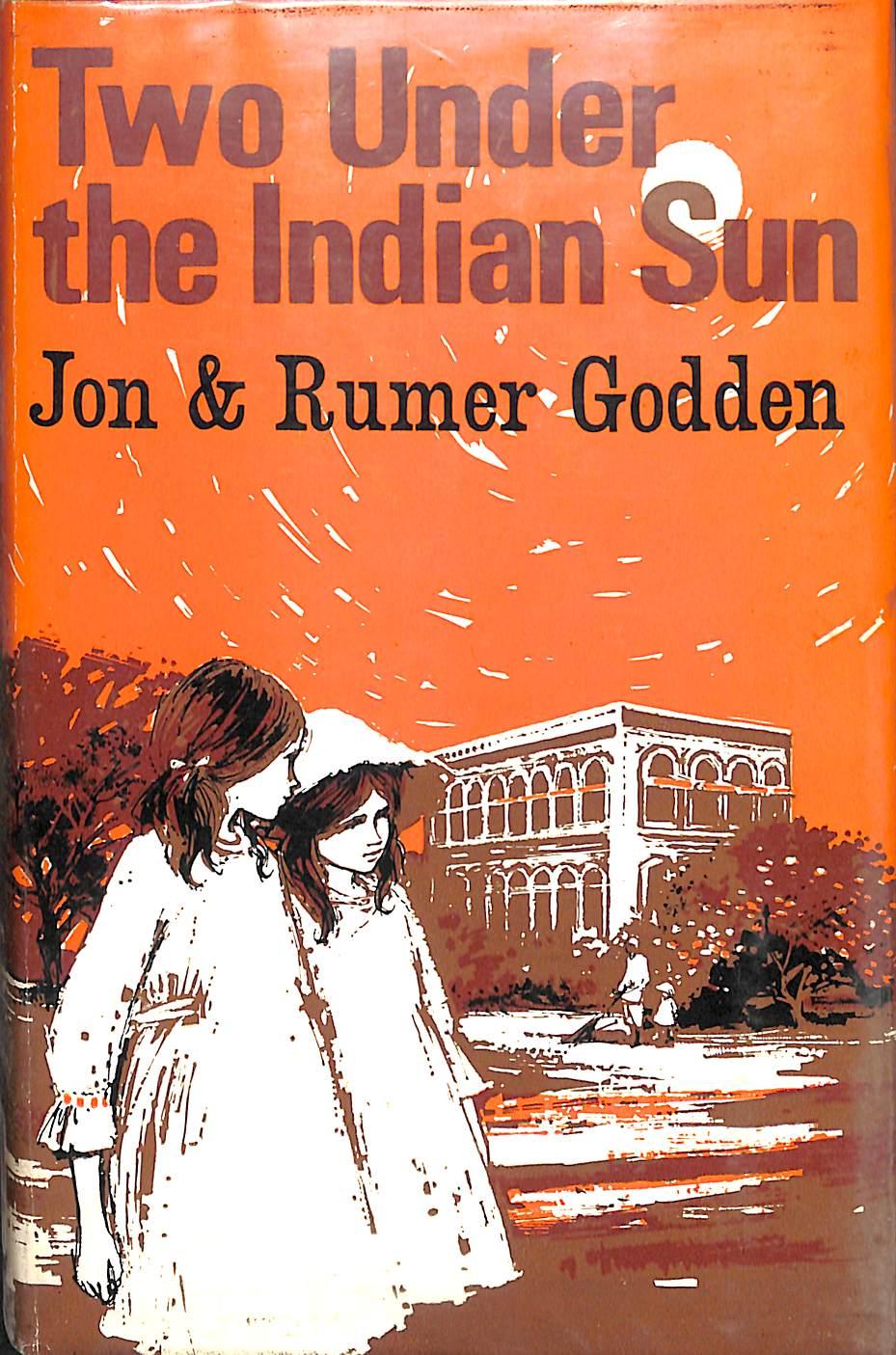
Two Under the Indian Sun cover

Two Under the Indian Sun by Jon and Rumer Godden was first published in 1966. It was a surprise to discover that Jon Godden is actually a girl. The Godden sisters had originally been living in colonial India with their parents, the father was working for a shipping company. The prologue says that the book isn’t so much an autobiography as an evocation of a time that is gone.The girls had been living in India when they were very young but had been shipped back to England for their education. When World War 1 broke out it was decided they would be better off being back in India, to avoid the zeppelins in London.

Jon and Rumer were thrilled to bits to get back to India as being farmed out to aunts in England had been an unhappy experience for them. The part of India they lived in is now part of Bangladesh and at that time the community was a very mixed one with a multitude of religions and castes. The girls were involved in all the religious celebrations but as their mother was terrified that they would get ill from contaminated food they never got to try Indian food, that must have been terrible, being able to smell it but not eat it. In fact they really led a very narrow life, not being able to play with many other children, the Anglo-Indian children next-door neighbours were off limits to them, except on Christmas Day when they were allowed to speak to them and of course as far as the Indians were concerned the Godden children were untouchables. There were two younger sisters by the time Jon and Rumer got back to India.

Life in India was very comfortable for them though, they had a far higher standard of living than they would have had back in England. In fact when they had to go back to England they had to travel third class on trains, whereas in India it had been first class travel for them.

This is a good read and as I had no idea that Jon Godden had also been a writer I’ll now have to track down some of her books. India was obviously a huge influence on the sisters, so I suspect that all of the books will have an Indian setting.

Have any of you read anything by Jon Godden?