Crichton Castle in Midlothian, Scotland

I do hope that I’m not repeating myself because I could have sworn that I had already done a post on our visit to Crichton Castle, but it doesn’t seem to be on the blog, and the photos weren’t on Flickr, so I must just have written the post in my head – and got no further!
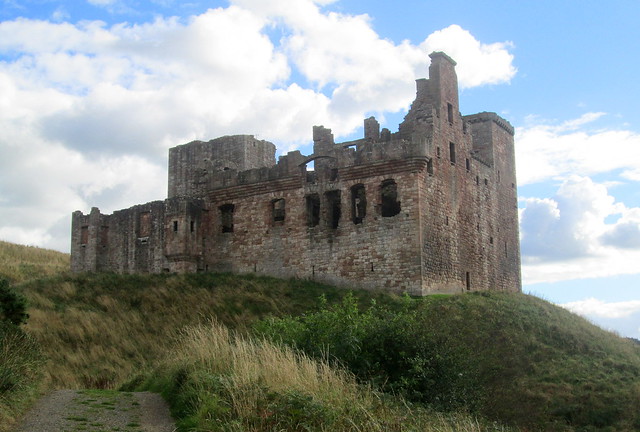
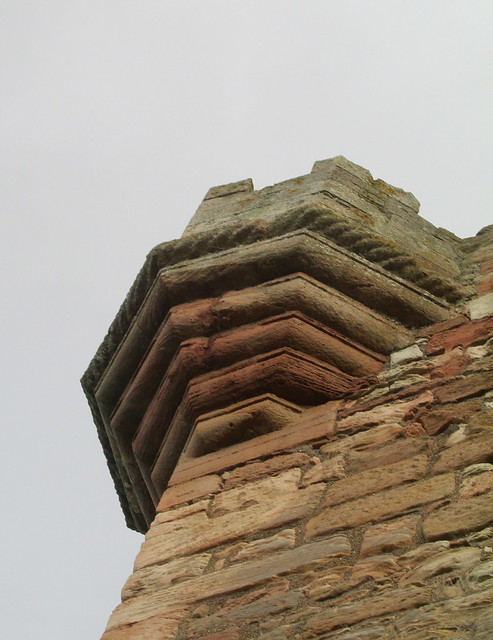
Crichton Castle

Anyway, as I remember it was a lovely visit to the castle which has quite a long footpath leading to it after you park your car. We had it all to ourselves although as we were leaving some other people turned up.
Crichton Castle is near the village of Pathead in Midlothian, not that far south of Edinburgh. The oldest part of the castle was built in the late 14th century, but by the time Mary, Queen of Scots attended a wedding there it must have looked quite different.
Crichton Castle
Crichton Castle

It was owned by the Earl of Bothwell who became Mary’s third husband – really that poor woman should have been much wiser and been more like her cousin Elizabeth I and eschewed marriage altogether.
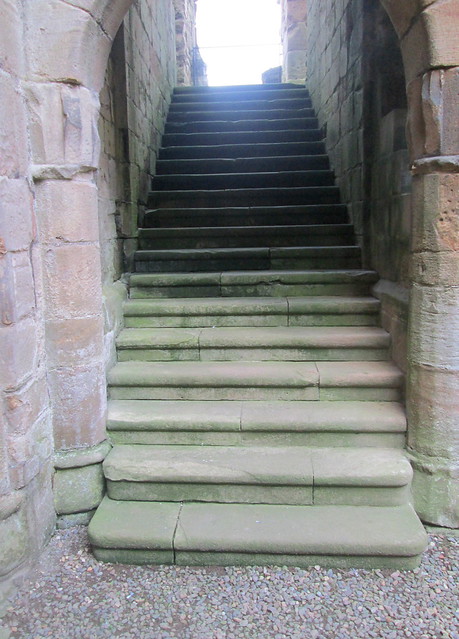
Crichton Castle  stairs

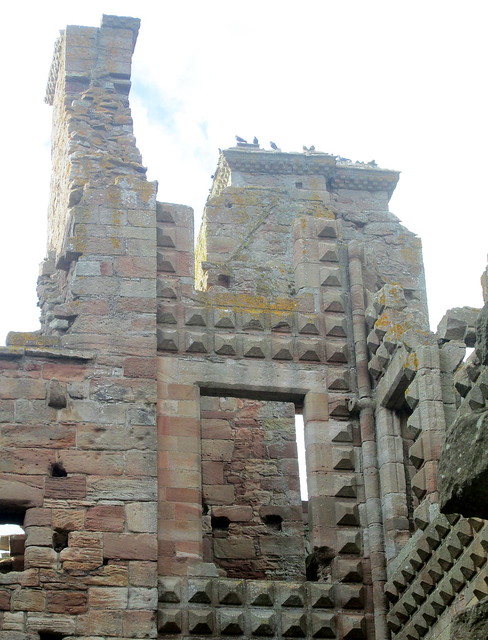
The castle has a scale and platt staircase, in other words a straight staircase with landings, instead of the normal spiral staircase that castles of that age have. Francis Stewart who owned the castle in the 1580s was inspired by a trip to Italy and copied an Italianate style, adding fancy diamond rustication to the courtyard wall, medieval stone cladding I suppose.
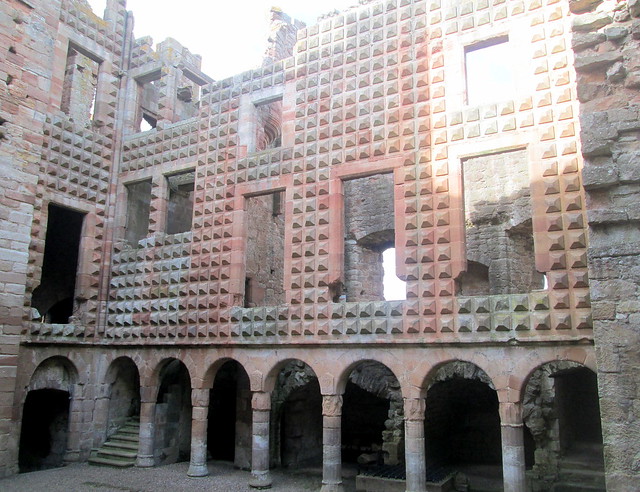
Crichton Castle
You need to put your initials on your castle obviously!
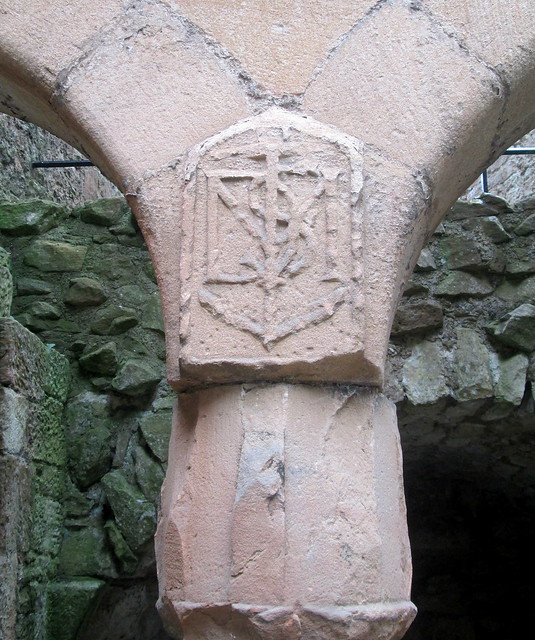
Crichton Castle

The setting is lovely, high above a river with plenty of trees around.
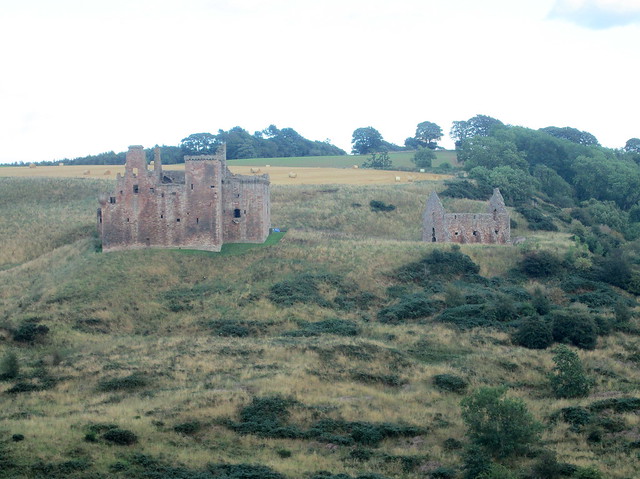
Crichton Castle

The castle features in Sir Walter Scott’s Marmion and was painted by J.M.W. Turner in 1818.

Trolls in Olden, Norway

I think every country has its myths and legends, we in Scotland have lots, including the Loch Ness monster, mind you over the years some very serious and normally sensible people have sworn they’ve seen the monster. Kelpies are water spirits in the shape of horses. There are selkies and I recently saw a poster in a shop which proclaimed that their haggis was freshly caught in Forfar! But in Norway it’s Trolls that are legendary beings, supposed to live near water and the tourist shops are full of wee troll figurines in various designs. I managed to avoid buying any when we were in Norway. You can read more about trolls in folk tales and myths here.

However I was amused by a cute troll house that had been built at the bottom of a hill in Olden, the trolls were lurking nearby.

troll house

troll house  in Olden

You get all sorts of different types of trolls apparently. The Swedish Moomintrolls of the Tove Jansson books fame are very different, to me they look more like cartoon baby hippos.

moomintrolls

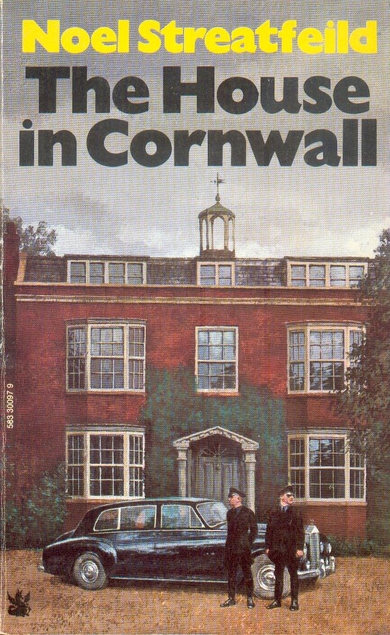
The House in Cornwall by Noel Streatfeild

The House in Cornwall cover

The House in Cornwall by Noel Streatfeild was first published in 1940 and was probably aimed at children aged 10 or over but I found it to be a good read. The advent of World War 2 undoubtedly galvanised many authors and inspired them to write about wartime. Streatfeild doesn’t mention the war at all, which may not quite have begun when she wrote the book but she was certainly influenced by all the shenanigans going on in Eastern Europe due to Hitler’s ‘lebensraum’ invasions.

The book begins with a railway journey from Paddington Station, four siblings are travelling to Cornwall where they are going to stay with their great-uncle for a six week holiday, they’ve never met their uncle before, but they know that their father doesn’t like the uncle. It’s just a desperate family situation that has led to the visit.

But when the children reach their destination they feel that they are being treated more like prisoners, there are guards in and around the house and during the night the children can hear what sounds like a child crying somewhere nearby. They’re determined to find out what is going on.

There is danger, secrets and revolution in the house in Cornwall. This is a tense read and I would have loved it if I had read it as a child, it’s not at all bad if you’re an awful lot older.

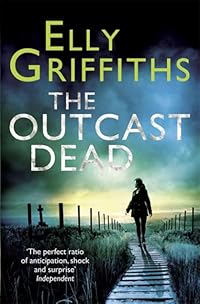
The Outcast Dead by Elly Griffiths

The Outcast Dead cover

The Outcast Dead by Elly Griffiths is the sixth book in her Ruth Galloway series. As Ruth is an archaeologist specialising in bones they usually entail the discovery of a body and this one is no different.

The location of her dig is Norwich Castle which had been a prison in the past. People who had been hanged were buried in the grounds and when the body that Ruth is excavating turns out to have a hook where a hand should be, she’s sure that it’s a locally famous child murderer.

Whilst Ruth is busy with that body her one time lover DCI Harry Nelson is investigating a supposed cot death, but it’s the third such tragedy in the same family and he’s thinking that three times is just too many to be natural.

I enjoyed this one although I’m beginning to wonder what Elly Griffiths has against happy couples as in her books nobody seems to be with the correct partner. I’m not at all sure that that adds much to the reading experience. No doubt it is the sort of thing that creative writing courses suggest as being a good thing to do to introduce conflict, but it can be overdone I think.

More book purchases

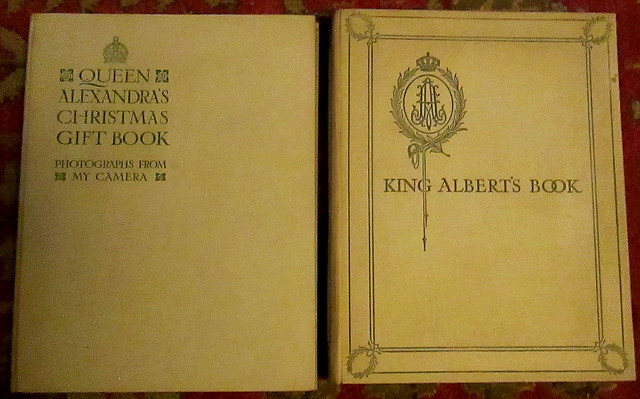
More Lovely Books

I’ve often seen copies of King Albert’s Book but as they’re over 100 years old they’re quite often in bad shape with torn pages, missing illustrations (they’re sort of tipped in) or drawn on. The book was sold in aid of the Belgian refugees at the beginning of World War 1 and published by The Daily Telegraph in conjunction with The Daily Sketch and The Glasgow Herald so there are quite a lot of them about. Basically it contains words of support for the Belgian people from many of the great and good of the day. There are illustrations by Edmund Dulac and Arthur Rackham to name a couple, pieces of music written by Elgar and Debussy and others. I bought it for all of £3. Beside it was a copy of Queen Alexandra’s Christmas Gift Book which I’ve never seen before. Again, this was sold for charity, but was published in 1908. She was apparently a keen photographer so it’s full of paper copies of many of her photos, tipped in as if they were in a photo album. There are a lot of family groups – the Empress of Russia appears a lot, but there are also photos of fjords and other places she visited and ships, including The Nimrod which was Captain Shackleton on his way to the South Pole in 1907. Another three quid – what a snip!

also:

Books, Books, Books

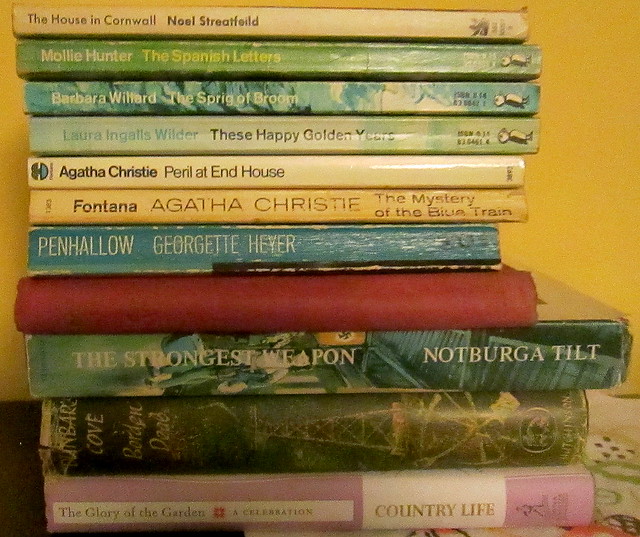
The Glory of the Garden – snippets from Country Life magazine over the years.

The Strongest Weapon by Notburga Tilt (an Austrian Resistance member in WW2 – signed.)

Dunbar’s Cove by Borden Deal. I’ve never even heard of this book but it seems to be well liked on Goodreads. I’m shocked to see that a copy with the dust jacket just like mine is on sale on Amazon for over £220. Mine cost £1.

Now comes a clutch of crime fiction.

The Mystery of the Blue Train by Agatha Christie
Peril at End House by Agatha Christie
Penhallow by Georgette Heyer (I’ve already read this one but I didn’t have a copy)
The Doomed Five by Carolyn Wells

Lastly some children’s books.

The House in Cornwall by Noel Streatfeild
The Spanish Letters by Mollie Hunter
The Sprig of Broom by Barbara Willard
These Happy Golden Years by Laura Ingalls Wilder

Three of those are Puffin books and I have a feeling that I might just have inadvertently started a bit of a collection as I think I bought a couple a few weeks ago.

Recent Book Purchases

While we were away on our recent (football inspired) trip down to England we took the opportunity to seek out secondhand bookshops, although there aren’t that many of them around nowadays, we visited the Moffat shop when we stopped there for lunch. We each bought a book there. Then on to Penrith in Northumberland where we found another bookshop. We also visited Oswestry, Shrewsbury, Alcester, Stratford on Avon, Much Wenlock, Ironbridge and Kendal. The upshot of that is that I bought a total of 25 books, Jack bought 11, he’s always more reticent than I am! Some of them were bought in charity shops.

I didn’t find any books that I’ve been lusting after for ages, just some books from authors that I’ve read and enjoyed before, and a few from authors I had never even heard of – but I liked the look of them. Here are a few of them.

Latest Book Haul

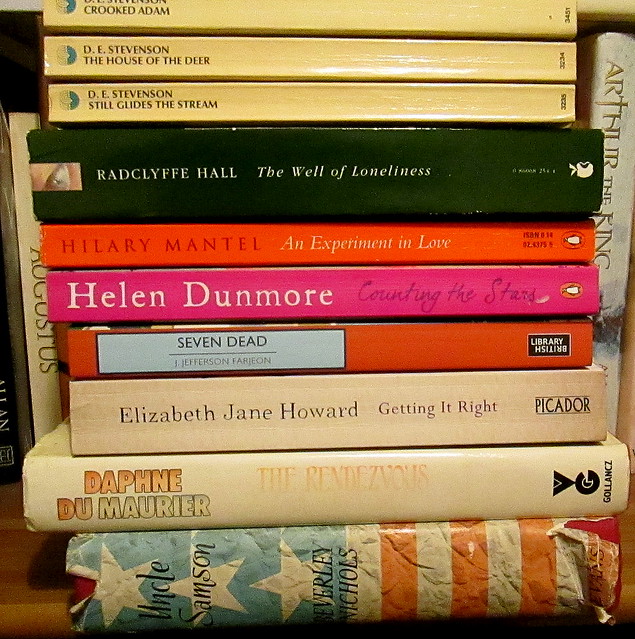
1. Uncle Samson by Beverley Nichols. It was published in 1950 and is his observations on the American way of life. I think it’ll be a witty report on social history.

2. Rendezvous by Daphne du Maurier is a collection of her short stories.

3. Getting It Right by Elizabeth Jane Howard. I loved the Cazalet Chronicles so I have high hopes for this one.

4. Seven Dead by J. Jefferson Farjeon, a British Library Crime Classic.

5. Counting the Stars by Helen Dunmore. She’s an author that I’ve only recently discovered – sadly she died just a few months ago.

6. An Experiment in Love by Hilary Mantel, published in 1995 and very different from her Tudor books I’m sure.

I found three D.E. Stevenson paperbacks in an antiques centre for all of £1 each, they were the most interesting things in the whole place.

7. Still Glides the Stream by D.E. Stevenson

8. Crooked Adam by D.E. Stevenson

9. The House of the Deer by D.E. Stevenson.

10. The Well of Loneliness by Radclyffe Hall is a Virago which was going for 50p so although I know I could have borrowed it from the library I decided to buy it.

That’ll do for now. Have you read any of these ones?

RRS Discovery at Dundee

I love ships and there’s something special about lovely old wooden sailing ships and all that rigging, but I can’t imagine ever being brave enough to actually set sail in one – on a long journey anyway. Those chaps who sailed off to explore the Antarctic were incredible. The Royal Research Ship Discovery was launched in 1901.

Mast & lifeboat

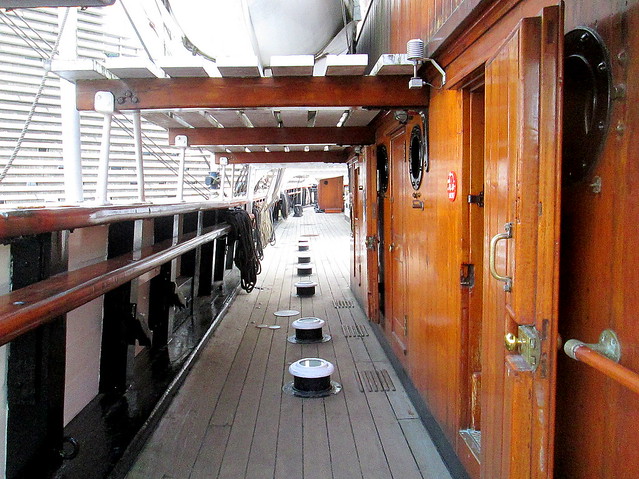
Going aboard Discovery the first thing that you notice is the mushroom vents which are fitted on the decks, they’re the equivalent of skylights in a house roof and bring daylight and fresh air below decks, but they’re chunky (well they had to be) and they’re terrible obstacles for anyone getting about on deck, in fact they were nick-named ankle grinders by the crew. There are no portholes in the ship’s hull as they would have weakened the structure.

Mushroom vents

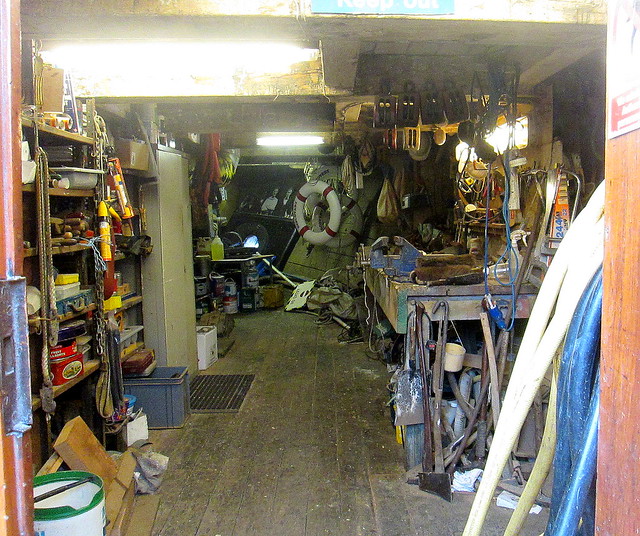
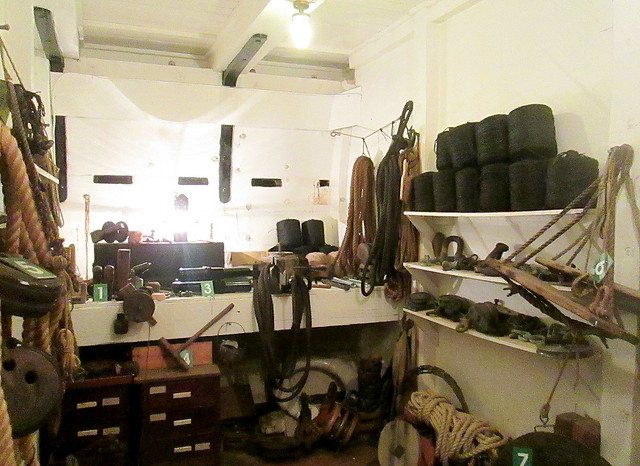
Going down into the hold I was surprised at how small it feels, considering they had to take so much with them in the way of stores.

Store room on RRS Discovery

Below Deck

Equipment Room

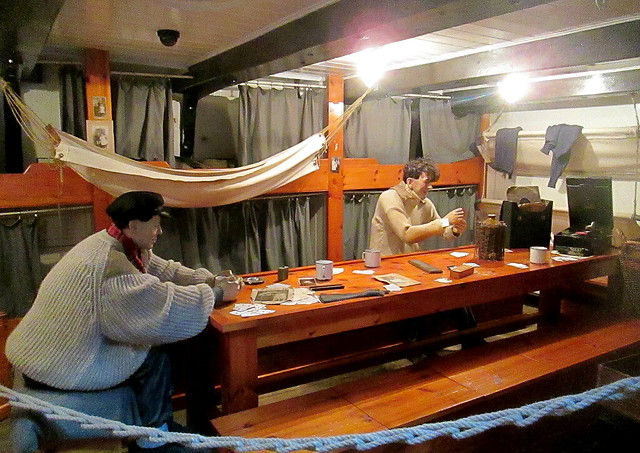
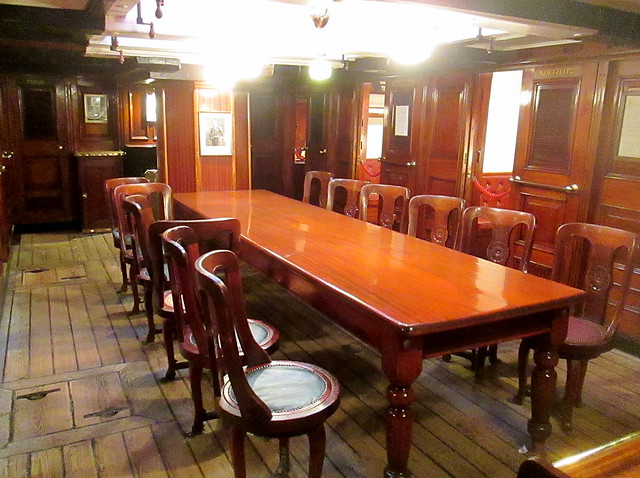
The actual living accommodation is quite stylish in an Edwardian sort of a way, with lovely wooden panelling, a bit gentlemen’s club-ish. It was a time when people knew their place in society though so although the officers had really comfortable looking cabins, complete with hanging bookshelves and a dining room the accommodation for the ‘men’ was basic. They just had hammocks slung up in the mess room, eating, sleeping and relaxing (if they ever could) in the same place.
Mess Room
The officers’ wardroom is in the middle of the ship with the officers’ cabins situated just off the room as you can see in the photo below.

Wardroom

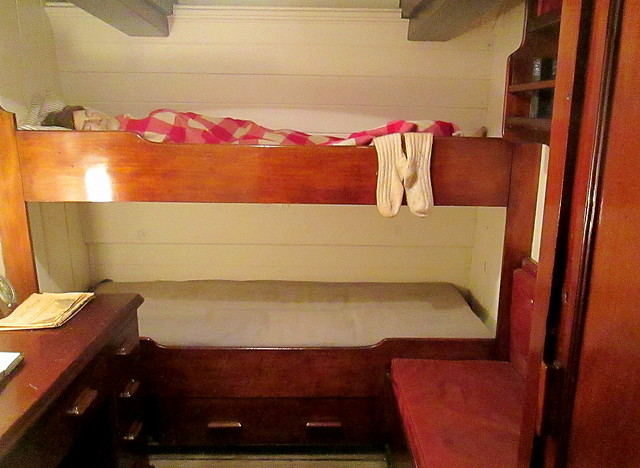
I was quite taken with the officers cute wee rooms until I was told that they were the coldest part of the ship and the mattresses regularly froze up as they slept in them.
Officer's Quarters
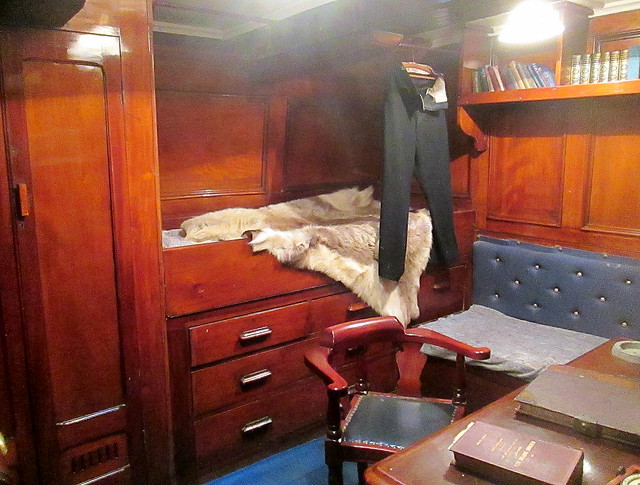
Captain Scott’s cabin is very comfortable looking.
Scott's Quarters

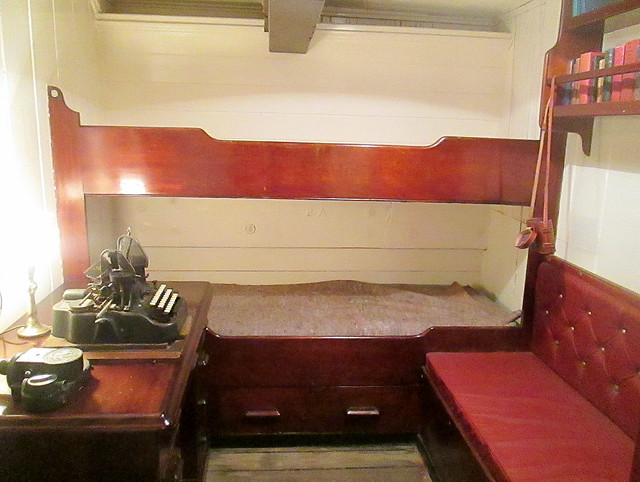
Shackleton’s cabin below isn’t quite so plush.
Shackleton's Quarters

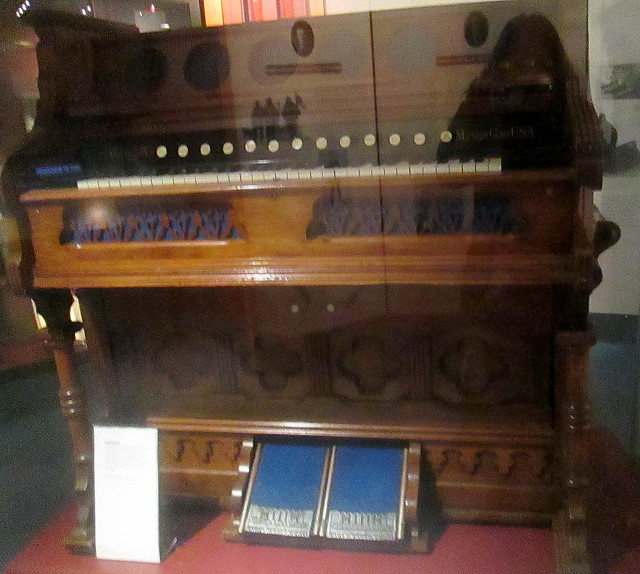
They had a gramophone player and a harmonium for entertainment, the harmonium is in the exhibition centre and is behind glass, presumably so that people can’t have a go of it. I was amused to see that the cast iron pedals say ‘mouse proof’ on them. It’s impossible to see that with all the reflections though. I suppose that harmonium bellows were made from leather which was apt to be gnawed by rodents.

Harmonium
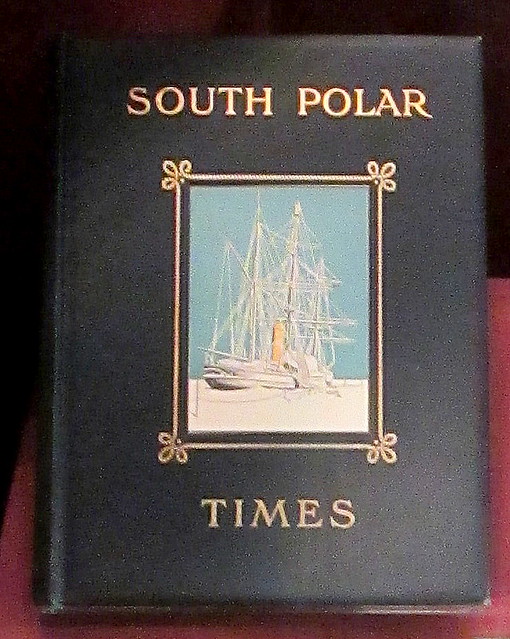
They also wrote their own newspaper articles – for The South Polar Times – to keep their spirits up, some of them drew cartoons, it was all very light-hearted in a black humorous sort of way. When they got back home they were printed and bound with a very small amount of copies being published. They put on plays and shows with the men inevitably getting togged out in women’s clothing.
South Polar Times

Discovery cost £51,000 to build which is the equivalent of £4.1 million in modern currency. She did have a coal-fired steam engine but relied mainly on sail as they didn’t have enough storage space for the amount of coal required for a long voyage.

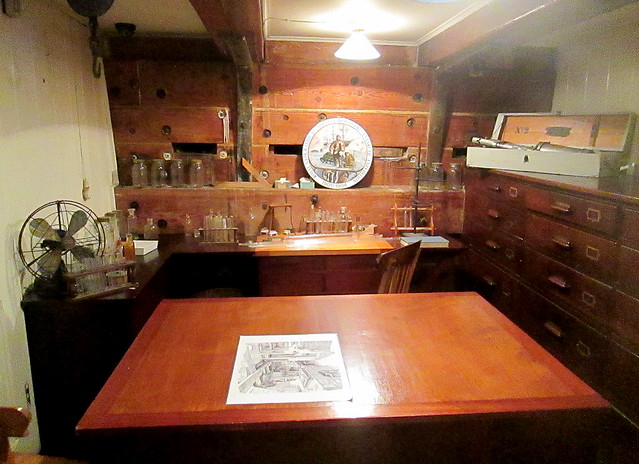
The Antarctic expeditions weren’t only about staking a claim on the territory for Britain, they also conducted important science experiments and made great discoveries.
Science Space

I was away – now I’m back!

I scheduled four posts just before leaving for a short break at the end of last week. We were in fact driving down to Oswestry which is very close to the Welsh border, at one point we had to drive into Wales and then out of it again to reach Oswestry which is a place neither of us had been before.

So what was the reason for our jaunt? Well, it was a football match because Jack is a very loyal supporter of Dumbarton Football Club (soccer). They’re what other supporters would probably call a ‘diddy’ team as they’re part-timers, all of them having ‘proper’ jobs, but this year they’ve done amazingly well in the Scottish Challenge Cup (officially known as the Irn Bru Cup because of its sponsors) and because they won the match at Oswestry they have now reached the final which thankfully will be played in Scotland.

I didn’t go to see the match, I stayed in the hotel and got on with reading Anna Karenina, a much more sensible thing to do, especially on a cold February night. I didn’t go online at all while we were away so I’m just catching up with replying to comments and reading blogs.

I plan to do another RRS Discovery post this week and also to tell you about the books that I bought on our travels – a worrying amount of them, but I just couldn’t say no!

The Town in Bloom by Dodie Smith

The Town in Bloom cover

The Town in Bloom by Dodie Smith is such an enjoyable read, better than I Capture the Castle in my opinion. I think lots of readers enjoy a theatrical setting, if that’s you you’ll probably like this one. It was first published in 1965.

It begins with three old friends getting together for a meal in London. They had all met up forty years previously in 1920s London where they had been involved in theatre work and they had all lived together in a club. There is a fourth friend but she hasn’t turned up.

The story quickly slips back to when they had first met. Mouse (her nickname) is a young Lancashire lass, just 18 years old who has always been star-struck. She hopes to follow in the footsteps of her great-aunt and go on the stage. Her aunt had given her an introductory letter to Rex Crossways a famous actor-manager and Mouse is determined to get a foot in the door of the theatre he heads.

She has enormous self-confidence but sadly little in the way of acting talent, she’s such a likeable person though, quite a charmer in a good way, but she ends up being a bit silly over Rex. This is I suppose a coming of age tale, Mouse certainly grows up quickly with the help of Lilian, Molly and Zelle, but she retains her youthful spirit although she realises that she has in fact become ‘elderly’ as she’s 59 at the end of the book, (that was a bit of a shocker for me – I’m surely not almost elderly?!) But crucially Mouse has plans for the future and hasn’t given up hope of having a successful career in another branch of the arts.

Smith’s descriptive writing is a delight, especially of all the clothes worn on stage and at the various social events, particularly a Suffolk village’s annual celebration.

RRS Discovery at Dundee

One day last week we decided to make our first ever visit to
RRS Discovery which is permanently berthed at Dundee. It’s the ship that took Scott and Shackleton on their first expedition to Antarctica.

We only live about 15 miles from Dundee and have often driven past Discovery but as both boys went on school trips to visit it seemed silly to take them again, so this was our first visit. The city of Dundee advertises itself as Dundee – City of Discovery which is quite smart as not only is it linked with the ship but it’s also known for the high standard of research that goes on at the Universities and Ninewells Hospital.

RRS Discovery bow part

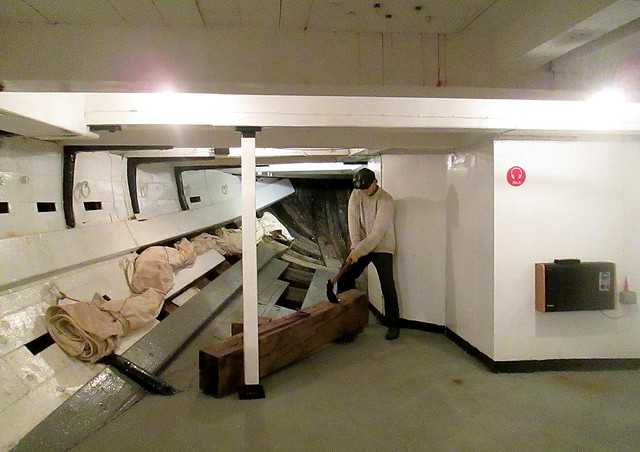
I love ships in general but getting to go on board Discovery was a real treat. It seems amazing that she is so small but travelled all the way to the Antarctic braving all that ice. She was built in Dundee and that’s why she is berthed there now. The Dundee shipyard was chosen to build her because they were experienced at building whaling ships (it was different times) so they knew how to build incredibly strong ships. Below is a photo of the way Discovery was put together for maximum strength.

Structure of wooden sailing ships

We took loads of photos especially of the cramped space below decks, but I’ll leave that post for another day. In the photo below you can see the newly completed building which is the Scottish outpost of the V&A which is yet to open, I can hardly wait!

Discovery and V&A 2