The Z Murders by J. Jefferson Farjeon

 The Z Murders cover

The Z Murders by J. Jefferson Farjeon was first published in 1932, but I read a 2015 British Crime Library Classics reprint which has an introduction by Martin Edwards.

I enjoyed this one, but not as much as his Mystery in White. Farjeon has a lovely turn of phrase at times, but towards the end of this book I began to feel that a major character was just too bizarre for words.

Again, a railway journey features in the story, I wonder if that was a bit of a motif where his writing was concerned. Not that I’m complaining because I think that a train instantly sets the scene for vintage crime.

Richard Temperley is travelling overnight by train from the north of England to Euston in London. Of course those overnight trains always get into London at crazily early times of the morning, it’s too early for Temperley to travel on to his sister’s house so he decides to spend some hours resting in a nearby hotel’s smoking-room.

The man that shared Temperley’s train compartment also ends up in the same smoking-room. He had ruined Temperley’s sleep through constant snoring so when Temperley realises that the man is no longer snoring he checks on him, sure enough – he’s dead – shot. The police are called and so begins a chase around the country from London to Bristol and back north again. In fact they were travelling along a road that I knew well, that’s always a plus for me.

But towards the end the storyline became very unlikely and I would say just about impossible. I think the author got fed up writing and just wound it up.

It’s still worth reading though and if possible I would give it a 3.5 on Goodreads.

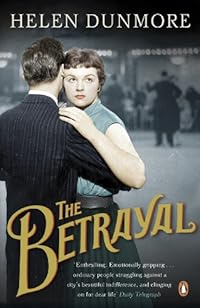
The Betrayal by Helen Dunmore

The Betrayal cover

The Betrayal by Helen Dunmore was first published in 2010 and it was long listed for the Booker prize. Howard Jacobson won the prize that year with The Finkler, I haven’t read anything by him, but I’m wondering if I would have enjoyed that one as much as The Betrayal.

It’s the first book by Helen Dunmore that I’ve read, it was Judith, Reader in the Wilderness who pointed me in the direction of The Betrayal – and what a great read it was.

Given the subject matter this was never going to be an easy or comfy read. The setting is mainly Leningrad and it’s 1952, Stalin is of course in power. Andrei is a young hospital doctor, married to Anna who is a nursery school teacher. They’ve been together for years, all through the siege of Leningrad and they feel lucky to have a two room apartment that they share with Anna’s much younger brother. Like everyone else they are constantly walking on egg-shells, knowing that there are spies everywhere, just waiting to denounce them to the communist authorities.

Andrei is a specialist in childhood arthritis, but when one of his colleagues asks him to look at a child’s swollen leg joint he realises that it is something far worse, he suspects cancer and he knows that his colleague has just handed him a poisoned chalice, because the child is Gorya the ten year old only son of Volkov a man very high up in the secret police. Volkov is a name that strikes fear into everyone.

Sadly it’s too late for Gorya, the cancer has spread and there’s no hope for him. Volkov has to hit out at someone and the doctors are the obvious targets for his rage, and so begins a nightmare for Andrei and Anna.

The Betrayal portrays what seems to me to be a realistic view of life in the Soviet Union, just before the death of Stalin. Hundreds of thousands of people had been sentenced to death or sent to labour camps for life under Stalin’s rule. He had begun with the artists and writers, then moved on to the engineers, after that it was the doctors who were targeted and accused of being butchers and Volkov says ‘We are uncovering an international conspiracy of Zionists working as tools of the Americans, who directed these criminal saboteurs.’ That’s a dictatorship for you and they’re all run on much the same principles!

Thankfully in reality the death (murder?) of Stalin meant that the doctors and many others who had been imprisoned under Stalin’s regime were eventually set free.

This isn’t the sort of book that you an say is an enjoyable read but it’s a real page turner.

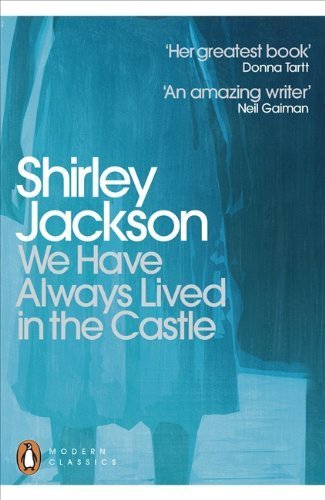
We Have Always Lived in the Castle by Shirley Jackson

We Have Always Lived in the Castle cover

I had no plans to read We Have Always Lived in the Castle by Shirley Jackson, not so soon after reading The Haunting of Hill House anyway, but it almost leapt off a library display at me as I walked in.

Happily I enjoyed this one much more than Hill House. Jackson is known for her quirky characters and relationships and that’s exactly what we have in this book.

The Blackwood family consists of Constance and her younger sister Mary Katherine (Merricat) and their Uncle Julian. They live in a large and grand house where Constance spends her time cooking and Merricat does the food shopping in the nearby village. This is an onerous task as the Blackwoods are more or less outcasts. Uncle Julian is confined to a wheelchair and spends his time looking through his papers.

The family had been much larger and after a disastrous meal there had been only the three survivors. When a member of the extended family turns up things go from bad to worse. Cousin Charles is only interested in the money that he thinks is in a safe. He’s getting in between the two sisters who had until then been devoted to and protective of each other.

It’s a bit like a mystery/fairy tale/horror story rolled into one. A great read.

I’ve just realised that these books probably count as classics and would count towards the Classics Club. What do you think, would you count them as classics?

Guardian links

Spookily – just as I have started reading Shirley Jackson’s books, up pops a biography of her called Shirley Jackson: A Rather Haunted Life by Ruth Franklin. You can read a review of it by Sarah Churchwell here.

There’s also an article by Frances Spalding about the Joan Eardley exhibition at Modern Art 2 in Edinburgh – the one we went to a couple of weeks ago, you can read the article here.

There’s also an article about Doris Lessing’s books by Nick Holdstock, and you can read that here.

In this article Nick Holdstock writes that he had been asked to make an inventory of Lessing’s over 4,000 books. He had hoped that Doris Lessing’s books might have notes in the margins, clues to her work maybe, but very few of her books had been written in.

How do you feel about writing in books? I have to admit that I don’t write anything in books, not even my name, although when I was first married I did do that on bookplates that I stuck in my books. I think that was because I was putting both my own name and my married name on them. I had a friend who used to write her name and the date and place that she bought the book on the inside cover. I thought that was quite a good idea but I’ve never done it myself.

I buy a lot of old books and often they were originally gifts, in fact I’m just about to start reading Miss Mole by E.H. Young and I noticed that it was given to Evelyn Heaton-Smith from Rodi – in July 1937. I love that, I want to know who they were, what sort of lives did they have?

Partly I think that it’s because I have so many books that makes me not bother to write even my name in them. I can’t really understand why anyone would want to write notes in books – to themselves. But I do have just one of my dad’s books and he wrote his name in it, it’s one of the very few examples of his handwriting that I have. Mind you people tend not to write anything at all nowadays, everything’s done on computers.

The Buttonmaker’s Daughter by Merryn Allingham

The Button Maker's Daughter over

The Buttonmaker’s Daughter by Merryn Allingham was just published last month and the sequel is due out in July. I heard about this one from Margaret @BooksPlease and you can read her thoughts on the book here.

I went from not being quite sure about this book to really feeling sorry that I had come to the end of it, then happy when I realised that there was a sequel coming out soon.

The setting is rural Sussex 1914, in the run up to the beginning of World War I. Summerhayes is an estate belonging to Joshua Summer who had made his wealth in the button making trade. His daughter Elizabeth is now nineteen and her parents are keen to marry her off, but during her summer London season when she was presented at court she turned down two good offers of marriage. She’s an artist and has hopes of making a living through her art.

Relations between the Summer family and the owners of the next-door estate are fraught, it was Elizabeth’s mother’s family home, now owned by her brother who is jealous of the wealth that she has married into, but despises them for being in trade.

This book deals with lots of topics in a time of change. Women’s suffrage, arranged marriages, religious bigotry, class distinctions, romance, same sex relationships and Irish politics – it’s all going on.

This is the first book I’ve read by Merryn Allingham and I’ll definitely be reading more. She also writes under the name Isobel Goddard.

I’m swithering between giving it a four or five on Goodreads.

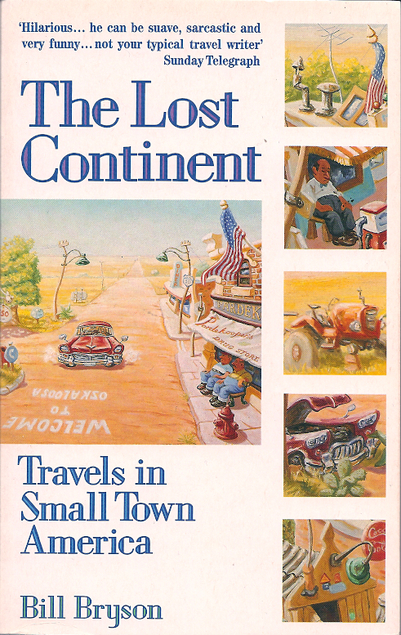
The Lost Continent by Bill Bryson

The Lost Continent cover

The Lost Continent by Bill Bryson is subtitled Travels in Small Town America and it was first published in 1989. In fact this book is probably something of a nostalgia trip for anyone who knows any of the areas mentioned, I imagine things have changed quite a bit in the almost 30 years since he wrote it. I believe that Bryson recently said that in his earlier books he set out to be very amusing and aimed for two laughs on every page, but he has now become more relaxed about his writing and less needy for laughs.

I really enjoyed this book although I am of course reading the laughs with a pinch of salt and allowing for exaggerations, however I had a look at the Goodreads comments and most of them seemed to be by disgruntled Americans who maybe are not very good at laughing at themselves. As we Brits have the most fun laughing at ourselves I find that difficult to fathom, but for that reason I’m wary about recommending this one to people in the US – who may suffer from a sense of humour by-pass.

Bryson comes from Des Moines and as he says – Somebody had to. At the beginning of this book his father had fairly recently died and it set up a nostalgia for the past and the roadtrips that his family went on during holidays, so he decided to revisit some of the places, beginning in the East. He’s on the trail of the perfect US small town, but suspects that such a thing doesn’t exist, a place where kids still go about on their bikes and throw newspapers on lawns (that has always seemed bizarre to me).

Unsurprisingly he discovered that the touristy places are best avoided as they’re too busty and tend to be tacky – but we all knew that. He mentions that Cleveland is disgustingly polluted, and that a river there had so many chemicals in it that it caught fire and burned for four days! He says it has improved a lot but, given that the present President has apparently allowed people to start dumping who knows what in rivers again – it won’t be long before rivers, lakes and wells are poisoned again.

He mentions that when he was in Times Square only two of the forty or so electronic adverts were for American products, the writing for US industry was literally on the walls. One thing that he really missed was the Burma Shave signs – nostalgic things like that will speak to Americans I suppose, but he is of course speaking about things that non-Americans have no experience of.

I’ve only read a few of Bryson’s books but as I recall they’re written from the perspective of a foreigner in England/Britain and US readers seem to have been very happy to laugh at the quirkiness of those crazy Brits, but weren’t so happy when the spotlight was turned on them. He mentions that the first thing an American asks a foreigner is ‘what do you prefer – America or your home country?’ and are always very disappointed when the person prefers home, but why wouldn’t they?!

When Bryson turns to the West he’s really out of his comfort zone and finds that the people there are not nearly as friendly as the Easterners. This is completely opposite from Britain, folks in the west here are always much warmer and more friendly. But maybe those Westerners just didn’t like his accent much. Bryson gets much jollity from southern accents in particular. It seems like America is really an amalgamation of different countries with very different ways of living, and indeed some people thought that he was foreign and he was complimented on his English! Maybe he had lost his Iowa accent after being in England for a few years.

He liked a town called Bloomsburg, a small college town not far from Gettysburg, but it seems that it was just about to be ruined by developers. He loved Fairmount Park in Philadelphia, Mount Vernon. He said at one point that all of the towns in the south were nice, mentioning Macon, Selma, Columbus and Savannah.

This is an interesting and fun read, even if you’re never likely to visit any of the places mentioned, and the information is way out of date.

The Wooden Overcoat by Pamela Branch

The Wooden Overcoat cover

The Wooden Overcoat by Pamela Branch was first published in 1951 but my copy is a 1961 Penguin reprint. I had never heard of Pamela Branch before I came across this book but I’ll definitely be looking for more of her books. Sadly she only wrote four of them.

If you don’t like any comedy at all with your vintage crime then this book won’t be for you, but I found it to be an absolute hoot.

It begins with a murderer getting off with it, the jury has just brought in the verdict, but the reader knows that Benjamin Cann had indeed strangled his girlfriend. When he gets out of The Old Bailey he is befriended by Clifford Flush who takes him to his house in Chelsea, it turns out that it’s the headquarters of a ‘club’ and all of the members are murderers who have got off with it. For very good reasons they’re all very scared of each other.

The house next door is inhabited by two married couples who are house sharing, they’re all artists of some sort and have decided to start taking in lodgers. Benjamin Cann is their first lodger and it isn’t long before murders ensue, but not at all as you would expect.

This book has some wonderful characters and hilarious situations. It’s a real shame that it wasn’t made into a film by Ealing Comedies, along the same lines of The Ladykillers (1955), it would have been brilliant. The BBC have dramatised it for radio apparently but it isn’t available on the iplayer at the moment.

If you enjoy comedy along with your vintage crime then you’ll love this one. I was lucky enough to pick this one up for about £1 in a local shop but the ones I’ve seen on the internet are stupidly priced. Yet again I wonder if anyone ever buys these wildly priced books.

If you are wondering what I mean by The Ladykillers you can see it on You Tube below.

Books, books, books ….

At the moment I’m reading two books, which isn’t like me, I tend to concentrate on one book at a time. But I bought Bill Bryson’s The Lost Continent – Travels in Small Town America in a charity shop the other day and started reading it on the way home. So I’m reading that one downstairs now while I have my morning tea. It’s a fun, light read.

Upstairs (bedtime and afternoon reading) I’m reading The Silver Darlings by Neil Gunn. It’s a readalong for the Read Scotland 2017 Challenge and I’m way ahead with this one as it’s scheduled for sometime in March. I’m enjoying it although at the moment I’m thinking that some of the sea-faring parts could have done with being a bit shorter.

I’ve finished reading Chatterton Square by E.H. Young, an author I had never read before despite having the book for years (Virago). I loved it but that’s a readalong on Undervalued British Women Novelists 1930 – 1960 so I’ll blog about that one within a couple of weeks. Have you read anything by E.H. Young?

The Silver Darlings is a library book, I’ve only just bought the Bill Bryson book and I made the mistake of popping into a north-east Fife library that I don’t normally visit today, and the upshot of that is that I came out with The Z Murders by J.Jefferson Farjeon.

So my great intention of concentrating on my own book piles has like most plans – gone to hell in a handcart, and although I compiled a list of the first ten Scottish books I intended to read for the Read Scotland 2017 Challenge – and the second Scottish book didn’t even appear on that list, it did however jump out at me from a library shelf, and I just couldn’t ignore it. For me libraries are a bit like those shops that have a mish-mash of stuff for sale, end of lines and last year’s stock such as TK Maxx. If by chance you see something there you want then you had better buy it, or borrow it if you’re in a library, because you just might never see it again.

There’s no cure for it you know!

the Guardian links

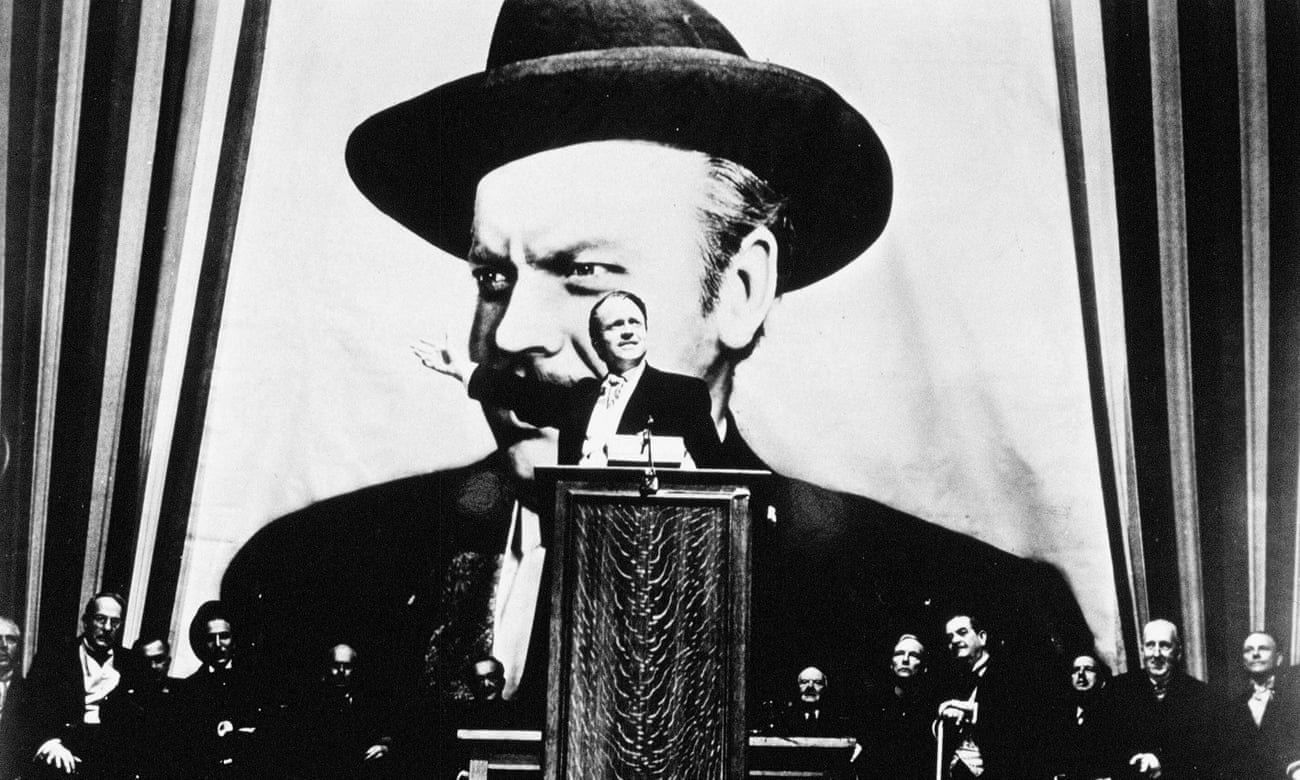
Citizen Kane

The front page of the Guardian Review section says:
Could it happen there? Fascism in American fiction from Sinclair Lewis to Philip Roth. It’s a fascinating read by Sarah Churchwell and you can see it here.

Neil Gaiman writes about his new book of Norse mythology, Brexit and being an Englishman in New York. You can read the interview here.

Claire Armitstead writes about a new book called Heartthrobs by Carol Dyhouse – Byron, Marc Bolan, Christian Grey …. how women’s fantasy lovers have changed over time. I have to admit that as a young teenager my bedroom walls were covered by Marc Bolan/T. Rex posters,

Marc

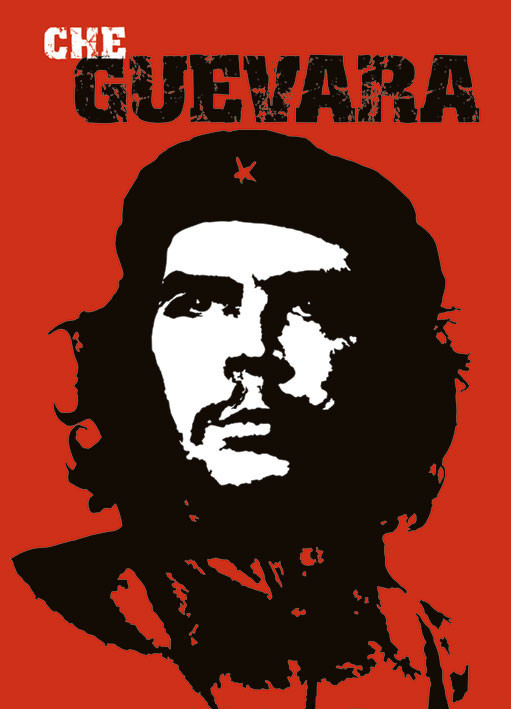
and then came that Che Guevara poster! You can read the article here.

Che

The Haunting of Hill House by Shirley Jackson

The Haunting of Hill House cover

The Haunting of Hill House by Shirley Jackson was first published in 1959 and it’s the first book by the author that I’ve read. Lots of bloggers seem to have been reading this book recently and so I thought I would give it a go.

I have to say that I was less than enthralled by the book, but you know what it’s like, maybe it just wasn’t the right time for me to be reading something like this. With everything that’s going on politically at the moment it might be best if I stick to comfort reads for a while!

If you haven’t read the book – it’s about an old house situated in a remote area and the people in the nearest town won’t even admit the place exists. Doctor Montague has been interested in paranormal experiences for years and he arranges for two young women – Eleanor and Theodora – to stay with him at Hill House along with Luke the young owner of the place.

The house has been built strangely, it’s all a bit out of kilter and that goes quite a long way to promoting a strange atmosphere. It wasn’t strange enough for me though. If you’re going to write a ghost story then there’s no point in being niminy-piminy (dare I say spiritless) and restrained about it.

I must admit that I might have been influenced by the fact that I’ve actually lived in a house that was spookier than Hill House, and it didn’t freak me out! Well not much.

I’ll try a couple more of Shirley Jackson’s books sometime though.