Bookish Guardian links

I recently enjoyed reading Helen Dunmore’s book The Betrayal, the first book of hers that I’ve read. So I was sad to read that she is seriously ill with some form of cancer that has a poor prognosis. She has written an article about facing mortality.What do we leave behind when we die? she asks.

There’s a new book out about Raymond Chandler and his work called Raymond Chandler: The Detections of Totality by Fredric Jameson. You can read an article about it here.

The author Elizabeth Strout writes about her working day here.

The retired MP Roy Hattersley has written an article comparing Brexit with Henry VIII’s break with Rome. You can read it here.

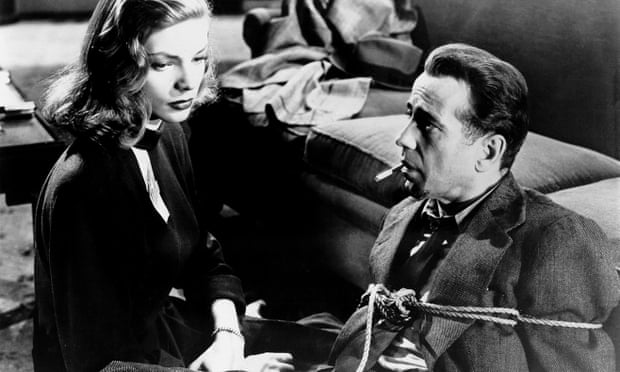
And just because I love Bogart and Bacall below is a still from The Big Sleep.

Bogart

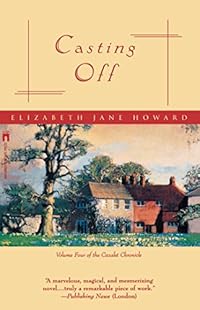
Casting Off by Elizabeth Jane Howard

Casting Off cover

Casting Off by Elizabeth Jane Howard was first published in 1995 and until a few minutes ago I had thought that it was the last in the Cazalet series, but apparently the last one All Change was published in 2013, the year before Howard died.

I know that a few blogpals are intending to read this one soonish so I don’t want to say too much about the storyline that runs from July 1945 to 1947.

You would think that people would be relieved beyond belief that the war in Europe was over, but of course for lots of people it meant the end of a time when they had plenty to do, they had had a sense of achievement or importance as they had been needed in the various voluntary organisations helping the war effort. Everyone is trying to get used to the changes although of course some things aren’t changing quickly enough, such as the rationing which is getting worse.

Members of the Cazalet family are beginning to move back to London instead of all being at the family country home – Home Place. Relationships are changing, some might not survive.

Three quarters of the way through this book I was feeling quite depressed by it as I really didn’t like the turn things were taking, and I couldn’t see how the author would get the many loose ends tied up by the end, and I had been under the impression that this was the last book.

I ended up being fairly well satisfied with it, especially as the characters that I particularly disliked seemed to be getting their richly deserved come-uppance. I’ll now have to get the last in the series All Change.

I’m thinking about buying the DVDs of the BBC series because I didn’t see it when it was on TV. Did any of you watch the series and if so did you enjoy it?

Recent book purchases – Mary Stewart

I’ve been looking for these Mary Stewart books and although I had been hoping to find hardbacks in a secondhand bookshop, I decided to settle for the copies in the photo below when I found them in a Stockbridge, Edinburgh bookshop. The covers are so of their time. Airs Above the Ground is a 1967 reprint, it was originally published in 1965. Mr Brother Michael was published in 1959 but this reprint was published in 1971 – the eighth impression.
Mary Stewart
I did read a lot of Mary Stewart’s books way back in the 1970s but I think that I missed Airs Above the Ground and My Brother Michael back then, so I’m really looking forward to reading them soon – for the Read Scotland 2017 Challenge of course.

If you are a regular visitor to ‘Pining’ then you’ll realise that Stockbridge in Edinburgh is my favourite stamping ground for books, but when I’m there I never take any photos of the place, I’m too busy perusing book and charity shops and also it’s quite a busy area so it would be impossible to take photos without getting a lot of people in them. So if you want to know what Stockbridge looks like have a keek here.

The Heart of a Garden by Rosamund Marriott Watson

Heart of a Garden Book Cover

I recently bought The Heart of a Garden by Rosamund Marriott Watson. I had never heard of her before but she was a poet, nature writer and garden writer, and The Heart of a Garden contains poems as well as descriptions of particular gardens. Sadly this book only has black and white photographs of gardens (obviously not colour given how old it is) but I had hoped that it would have lovely watercolour illustrations as many books of this type have. It was first published in 1905 but my copy is a 1907 reprint.

I must admit that I saw the book online and decided to buy it just because I loved the cover – yes, shallow I know! But luckily it looks like it’s going to be an interesting read anyway.

I was amazed to discover that despite the fact that the author was born in 1860 and died in 1911 she led what I would call quite a ‘fast’ life. She and her first husband divorced, she later eloped with an artist, then divorced him and ran off to live with a novelist whom she never married.

That’s the second Victorian woman in a week that I’ve read about who led a somewhat irregular life and it didn’t seem to reflect on their lives in any sort of negative way. Mind you I think that if people had money then they were probably judged entirely differently from those in the so called lower orders, maybe they still are!

Into the Whirlwind by Eugenia Ginzburg

 Into the Whirlwind cover

One day a couple of weeks ago I entered the word Persephone into Fife libraries’ catalogue and it seems they only have a handful of Persephone publications. I had already read most of them, so I decided to request Into the Whirlwind by Eugenia Ginzburg. I must admit I had never even heard of the author, but the book is her autobiography, telling of her horrendous experiences when she was a victim of one of Stalin’s purges in the early 1930s.

As a member of the Communist Party and a writer and university teacher she had led a comfortable life, especially as she was married to a Party official. Holidays in luxury Communist Party hotels had been normal for them although they weren’t quite as well off as some others. They only had a Ford car whereas the wealthier officials had Buicks and Lincolns. That information in itself proves that real Communism has never been tried, when you consider how abject was the poverty that most ordinary Soviet citizens suffered.

Ginzburg may have been an intellectual but she lacked street-wise commonsense, and when questions began to be asked about a work colleague Ginzburg assumed that as she hadn’t done anything wrong then she couldn’t be in any trouble. Her old mother-in-law knew differently though, she had the experience of living through Tsarist reigns of terror and understood that things were much the same with Joseph Stalin in power. Ginzburg’s mother-in-law advised her to disappear to the country until things cooled down and the authorities got tired of looking for her, a ploy that apparently did work for many, but Ginzburg knew better and the result was she was eventually sentenced to ten years in prison for terrorism. She actually ended up serving a sentence of eighteen years.

This was the beginning of Stalin’s purges of the Communist Party. He was getting rid of anybody he thought might be a rival to him and the prisons and camps were jam packed with innocent people – Communists, religious people, foreigners including ballet dancers and film stars.

Obviously this isn’t a comfy read, but it is fascinating and it makes you wonder how people could survive such terrible treatment, starvation and punishment cells, being constantly freezing and frostbitten in winter and sweltering in summer and having to do heavy work like tree felling in 60 degrees of frost, wearing just rags. It’s hard to feel that those people were the lucky ones but millions were shot immediately and I’m sure a lot of prisoners must have wished that they had been too.

There is an afterword by Rodric Braithwaite, he was the British Ambassador to the Soviet Union in the 1960s and 80s, and in it he explains that Eugenia Ginzburg actually had more favourable treatment than most prisoners as she had been in the Communist party and was seen as being a member of ‘the intelligentsia’.

These purges started in 1934 and the really depressing thing is that they continued until Stalin’s death in 1953. It’s just as well that those incarcerated in 1934 didn’t know that, many of them lived in hope of their god Stalin coming to their rescue, never being able to believe that it was Stalin who was at the back of their misfortune. After Stalin’s death Nikita Khrushchev set about releasing political prisoners and ‘rehabilitating’ the reputations of those who had been vilified by Stalin.

This book is an account of Ginzburg’s first three years of imprisonment and I think she wrote another book years after that, I’ll have to see if I can get a hold of that one.

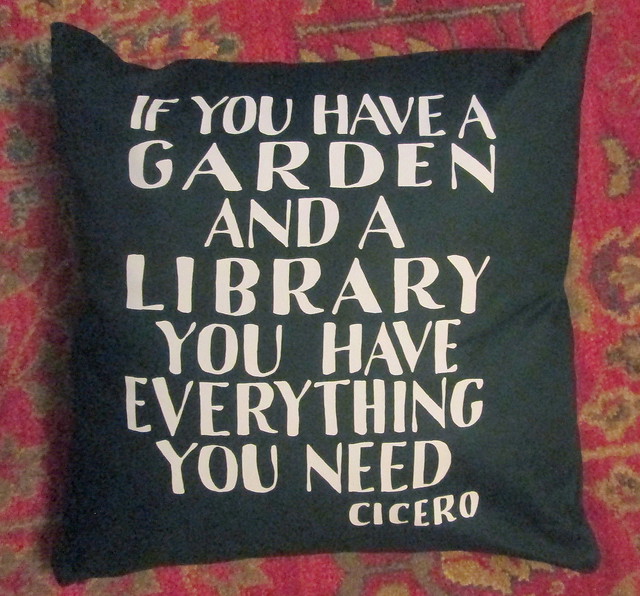
Cicero quote cushion

I got some bookish presents at Christmas, including the cushion pictured below.

Cicero Quote Cushion

I had never heard of the Cicero quote before:

IF YOU HAVE A GARDEN AND A LIBRARY YOU HAVE EVERYTHING YOU NEED

but I completely agree with it, what a wise chap he was. It has made me think that I should get down to reading some serious Cicero. I think I might have read some when I was at school, in Latin.

I’ve had a look online for any information about a garden belonging to Cicero but haven’t had any luck finding anything, so his garden must have disappeared – as they often do.

Mary Poppins by P.L. Travers

Mary Poppins cover

At Christmas I watched the film Saving Mr Banks which is about the terrible amount of wrangling that Walt Disney had to go through to get P.L. Travers to allow him to turn her Mary Poppins books into a film. Actually it’s about the only film that I’ve liked with Tom Hanks in it, I’m not a fan. I didn’t really know much about P.L. Travers- beyond that she hadn’t been at all happy with what had been done to her books, anyway the film Saving Mr Banks was enjoyable and it made me think that it was about time that I read at least one of the Mary Poppins books.

Luckily I found a paperback copy of the first book at the Oxfam bookshop in Morningside, Edinburgh. The book was first published in 1934.

It was an enjoyable read and I was surprised that it was really quite similar to the Mary Poppins film, well the bits of it that they used anyway.

Mary Poppins herself comes across as being less prim and snooty than her film version. Presumably Walt Disney thought it would be a good idea to make her ‘posh’ English. I have heard that all English accents are seen as being upper class in America though – or they were in the past.

This was just a good light read that I embarked on when I was in the midst of a heavy cold, and it filled in one of those gaps that I have in children’s literature, I think I went on to adult books too early really.

At the same time I bought this one I also bought a book called The Family from One End Street by Eve Garnett. I hadn’t even heard of it but it’s apparently a children’s classic and it won the Carnegie Medal. Have any of you read it?

Miss Mole by E.H.Young

Miss Mole by E.H. Young was first published in 1930 but my copy is a 1934 re-print, at least the tenth time it had been re-printed so it was obviously a very popular book from the start.

To begin with I really disliked Miss Hannah Mole, there’s nothing attractive about her in looks or character, she seems to have a fleeting relationship with the truth and is quite happy to lie her head off if it suits her.
…Hannah was not scrupulous about the truth. She was not convinced of its positive value as human beings knew it, she considered it a limiting and embarrassing convention. The bare truth was often dull and more often awkward, while lies were a form of imagination and a protection for the privacy of her thoughts and, in a life lived in houses which were not her own and where she was never safe from intrusions.

I ended up admiring her though, she’s quick witted, humorous and kind – what more could you want in a friend?

She’s an odd looking person, almost 40 and dressed in peculiar clothes, although she never skimps on her footwear as she knows that people judge you by your shoes. She’s had a succession of jobs, mainly as companions to wealthy women, and she’s always being sacked from them as she’s not exactly dedicated to the work and she’s insolent to them, and when she gets a chance of a job as a housekeeper to a non-conformist minister whose wife has died she jumps at the opportunity to move up and look after his family and home.

For a large part of the book it’s swathed in mysteries such as – why is Hannah so poverty stricken if she has her own cottage that she’s renting out? There’s a hint of a man in the background, her sorrowful past. But in the end it all works out satisfactorily. This is the second E.H. Young book that I’ve read for the Undervalued British Women Novelists Group on Facebook.

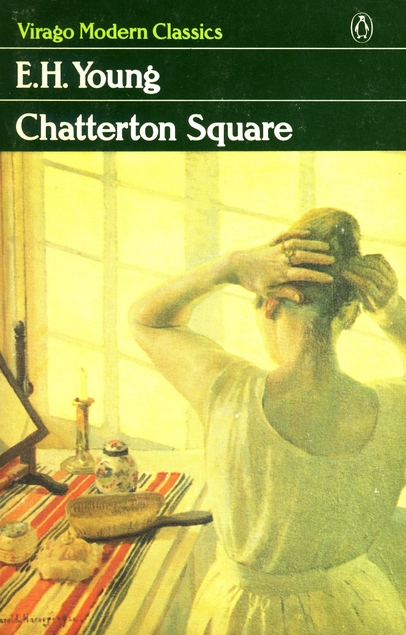
Chatterton Square by E.H. Young

Chatterton Square cover

My copy of Chatterton Square by E.H. Young is a Virago reprint from 1987 and I’m ashamed to admit that I’ve had it sitting on a shelf all those years unread. It was the Undervalued British Women Novelists Facebook Group that I’m a member of that spurred me on to dust it off and read it at last, and I’m so glad that I did. It was my first book by E.H. Young and I loved it, it’s the last book that she wrote and is possibly her best one, subsequently I’ve read her Miss Mole and I didn’t enjoy that one quite as much.

Chatterton Square is set in Upper Radstowe, (Bristol) it’s an area that’s slightly past its best but not quite down at heel. The Fraser family is a large one and their house in the square is owned by Rosamund Fraser, it had been built by her grandfather and she has always lived there. Her husband Fergus has abandoned her and his family and is thought to be living somewhere in France. His absence is a bit of a relief all round as his rages and bad behaviour in general had upset everyone. Miss Spanner, an old family friend has moved into the house since his departure.

A house across the road has been rented by the Blackett family. Mr Blackett has been born thirty or forty years too late, he’s really a Victorian and tries to control everything, even down to the rather antiquated clothes that his wife wears. He has an enormous ego and thinks that he’s admired by all women. In fact he isn’t even admired by his wife, she had married him as a means of escape from her even more forbidding father, and her honeymoon in Florence had been a ghastly shock to her, something she had never really got over. The fact that her eldest daughter was conceived then and named Florence ensures that she has a constant reminder of it.

The two families begin to fraternise, something that Mr Blackett isn’t very happy about.

Unfortunately for Bertha Blackett her husband is quite besotted by Rosamunde although he claims to dislike her, he is I think annoyed by her ‘hold’ over him despite the fact that Rosamunde barely looks in his direction. Bertha ends up being the recipient of his lust, although that’s all very delicately dealt with. He insist on jamming their double bed up against a wall, meaning that Bertha is stuck between him and the wall, having to clamber over him to get out! Bertha knows her husband inside out but he is absolutely clueless about her character and wishes, she’s just an extension of him as far as he is concerned. He’s shocked when he discovers that she has been reading a different newspaper from him while he’s at work. He’s a bear of very little brain.

There’s so much to say about this book, but I’m just giving a wee flavour of it here, it’s set just as Chamberlain is doing all that toing and froing between Berlin and London in an attempt to avert World War 2. The possibility of war hangs over the whole book with Blackett absolutely sure that there won’t be another war (he had dodged the last one). The spectre of World War 1 follows all the older characters.

Everybody else is quite sure there will be war, particularly the ones who had been in the first war. World War 1 hangs over everything I think, Fergus has almost certainly been damaged by his experiences in that war, hence his moods and rages, things that Rosamunde had probably not bargained for when they were first married. Despite everything Rosamunde is an optimistic woman, which is just as well.

The women are by far the more important characters, the men shadowy compared with them and I love the way Bertha Blackett deals with her obnoxious husband, she’s so much brighter than he is.

Miss Spanner seems to be a favourite type of character with E.H. Young. She’s similar to Miss Mole in many ways and both characters have a habit of ‘knocking’ or pushing their noses at times of distress. I note also that another of Young’s books is titled The Misses Mallett – Young seemed to have been fond of naming spinsters after tools!

Chatterton Square has an afterword by Bel Mooney. I intend to read all of Young’s books eventually.

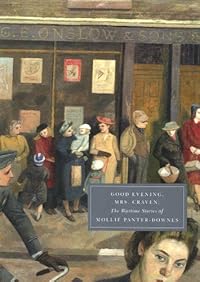
Good Evening, Mrs Craven by Mollie Panter-Downes

 Good Evening, Mrs Craven cover

For a week now our home has been a bit of a centre of misery as we’ve both had rotten colds. Jack got it first and generously passed it on to me – share and share alike! With explosive sneezing bouts occurring frequently we’ve both been too exhausted to do anything much, but when I’ve had the energy I’ve been reading.

But decisions, decisions – what should I read? I tried The Black Arrow by Robert Louis Stevenson. It’s on my list of Scottish books to read for the Read Scotland 2017 Challenge. But I only got a couple of pages into it before realising that my brain was not going to cope with the medieval style of English that it seems to be written in. I gave it up intending to go back to it when I’m back to normal.

I then picked up A.J. Cronin’s The Citadel, but the subject matter of medicine and Harley Street doesn’t appeal to me at the moment. So I put it down again.

I couldn’t find my copy of The Young Pattullo by J.I.M. Stewart – so opted to start reading Good Evening, Mrs Craven: The Wartime Stories of Mollie Panter-Downes. It had just dropped through our letterbox a few days before. It turned out that these short stories – often very short were just perfect for my mood.

They were originally published in The New Yorker magazine, giving people in America a flavour of what life was like for women in wartime Britain. There’s a date at the beginning of each story, presumably when it was originally published, the first one being 14 October 1939, so just a month or so into the war. The early stories are quite light-hearted and amusing but towards the end of the book nerves are getting frayed as food shortages and changes in life-styles begin to bite.

This is the first book by Mollie Panter-Downes (I can’t help it but her name always makes me smile) that I’ve read, and I’ll definitely be reading more. This one just hit the spot exactly.

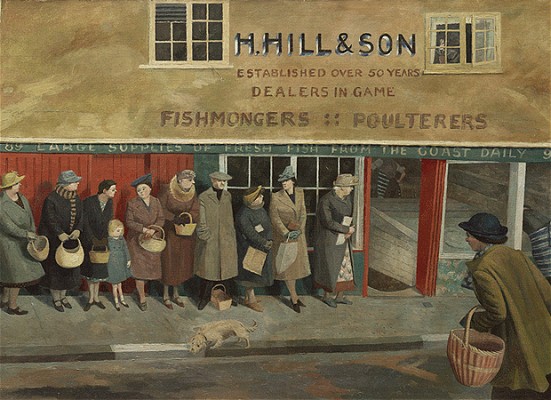
I know that a lot of people prefer the original plain grey Persephone covers but I was particularly pleased that this one has as a cover which is one of my favourite World War 2 paintings, capturing what must have been the reality for people, women in particular, standing in queues for hours on end in an effort to get enough food to feed their family. The painting is by Evelyn Dunbar.

Evelyn Dunbar