Noble Descents by Gerald Hanley

Noble Descents cover

Recently I read Kipling’s Kim with its colonial India setting, I have to say that I didn’t enjoy it that much, but just a couple of weeks later I picked up Noble Descents by Gerald Hanley which has a post Indian independence setting. I enjoyed that one far more than Kim.

In Noble Descents the characters have chosen to ‘stay on’ in India after independence. Of course for many of the so-called British people India was really their home as they had never even visited England and their family had been in India for generations.

Others had come out from Britain where the jobs they could get were rather low in status and poorly paid. The prospect of living in India where they could afford to have ten servants to shout at was what drew them to India.

Colonel Tim Bingham is one of those ‘staying on’, he’s retired from the army and has always had an affinity with India and an interest in the culture and religions. His closest friend is a Maharajah who feels he doesn’t fit in at all in his own country. He has been educated at an English public school and that culture is the one that he is most comfortable with. After the death of his wife and child the Maharajah feels even less inclined to be what he has been brought up to be.

This is a very readable and at times witty tale involving poisonous marriages and poison pen letters and people from Hollywood intent on making a film.

I found it quite amusing that there are a few characters in it who are making a lot of money from the books they are writing – a very unusual happening in the publishing world and probably wishful thinking by the author.

I was pleased to see my favourite perfume Ma Griffe mentioned a few times – that exquisite perfume as it was described, one character tries to get his boring wife to wear Ma Griffe – but she obviously just wasn’t classy enough!

Ma Griffe by Carven is a Chypre Floral fragrance for women. Ma Griffe was launched in 1946. The nose behind this fragrance is Jean Carles. Top notes are aldehydes, gardenia, green notes, asafoetida, clary sage and lemon; middle notes are iris, orange blossom, orris root, jasmine, ylang-ylang, lily-of-the-valley and rose; base notes are labdanum, sandalwood, cinnamon, musk, benzoin, oakmoss, vetiver and styrax.

India isn’t a favourite destination of mine book-wise but this book had made me think that I might read some more, maybe some of Paul Scott’s books would fit the bill. Have any of you read any of his books?

I Capture the Castle – from the Guardian

The Guardian review section this week has an article about Dodie Smith’s I Capture the Castle by Evie Wyld in it that you might be interested in reading if you are a fan, you can read it here. I enjoyed the book when I read it for the first time fairly recently – probably I would have loved it more had I read it when I was much younger. I have since enjoyed some of her other books even more.

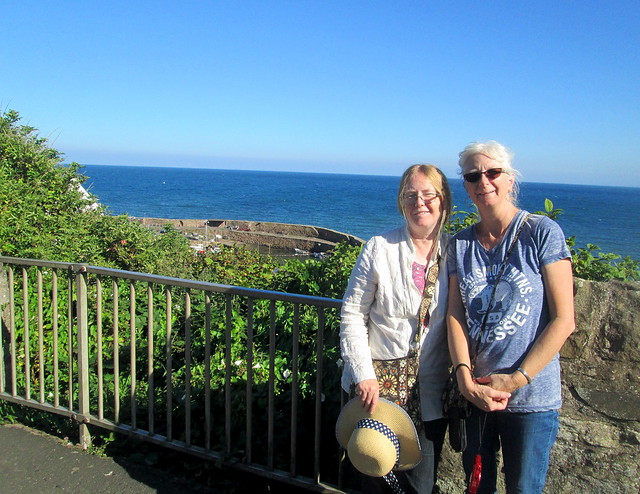
Apart from reading the Guardian I’ve been busy touring around with Peggy, with Jack doing the driving. You can read her post on Cove here.

Headless Angel by Vicki Baum

Headless Angel over

Headless Angel by Vicki Baum was first published in 1949 and I believe it is sometimes titled Clarinda and it has an intriguing beginning. The prologue starts:

Now that September is blue and hazy upon the land, I like to walk up to my grave in the early afternoon and remain there until in the slanting sun the shadow of my tombstone grows long and lean and begins licking at the hem of my skirt.

It’s Clarinda who is speaking and she is a young married woman living in Weimar where the writer Goethe is a frequent visitor to her house, she has known him since she was a child and he’s a great friend. Clarinda’s husband Albert is a bore as well as a philanderer and when an astonishingly handsome young Spanish man visits the neighbourhood she is bowled over by him and they end up running off together. Too late she discovers that just about everything her beloved Felipe tells her is a lie, he’s a dreamer and a gambler, but she’s still hooked on him.

Because of the political situation in Spain Felipe isn’t able to go back there so it’s to Mexico that they go to live. He’s well known there and pins his hopes on being able to make money out of a mine he owns. It’s the boom and bust existence of a gambler and Clarinda copes with the changes in her life – whether she’s living the life of a princess or a pauper.

The setting is the 1800s around the time of the Mexican wars for their independence from Spain and I was impressed that Vicki Baum, an Austrian Jew had been able to write a book around an era in history that must have been completely alien to her, she moved to the US in the 1930s when one of her books was made into a film. It was a very lucky move for her as her books were banned in Nazi Germany. She must have been drawn to that era in history when men were men – and she could dress her hero in leather finery and a cloak, I couldn’t help thinking of Dirk Bogarde while I was reading this book. He would have been perfect to play the part of Felipe. Think Zorro and you get a picture of how Felipe liked to look, minus the mask.

I really like her writing, I suppose this book could be described as a romance, but it’s more than that and Clarinda is such a good strong character. It’s a shame that Headless Angel doesn’t seem to have been reprinted as I think it must be quite difficult to get hold of a copy, I was just lucky to pick it up in a second-hand bookshop.

Baum’s earlier books were definitely written in German and I would love to know if she eventually switched to writing in English as this book doesn’t mention a translator.

Visit Scotland – City Breaks

If it’s a city break in Scotland that you’re looking for then you should have a wee keek at the latest post from Visit Scotland which you can see here.

I laughed when I read that there are about 30 golf courses within an hour’s drive of the city (all the cities presumably). I reckon there are about 300 golf courses within an hour’s drive from me!

East Neuk of Fife, Scotland

Yesterday we picked Peggy of Peggy Ann’s Post up from Edinburgh airport, she was here visiting us last year but we didn’t quite manage to visit all of Scotland that time, despite running around like crazy – so she’s back for part two! Luckily she brought the good weather with her, for a few days at least.

K & P

Can you believe that we didn’t have time to take her to the East Neuk fishing villages last year? It’s true that you tend to overlook the attractions right on your own doorstep. Anyway we rectified that today.

You can see images of the Fife fishing villages here.

You can see Peggy’s recent blogpost and just some of the many photos she took here.
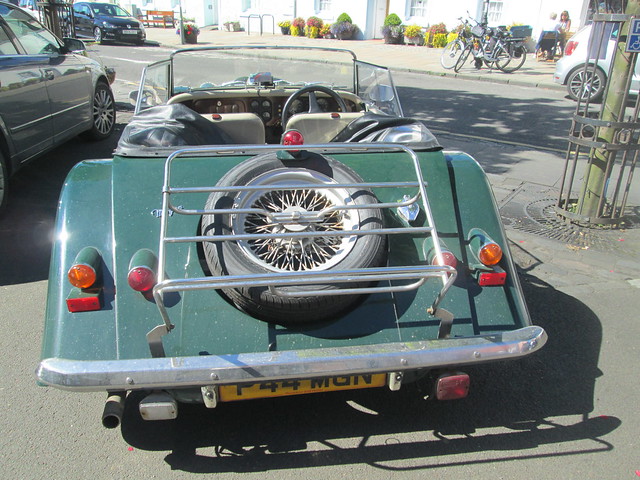
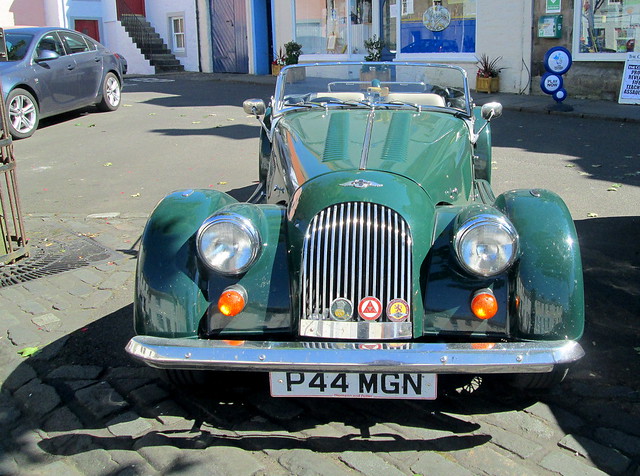
I didn’t take many photos of the villages as I’ve taken so many before. But look what I spotted parked outside a shop in Pittenweem.

car 3

Yes, a British Racing Green Morgan. I knew that that is Joan of Planet Joan‘s dream car so I had to take some photos for her. It’s possibly just as well that Joan wasn’t with us, she might have been tempted to at least sit in the car and vroom vroom!

car 1

car 2

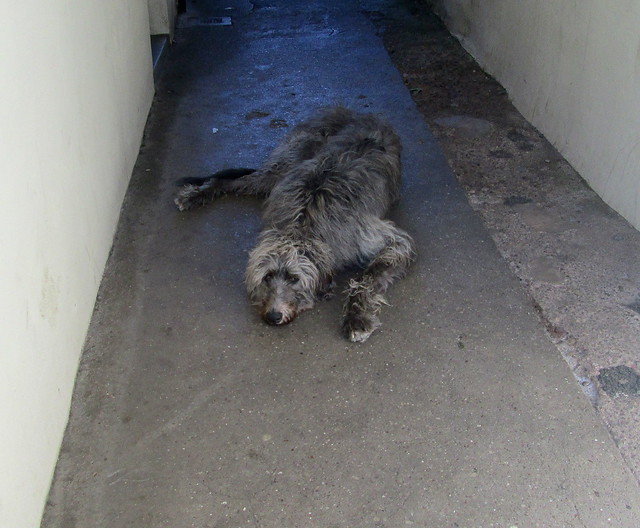
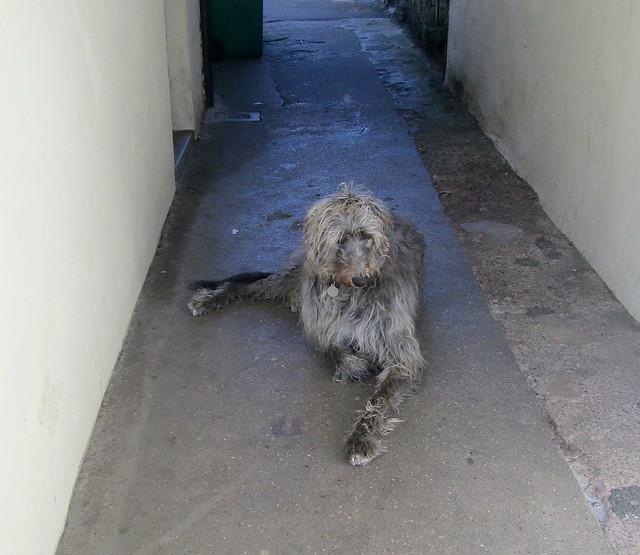
Then Peggy spotted an Irish Wolfhound in the shade of a ‘close’ across the road, trying to stay cool in the unusual heat. So Jack took a couple of photos just for Joan.

hound 1

I don’t know if this hound looks anything like her beloved Murphy did but I suspect that if she had been here she might have been very tempted to abduct the dog and the car. Too tempting!

hound 2

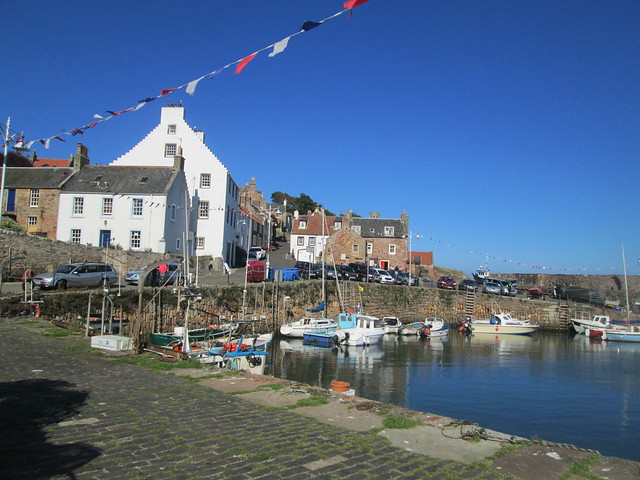
And this is what Crail harbour looked like when we got there.

Crail 13

That was a great day out for the first day of Peggy’s holiday with us, I hope the rest of her time is as good but I suspect the weather isn’t going to hold out that long.

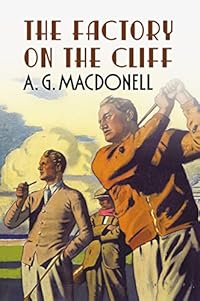
The Factory on the Cliff by A.G. MacDonell

 The Factory on the Cliffs cover

The Factory on the Cliff by A.G. MacDonell was first published in 1928 but it has been reprinted by Fonthill Media. Originally this book was published under MacDonell’s pseudonym Neil Gordon. MacDonell is best known for his book England, Their England. Published in 1933 it’s a satirical comedy on English society and its eccentricities. It won the James Tait Black Award in 1933.

The Factory on the Cliff is written very much in the style of John Buchan, in other words a sort of ‘boys own adventure story’. The story begins with George Templeton on a golfing holiday in Aberdeen, Scotland but when he damages his thumb while using the starting crank on his car it means he can’t golf. He’s the sort of chap who hates walking, unless he happens to be whacking a wee ball along as he goes.

Desperate for some exercise he is forced to take a walk and comes across a group of men acting suspiciously. They’re looking for something but claim that they aren’t. Later George finds a type of Mills bomb (grenade) in the undergrowth and realises that that is what they were looking for.

I think that this sort of adventure tale was very popular when it was first published, especially amongst the many men who would have been involved in the First World War. It involves germ warfare and scientists and Scotland Yard does get involved albeit at a distance. The characters had all been soldiers and in some way it was something that they missed, as apparently men did. There’s only one female character and she is there as a bit of eye candy for the men.

I must admit that I’m happier reading the country house sort of murder mystery but I still enjoyed this book. I also love the cover, very much of its time, but I’m not so enamoured with the size of the book, one of those larger format ones which is just not going to fit on the shelf where I have the rest of my vintage crime books. Annoying.

Archibald Gordon MacDonell was born in India but he regarded himself as a Scotsman so this one counts towards the Read Scotland 2016 Challenge.

Garden Birds

I’m always reading that the common sparrow is getting to be very rare but in my garden we are swamped by them, and it was just the same in my old garden. Not that I’m complaining though, they are dull compared with most birds but they do have cheery personalities and I’ve noticed that the sparrows here are a lot less argumentative than the Kirkcaldy sparrows who often got into noisy chirping fights with rival squads of sparrows.

garden birds 2

Look a bit closer and you’ll see that there are well camouflaged sparrows in there, it’s an old wash-hand basin covered by a black bin bag. The birds use it a lot and I probably won’t bother to make a pond for this garden as I noticed a few weeks ago that there was a lot of midge larvae in the basin. I don’t really want a big pond full of them.

garden birds 2

I remeber being told as a child that robins only got their red breast feathers in the winter but in Fife there are red breasted robins around all year. This cheeky chappy stood on my garden bench surveying the place for ages last Saturday.

Garden birds 3

In fact the bench is used by the birds far more than it is used by me. I occasionally flop onto it to have a rest from weeding and to straighten my back out. But as you can see it’s a favourite spot for the sparrows too.

Garden birds 7

Sparows and robins – not very exciting I hear you say but I swear to you that I saw an eagle circling around and calling in a high pitched tone today on my travels, but did I have a camera or binoculars? Did I whack. I’m going to have a look for it tomorrow though as you never know your luck!

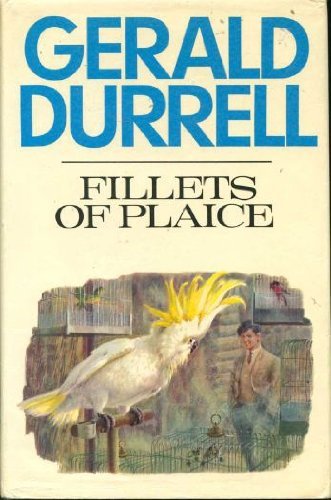
Fillets of Plaice by Gerald Durrell

Corsair, 2015, 352 p.

Fillets of Plaice cover

If you enjoyed watching The Durrells on TV recently then you’ll probably enjoy reading Fillets of Place by Gerald Durrell. It was first published in 1971 and it consists of just 191 pages with five chapters, each of them about a particular Durrell escapade.

The settings are all over the place, reflecting some of the varied locations that Gerald Durrell lived in over the years. His first job as a youngster in London was in a pet shop where he knew much more about the animals than the man who ran the place. Gerald seems always to have had a knack for making friends with unusual characters so this adds up to an entertaining read.

The only gripe I have about the book is that I found it a wee bit disconcerting to go straight from him being a 15 year old in London to the next section which has him at least double the age and living in colonial Africa. Just one of the chapters features Corfu and his family but that is not a problem, he met up with plenty more interesting people in his travels. He does mention that the Ibo – a Nigerian tribe spent their time crossing the border into Cameroon to con the Cameroonians out of whatever they had, and I couldn’t help wondering if that is the same tribe that tries to con people on the internet nowadays!

In the Corfu section it’s mother’s birthday and as the Durrells are all rather self-centred the poor woman has been given presents that they all want themselves. After telling them not to remove her beloved ice box from the kitchen they of course do just that, intending to take it on the boat as they sail off for the birthday picnic. It is of course a disaster.

It’s incredible for me to think that this book was written getting on for 50 years ago and he was writing about the past then, so a lot of what he is writing about seems like another world now, colonial Africa in particular. But even in the 1970s I was bothered by Gerald’s obsession with collecting and caging wild animals. I can’t imagine why such an animal lover would want to do that, he mentions having a pair of magpies in captivity, what a thought, but I suppose times were just different back then. It isn’t all about animals though, one chapter is about a horrendous nose bleed and another is about a crazy girlfriend. It’s a fun read.

I read quite a few of Gerald Durrell’s books back in the 1970s but I don’t recall reading anything by his brother Lawrence, although I’ve recently bought a couple of his books. Have any of you read anything by Lawrence Durrell?

Bonsai at Gardening Scotland

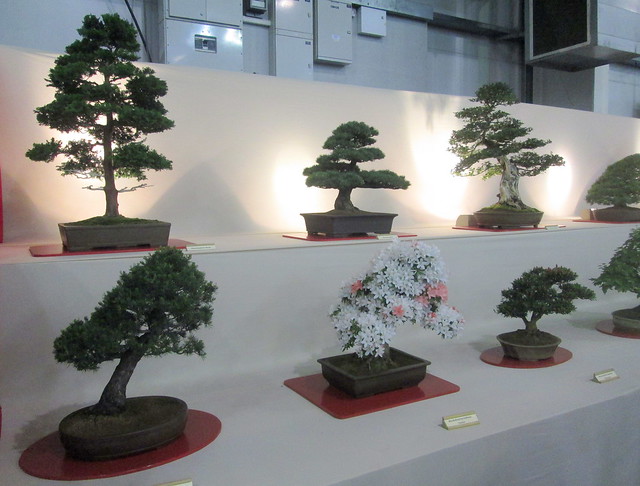
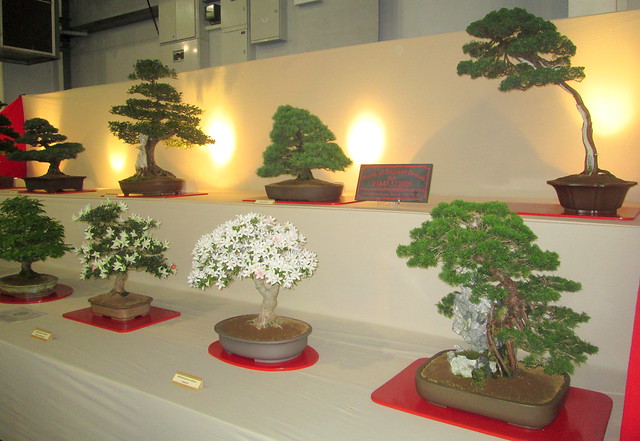
We went to Gardening Scotland way back in June, at Ingliston in Edinburgh. I suppose it’s the closest we get to a Chelsea Flower Show in Scotland but it’s really nothing like that. No huge amounts of money are thrown at it by sponsors for the creation of sumptuous gardens. In fact I think that it is a real shame that the big Edinburgh institutions such as Standard Life don’t have a show garden. It’s all very teeny and the few wee show gardens are mainly by charities, still interesting though and I’ll do another post about those ones. I was really taken with the bonsai stands though and there were some Japanese tourists there who were obviously impressed too. These are just a few of my favourites.

bonsai 1

Just about anything in miniature is so cute, even humans I suppose, and I can quite see why some people get quite obsessed with bonsai.

bonsai 2

You have to be patient though, some of these trees are 50 years old or more.

bonsai 5

There were some chaps from the Scottish Bonsai Association showing how it was done. I’ve always felt quite squeamish about the thought of wiring up trees but I have to admit that the results are stunning.

bonsai 9

bonsai 10

Abernethy, in Perth and Kinross

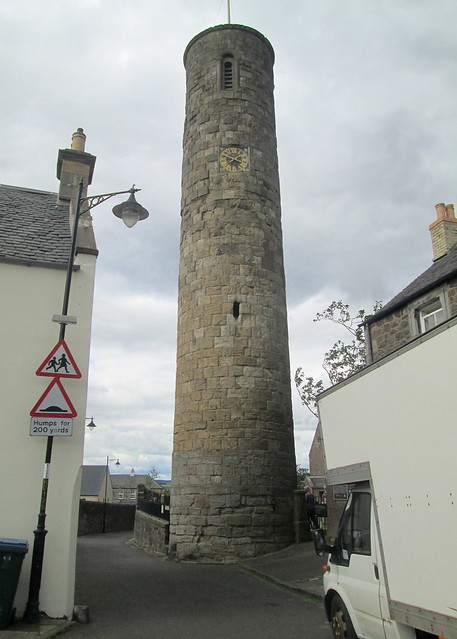
Abernethy in Perth and Kinross is a fairly ancient place as you can see from the Pictish tower in the photo below. Sadly that white van on the right was there for the duration of our visit.

Abernethy  Round Tower 1

We climbed all the way to the top of the tower. It has a modern metal spiral staircase which ends in a ladder leading to the top of the tower and you go up to it through a hatch. It’s not for the faint-hearted as it’s a very long way up – and down! Sir Walter Scott actually mentions this tower in his book The Antiquary. You can see more photos of the tower here. I was surprised to see a set of ‘jougs’ attached to the stonework. It’s a metal sort of dog collar on the end of a chain that was fitted around the neck of any naughty locals who were thought to be in need of punishment.

Abernethy  View 1

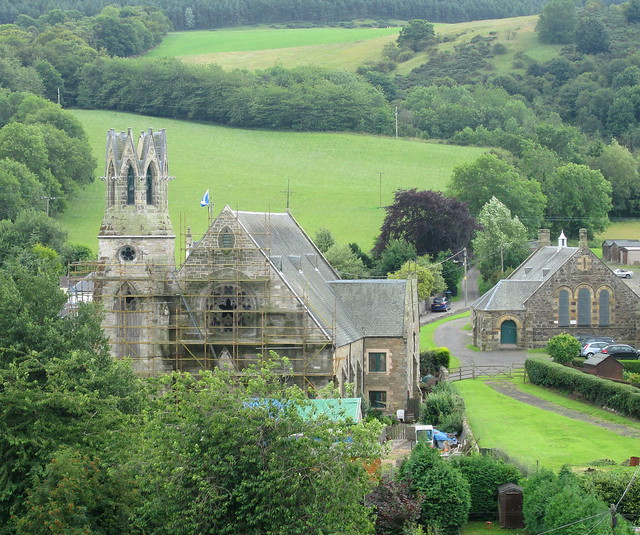
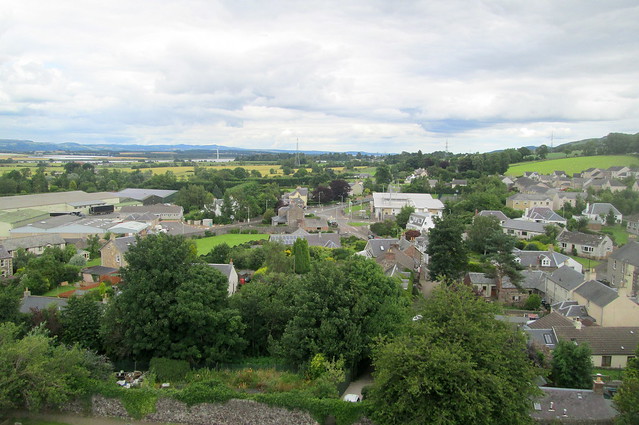
You get a good view of the surrounding area from the top though. You can just about see the Rivers Tay/Earn at Carpow from there and that is where a 3,000 year old logboat was discovered buried in mud a few years ago. The boat was originally preserved and on display in Perth Museum but is has been moved to Edinburgh now. You can see it here.

Abernethy  View 2

Of course the confluence of two rivers has always been seen as being a magical place by our ancestors but I love that the Romans also decided that Carpow would be a good place to set up a camp about a thousand years later.

Abernethy is a teeny wee village with just one shop but it has an interesting graveyard and if you visit then make sure that you pay a visit to the museum which has varied exhibits and particularly a lot of information on what went on in Abernethy during the wars. It was one of those places that was ‘taken by storm’ by the Polish Free Army, as one old lady friend of mine said of her home town of Kelso. All those clicking heels and bowing to kiss hands meant that any local men still living in the place didn’t get a look in. I imagine it was much the same in Abernethy.

The museum is run by very friendly and helpful volunteers.