Cafe Society – the film

On Friday morning we decided to go to the morning viewing of the latest Woody Allen film. For me there’s something quite decadent about going to the flicks in daytime, I feel a wee bit guilty about wasting all that daylight I think. Anyway, there were only about thirty other people in the Adam Smith film theatre in Kirkcaldy, which was a definite plus as the more people there are there the more likely there are to be those annoying rustlers who can’t go any length of time without stuffing their face with sweeties.

Cafe Society turned out to be an art deco feast for the eyes and ears, gorgeous settings and costumes as well as the music of the 1930s. There are a few funny forays into the more mundane society of the Bronx in New York and gangsters.

Bobby is in need of a job so makes his way to Hollywood where his Uncle Phil is a hot shot agent to famous film stars. After getting the run around from Phil for a while he’s eventually given work as a bit of a dogsbody around the studios. Phil gives Vonnie his young secretary the task of showing Bobby around town and of course Bobby falls in love with her.

The actual storyline is predictable but that didn’t detract from my enjoyment. It was an eye candy fest of gorgeous clothes and accessories, art deco buildings and cars as well as beautiful trees and planting in the Hollywood gardens.

My only gripe is that the ending was so abrupt. It’s as if Woody Allen just got fed up and said – that’ll do. It was quite disconcerting really. At first I thought that probably he would make a sequel to the film because it seemed so weird an ending but I suppose that was it!
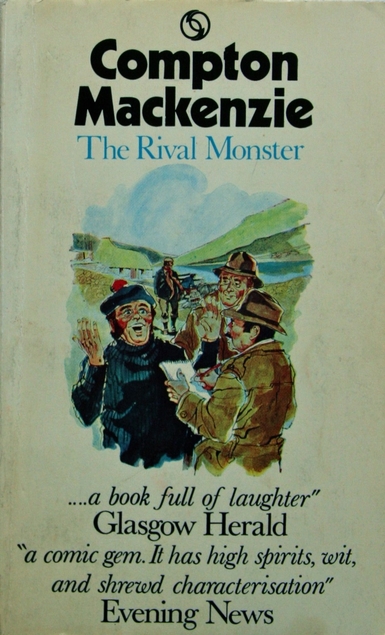
The Rival Monster by Compton Mackenzie

The Rival Monster cover

The Rival Monster by Compton Mackenzie was first published in 1952. The setting is again the Scottish Highlands and Islands, more particularly the islands of Little Todday and Great Todday, the islands made famous by the sinking of a ship full of whisky in his earlier book Whisky Galore. In fact if you intend to read these books you should start with Keep the Home Guard Turning then read Whisky Galore, then Rockets Galore. All absolute hoots.

The Loch Ness monster had been very shy all through the war when the area had been taken over by the military, but more recently there have been several sitings of a terrifying monster with enormous teeth like a hayrake. There’s suspicion that the whole situation has been drummed up to lure tourists up to the islands.

Ben Nevis – the local laird is incensed because he thinks ‘his’ Loch Ness monster has been lured away to an island loch and he vows to bring it back to Loch Ness.

A Glasgow newspaper gets involved when a local claims that he saw the monster being hit by a flying object which is being described by the press as a flying saucer but is supposedly more akin to a flying teapot spout! It’s feared the monster has been killed.

Paul Waggett, the Englishman who fondly imagines he is far superior to any of the locals is of course as delusional as ever and brings a lot of humour to the book. The whole thing is completely nutty, but very well written with Mackenzie having a wonderful feeling for the various dialects used by the characters ranging from the cockney of Mistress Odd who has fallen in love with the islands since her son married one of the islanders, to the differing Scots dialects and Gaelic phrases scattered throughout, luckily there’s a glossary at the back!

I read this one for the Read Scotland 2016 Challenge.

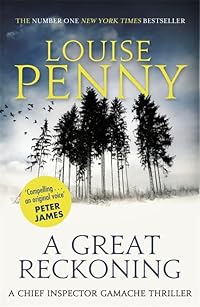
A Great Reckoning by Louise Penny

A Great Reckoning cover

A Great Reckoning by Louise Penny is the latest in her Three Pines series and if you decide to start reading the series then make sure you start at the beginning and read them in order for maximum enjoyment. I’ve come to realise that although I ‘ve enjoyed them all my pleasure in them depends on how much the inhabitants of the village of Three Pines feature in the storyline, the more the merrier as far as I’m concerned.

There’s a mystery involving an old map that has been discovered in the bistro. It’s very strange because the Quebecois village is unusual in that for some reason it appears on no modern maps and has no mobile phone signal, so it must feel a bit like it has fallen off the edge of the word in some ways. But it’s the place that former Chief Inspector Armand Gamache and his wife Reine-Marie have come to love, so much so that they have bought a house there.

Previous investigations have left Gamache damaged both physically and mentally, but he isn’t quite ready to retire from public service yet and after pondering over several job offers he has chosen to be the new commander of the Surete Academy. In recent years that training college has become corrupt and the young recruits are being taught that brutality is normal and that they are above the law.

Gamache is determined to clean the place up but he makes some surprising decisions as to which teachers to get rid of and who to hang on to. Has Gamache bitten off more than he can chew? This is a cracking read.

The story involves village men – boys really who went off to fight during the First World War and who got caught up in the horror that was the Somme. This year – 2016 is of course the centenary of those battles and I’m sure that Louise Penny wrote this book in remembrance of the many Canadians who died there.

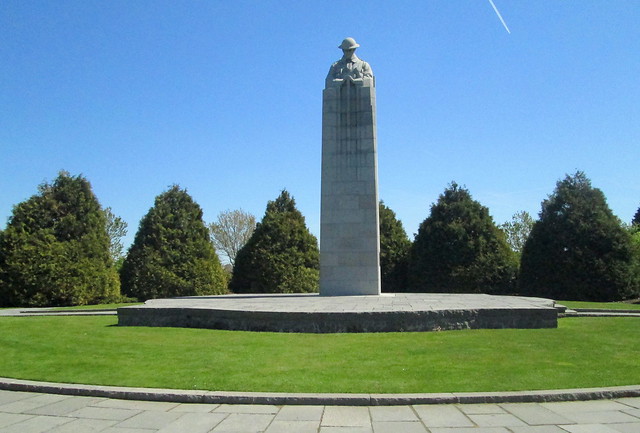
We were in Ypres earlier this year and photographed the massive but very moving memorial to the Canadians there, see the photo below.

Canadian War Memorial, Saint-Julien

Ferrera Park Aviles, Asturias in Spain part 3

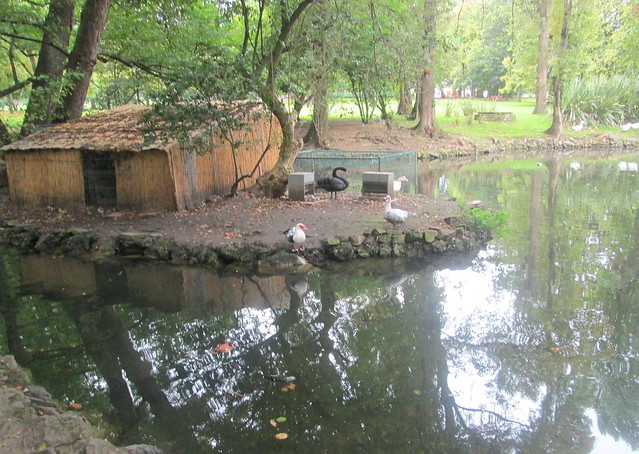
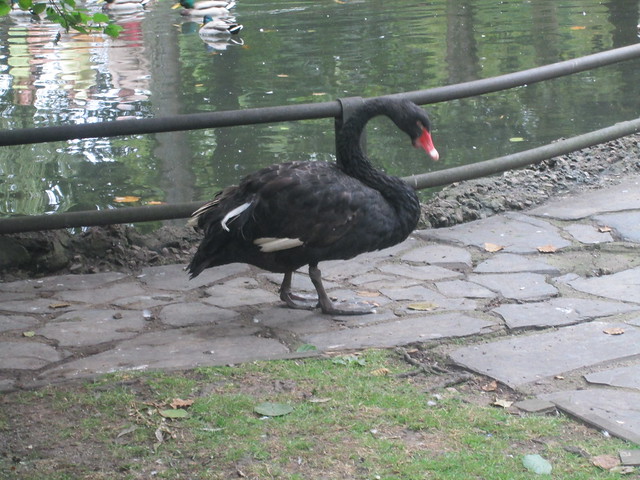
After walking up a fairly steep road, admiring the marble all the way, we got to the park which is quite a busy place, very well used by joggers and all sorts, like most parks. Duck ponds are always popular with the kids and they have two rather exotic black swans in residence there.

aswan 1

Unfortunately this one had a limp.
Swan in Ferrera Park, Aviles

Ferrera Park is 80,000 square metres in area and it was the private park of the Ferrera Marquesses’ family until it was finally bought by the Town Hall for public use. King Juan Carlos I inaugurated it in May 1976. It is an English/British style park.

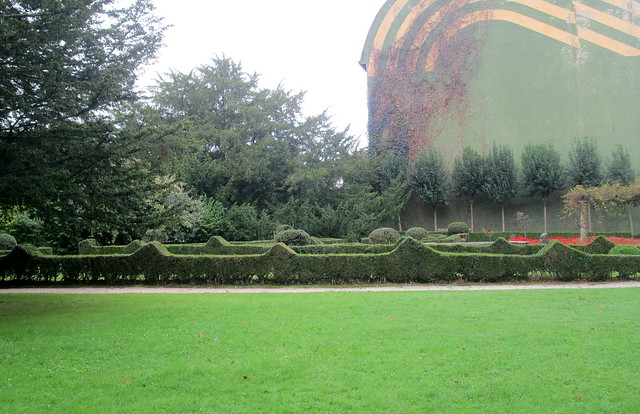
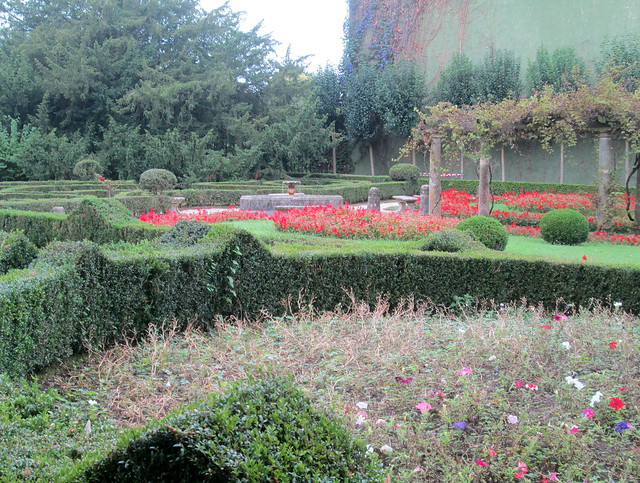
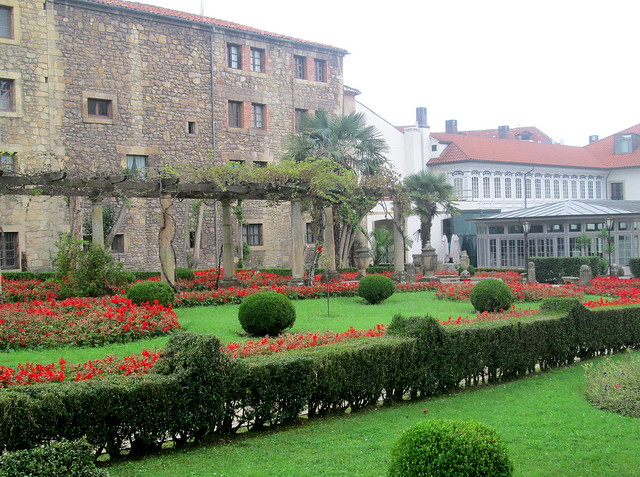
There’s a separate area through a gateway leading into this topiary garden which made me feel very much at home, all clipped box hedges, roses, pelargoniums and lavender.

a garden in park 1

agarden in Ferrera  park 2

In fact I think that the large stone building in the background was a convent and this would have been a medicinal garden in earlier times.

agarden in Ferrera park 3

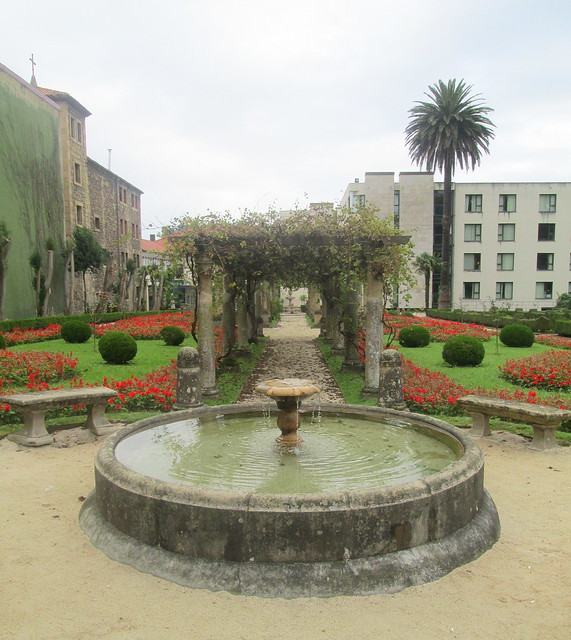
It’s a really beautiful part of the park and we had it all to ourselves, there was a sign at the entrance and from a distance we could only read a large NO so we thought maybe you weren’t allowed in but as we got closer we saw that it said NO DOGS, but maybe it put people off going in. I’d have hated to have missed it, and I must admit it was nice to be able to take photos with no people around.

garden in park 7 fountain

Nine Coaches Waiting by Mary Stewart

Nine Coaches Waiting cover

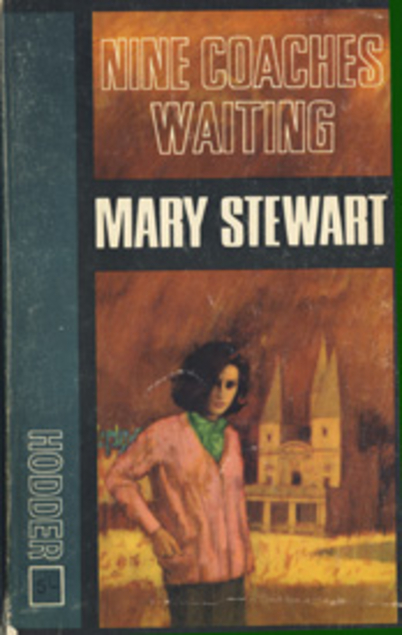
Nine Coaches Waiting by Mary Stewart was first published in 1958.

The book is a mixture of mystery and romance and has an almost Victorian feel to it as Linda is a young English woman, alone in the world and in need of some way of supporting herself. Linda’s mother had been French and Linda had lived in France in the past so she is a fluent French speaker but when a job opportunity comes up for her and it seems that it is only open to an English woman she decides to hide her ability to speak French.

Linda becomes governess to a young boy Phillippe whose parents have died recently. It means that Phillippe has inherited the family estate as his father was the eldest of three brothers. But Phillippe’s uncle had been in control of the estate for some years as Phillippe’s father had been more interested in his archaeology career which kept him away from the chateau that should have been his home.

It isn’t long before Linda realises that Phillippe’s life is in danger and she picks up various interesting pieces of information as her employers think that she doesn’t speak French.

I always enjoy Mary Stewart’s writing and I found this one to be a page turner, full of suspense and great holiday reading.

The title Nine Coaches Waiting was taken from a Renaissance play by Cyril Tourneur – The Revenger’s Tragedy and although there are twenty-one chapters in the Stewart book nine of them are headed by a coach number with Ninth Coach appearing as the name of the last chapter. The coach chapters all deal with car journeys that are important to the storyline.

I know that someone who reviewed Nine Coaches Waiting on Goodreads was perplexed as to why the book was titled as it is. My copy of the book is a very old paperback so maybe later versions of the book had those chapter headings removed, or maybe that reviewer just didn’t read the book very closely.

I read this one for the Read Scotland 2016 Challenge.

Aviles in Asturias, Spain part 2

I took quite a lot of photos while we were in Aviles, it’s such a lovely and historic place and when you keep walking to the top of the town you reach a very well used set of botanic gardens.

aStreet 8

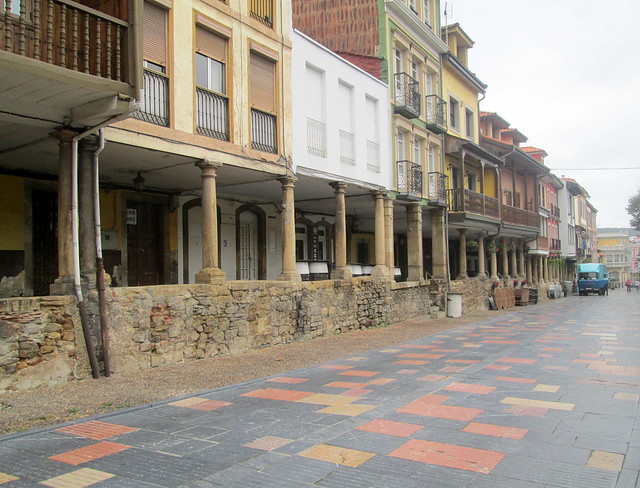
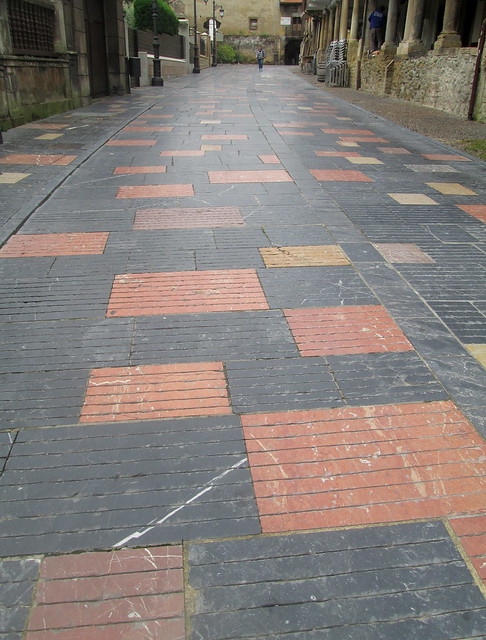
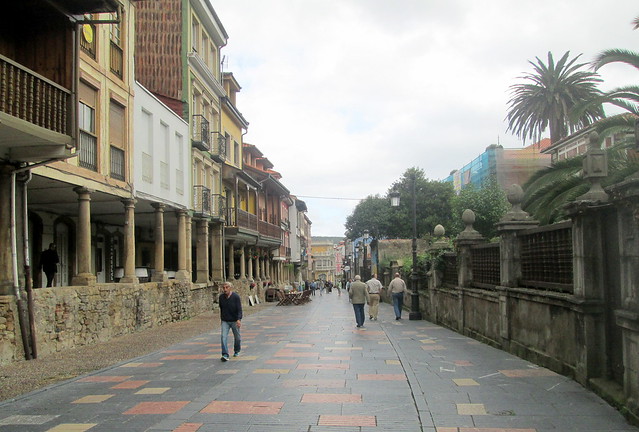
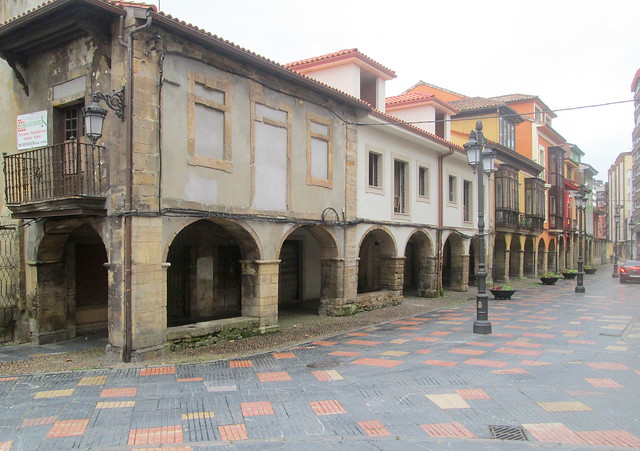
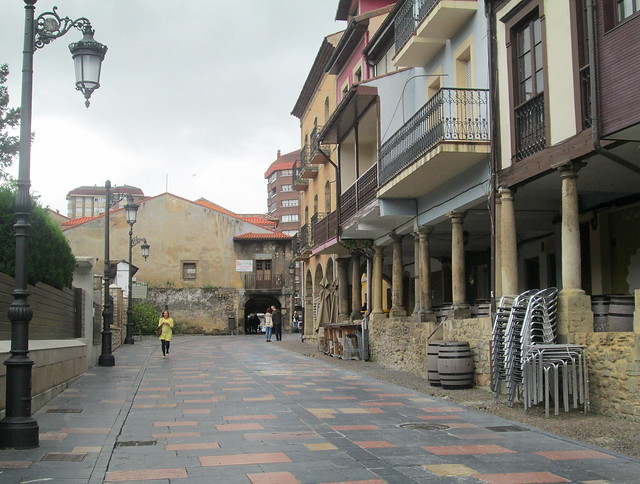
It’s quite a steep uphill walk to the park and gardens and I was amazed to see that the roads and pavements are made of polished marble – how posh is that? I suppose marble quarries in this region might be as common as slate and sandstone quarries in the UK, so they aren’t precious about it. The marble is scored every three inches or so, I imagine so that is isn’t slippy in damp or icy weather, not that they get much in the way of freezing weather in Aviles. The marble makes the place look very smart and opulent even although the buildings are obviously old and some in need of a bit of buffing up.

Marble Paving in Aviles

aStreet 10

Sadly the marble doesn’t look nearly as nice in the photos as it does in reality.

aStreet 9

aStreet 11

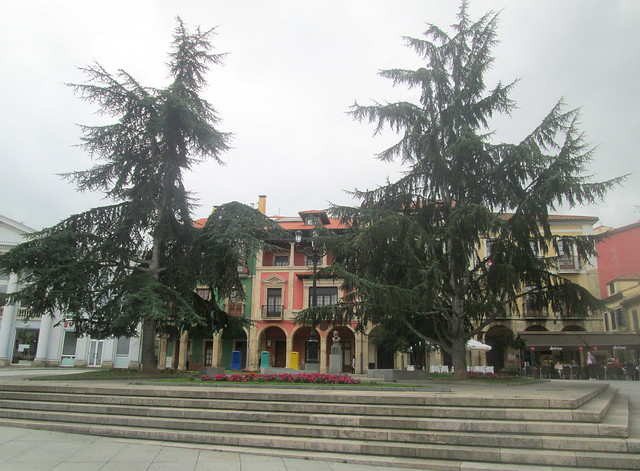
These trees were at the bottom of the marble-paved street.

aStreet 12 trees

The next Aviles post will feature the park.

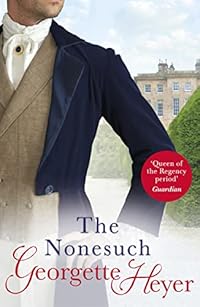
The Nonesuch by Georgette Heyer

Blood and Beauty cover

The Nonesuch by Georgette Heyer is one of her Regency romances – a bit of a romp, but perfect holiday reading. It was first published in 1962 and this one has a lot of similarities with Jane Austen, more so than others of Heyer’s books I’ve read.

Sir Waldo Hawkridge is a wealthy, handsome and fashionable bachelor of thirty-five or six. In his younger days he was well known as a great athlete and he’s still held in high esteem by the younger males in society. In fact they are still emulating the somewhat crazy fashions that Hawkridge made popular years before, although he himself is dressing with much less fussiness in his old age. He was given the nickname of The Nonesuch meaning he was a paragon, nothing and no-one could better him.

In fact most people don’t realise quite what a paragon The Nonesuch is. Although he is wealthy he has an interest in orphans and the poor and when he inherits an estate from a miser of an uncle he decides to turn the house into another orphanage, but it’s all very secret as he doesn’t like to advertise his philanthropy.

Throw in three young male relatives and a bit of love interest, just when The Nonesuch thought he was past such things, it all adds up to an amusing and entertaining read.

Aviles, Asturias in Spain

The next port of call on our recent cruise was Aviles in the region of Asturias, I must admit I had never heard of Aviles before, but it turned out to be a lovely place with very friendly people, keen to practice their English – phew!

aoldest building 1
Above is the oldest stone building in Aviles, an ancient church, Los Franciscanos.
It’s also very historical with some really old buildings. Like many towns it has had a tough time over the years economically and in the past just about all of the young men had to leave the place to go South America to find work. There’s nothing new under the sun is there?! Thankfully for them it seems to be a thriving place now.

a4 poster 1

The wooden building on stilts is very unusual and ancient, and a kind local directed us to it, just in case we missed seeing it, it reminds me of those medieval store houses you sometimes see in old English towns.

I loved the drinking fountains in the photo below, they’re situated outside the church, presumably they were for pilgrims to refresh themelves, I wouldn’t chance the water now though.

stone fountain

This part of northern Spain apparently gets a lot of rain so most of the balconies have windows behind them but I think they can be opened back like shutters.

Balconies 1

Tiles are a feature of a lot of the buildings in Spain, they look very smart, I wonder if the have to be cleaned or the rain washes them?! As you can see the dress shop below this block of flats is shut – siesta time.
aTiling 1

I particularly liked the building above, very pretty.
aTiling 2

I took such a lot of photos of Aviles that I’ll be doing it in two or three blogposts – more tomorrow.

England Their England by A.G. Macdonell

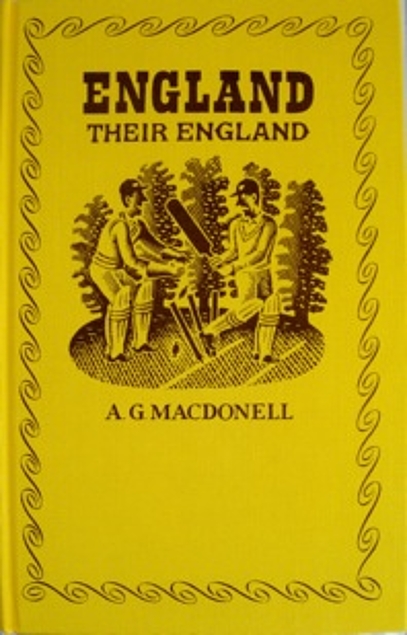
England Their England cover

England Their England by A.G. Macdonell was first published in 1933 and it won the James Tait Black prize that year. My copy is a lovely illustrated Folio Society one. The only other book I’ve read by him was a vintage crime and he did write under various names. My copy is illustrated by Peter Brookes.

The book is set in the early 1920s, Donald Cameron is a young Scot who had been invalided out of the army where he was at the Western Front. When he gets home to Aberdeenshire where his father is a farmer it’s evident that he isn’t much use to his father, and his father tells him to go to England. (Harsh!)

While he was at the front he had met up with a Welshman who had been in publishing. On hearing that Cameron was interested in writing he told Cameron to look him up in London if they ever get out of the war, so that is what he does. The Welshman thinks that a book about the English from a foreigner’s point of view would go down well, and Cameron immerses himself in English society of various sorts as a way of studying them.

His account of a cricket match is apparently the most famous and popular part of this book but for me it was his invitation to a country house Friday to Sunday that was the funniest. Donald was taken in hand by a man who knew how to make an entrance at such a social event. The most important thing was to arrive with masses of luggage which would impress the servants and then receive numerous phone calls from various important persons – all made by Donald’s social advisor of course! It was a hoot.

This is all very much tongue in cheek of course. At the time this book was first published there was a bit of a vogue for such amusing books, by people such as P.G. Wodehouse and Jerome K.Jerome.

I read this one for the Classics Club Challenge, Read Scotland 2016 Challenge and the James Tait Black Challenge – three with one book!

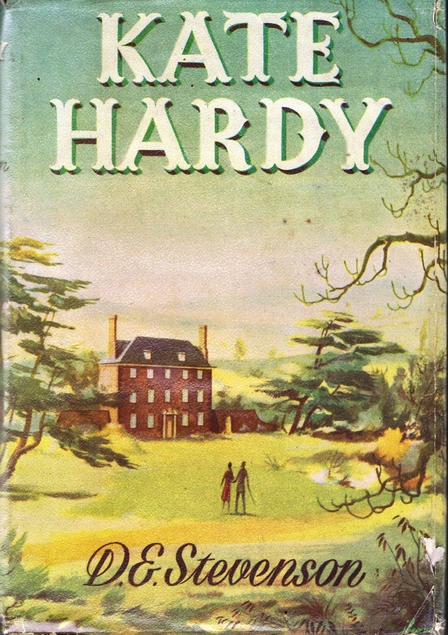
Kate Hardy by D.E. Stevenson

Kate Hardy cover

Kate Hardy by D.E. Stevenson was first published in 1947.

The ancient village of Old Quinings is full of gossip, it’s rumoured that Richard Morven the owner of The Priory, an historic estate, has sold the Dower House. Richard’s wife dies some years before and he sees no need to hang on to the property which has been bought by Kate Hardy, an author in search of a quiet place to write. Kate also has a flat in London but since her older widowed sister and her daughter have plonked themselves on her, with no feelings of gratitude Kate decides to leave them to it in the London flat.

D.E. Stevenson’s writing remind me very much of that other Scottish author O.Douglas – minus the religion, with both of them writing about small communities and usually a young woman moving to a new neighbourhood and having to make a new home for herself amongst strangers.

However there’s a bit more to Kate Hardy which deals with the snobbery and jealousy that some returning soldiers had to put up with when they came back from World War 2 – hoping to just pick up their lives where they were prior to joining the armed forces. It’s a bit of social history and an enjoyable read.

I read this one for the Read Scotland 2016 Challenge.