The Tall Stranger by D.E. Stevenson

The Tall Stranger cover

The Tall Stranger by D.E. Stevenson was first published in 1957 and I was lucky enough to find this one in a second-hand bookshop in Kirkwall, Orkney.

I see D.E. Stevenson as being a sort of updated O.Douglas in her writing style and content, although not quite as ‘churchy’.

This one begins in London where the people are having to cope with a horrendous fog that has lingered for almost a week, but thankfully about half-way through the book the action moves to the clear air of the Scottish borders.

Barbie and Nell are great friends and flatmates. In some ways they’re quite different with Nell being happy running around with lots of different boyfriends and cheerfully accepting lots of gifts from them. She works as secretary for a doctor. Barbie is much more choosy about men friends, and at the beginning of the book she’s in hospital, seemingly having lost the will to live.

When she improves enough to be able to travel she goes to Scotland to stay with her Aunt Amalia/Lady Steyne who lives in a lovely old house called Underwoods. There she meets up with her step-cousin, someone she hasn’t seen for years, and at first Barbie is charmed by him.

This was a good read, D.E. Stevenson’s books have the reputation of being light comfort reads, but they also have a serious side. Barbie has a career that she loves and is very good at, she’s an interior decorator and the thought of giving that up to please a husband isn’t a pleasant one for her. Quite a modern concept for 1957 I think.

Also there’s a moment in this book when Barbie realises that she’s not at all happy with her discovery of an unexpected trait in her fiance’s character. It’s a shock and a game changer for her, she’s wise enough to have a complete re-think about her future. I’m sure that this is something that must have happened to a lot of people, and they have looked back and thought – that was the time when I should have taken steps to change things.

Not just a comfort read.
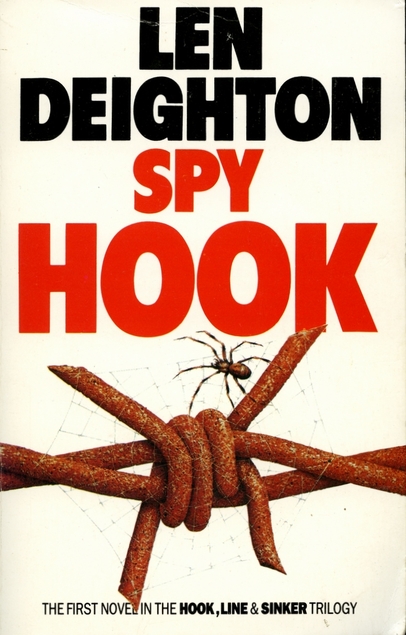
Spy Hook by Len Deighton

Spy Hook cover

Spy Hook by Len Deighton is continuing the story of Bernard Samson but as ever I can’t say too much about it for fear of ruining it for any other readers. The book was first published in 1989.

Bernie’s career prospects within the Department have plummeted and he no longer has the security clearance level that he once had. He’s under suspicion despite the fact that his bosses claim he isn’t. Bernie decides to start his own investigations but the use of computers is fairly new within the Department and as he keeps delving into computer files he keeps getting the message Access Denied. Obviously this just makes his position even more difficult, and he didn’t even realise that each of his attempts was logged on the system!

Things in Bernie’s family life have gone from bad to worse, he’s a single parent now and to make matters worse his father-in-law is keen to get custody of the children.

These books are surprisingly easy to read for espionage fiction, another page-turner.

House of Dun near Montrose – interior

It’s a few weeks now since we visited the House of Dun near Montrose, you can see the post that I did about the exterior of the building here. It was built in 1730 for the laird David Erskine.

This is a house that you can only go around as part of a guided tour, but they seem to be fairly frequent so we didn’t have to wait all that long to be shown around. It’s a shame that one of the owners married a woman who liked to tinker with the internal plan of the house. It was of course designed by William Adam who was a fanatic about having everything symmetrical, even creating dummy doors to match actual doors at opposite ends of walls. A previous occupant has ruined a lot of the proportions by having walls removed and such, especially in the hall.

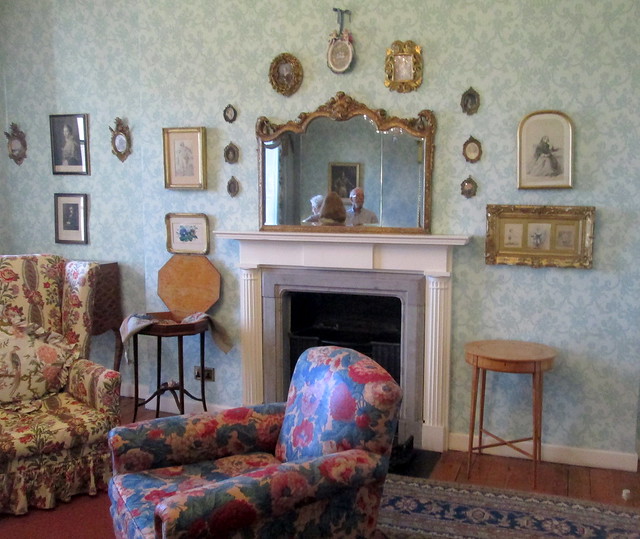
Room in House of Dun

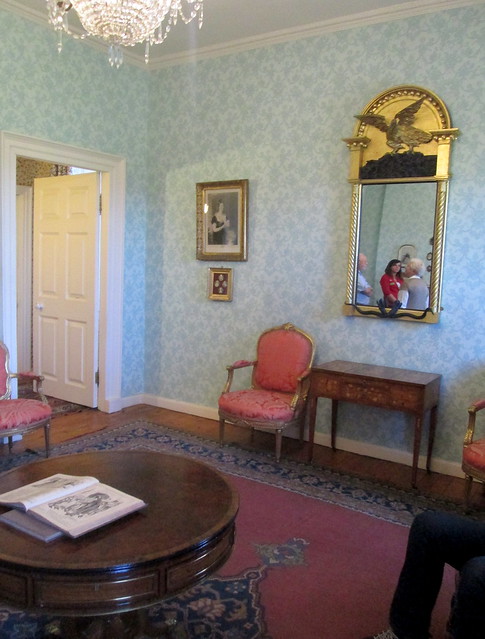
Room in House of Dun

I keep saying this but it’s true – although it’s a very grand house, it still has the feeling of a family home. It must be all the personal nick-nacks that decorate the place that help.

It was impossible to get a photo of the huge looking glass without getting people in it!

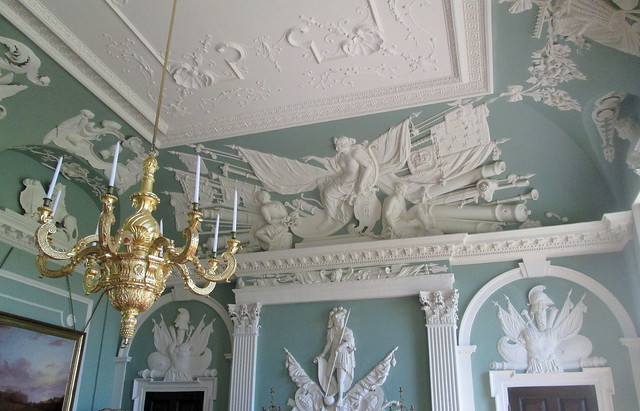
Room windows in House of Dun

The cornicings/plaster wall and ceiling decorations are incredibly ornate as you can see.
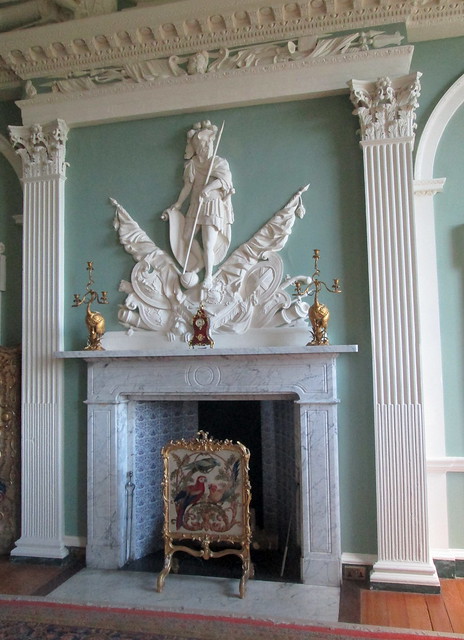
Room in house of Dun

Apparently the overmantel decoration is of a soldier standing with one foot crushing the crown of England. Not terribly subtle, apparently the house was owned by Jacobites who enjoyed this sort of visual support for the Jacobite cause and they got away with it, at a time when they could easily have been executed for such sympathies!
Room  Overmantel + fireplace

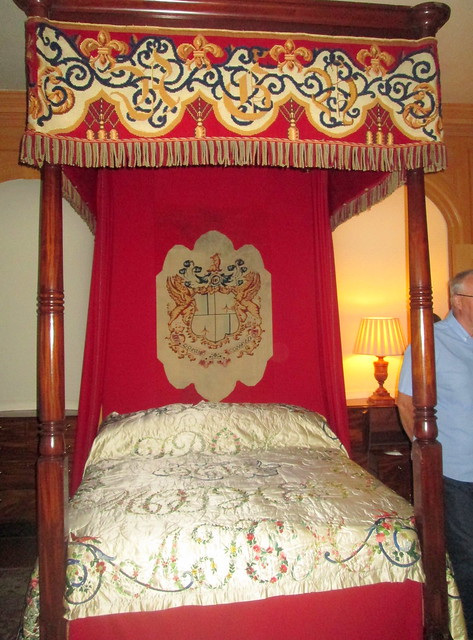
The embroidered quilt on this four-poster bed is fantastic. It was apparently found in a tin trunk in the attics fairly recently. It was a wedding gift embroidered by the mother of the then laird and it has his and his mother’s name sewn all over it, and the fact that it was a gift from her for his wedding. It’s suspected that his bride didn’t want to have her mother-in-law at such close quarters, even if only in the shape of embroidery and I have to say I don’t really blame her.
Quilted bed

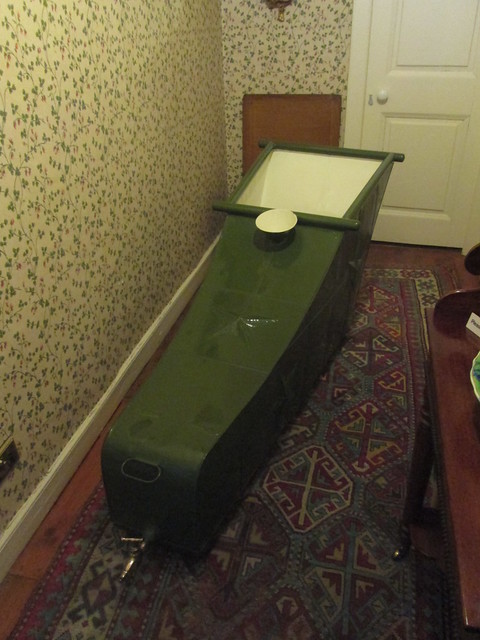
Lastly, just about the most bizarre object at the House of Dun is the ‘boot’ bath below, so named because it resembles the shape of a boot. I can’t make up my mind whether it was enclosed like that to keep out draughts or just to make it a more private experience for the bather. I don’t think it would have made washing your legs and feet very easy though!

boot bath

The Dragon of Og by Rumer Godden

The Dragon of Og cover

I read The Dragon of Og by Rumer Godden ages ago but I’m so behind with some book thoughts that I’m only getting around to it now. It was published in 1981, it’s only the second or third children’s book by Godden that I’ve read and I must admit that it was the book cover that attracted me to it although I’m quite a fan of her books for adults. Pauline Baynes illustrated the book in colour and black and white and the cover. I’ve always liked her designs, she designed C.S. Lewis’s Narnia books in the 1960s.

Anyway, I was particularly delighted when I started to read this one as the setting is the Scottish Borders at a time when the castles were made of wood. The Castle of Tundergarth stands high on a hill overlooking broad meadows and forests through which flows the Water of Milk which isn’t as benign as it sounds as beneath its pools lies a deep cave where a dragon lives.

This isn’t an ordinary dragon though, he’s a lonely soul as his mother left him at the cave as a youngster and he has no friends, and no idea of what it means to be a dragon. The young wife of the new laird befriends him, but the laird isn’t pleased with that as Og the Dragon occasionally eats one of his bullocks and the laird is determined that Og must die. Matilda and the local villagers are up in arms about that. The story is based on an old legend of the Scottish Lowlands.

What amazed me about this book is that Godden writes quite a lot of the dialogue in Scots, using a fair few Scots words and ways of speech. She even uses correctly amn’t I instead of the less grammatical English aren’t I. That is a big bugbear of mine as editors often wrongly anglicise it and even directors have Scottish actors saying it the English way when they definitely shouldn’t be as they are speaking Scots.

I always thought of Rumer Godden as being one of those very English women – in the way that a woman who had grown up in the Indian Raj always was. But after a teeny bit of research I discovered that in her old age she moved to the Scottish Lowlands to be close to her daughter. She certainly soaked up all of the atmosphere of the area, she must have enjoyed living here I think.

Carn Liath Broch, Sutherland, Scotland

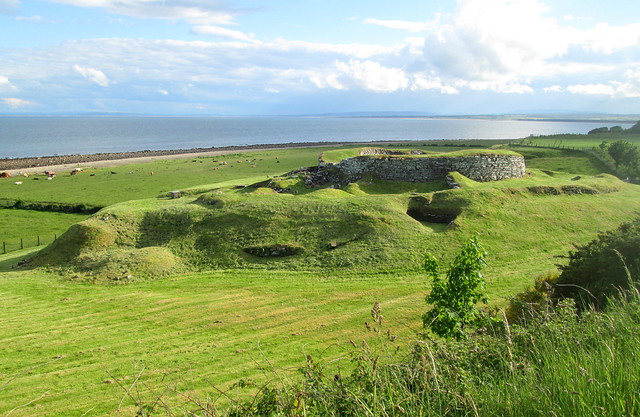
The weather on our way back from Orkney was beautiful and we decided to take a long slow journey back home, stopping off at anywhere that took our fancy. When I spotted a sign to a broch on the road between Golspie and Brora we just had to visit it. Carn Liath Broch is situated very close to the main road south and there is a good lay-by on the other side of the road for parking.

Carn Liath Broch

It’s fairly well preserved with some of the walls still 12 feet tall. It’s in a beautiful position fairly close to the beach – but not too close!

Carn Liath Broch

Carn Liath Broch

There’s still quite a lot to see and it’s easy to imagine what it must have been like for the original inhabitants, quite cosy I imagine.

Carn Liath Broch

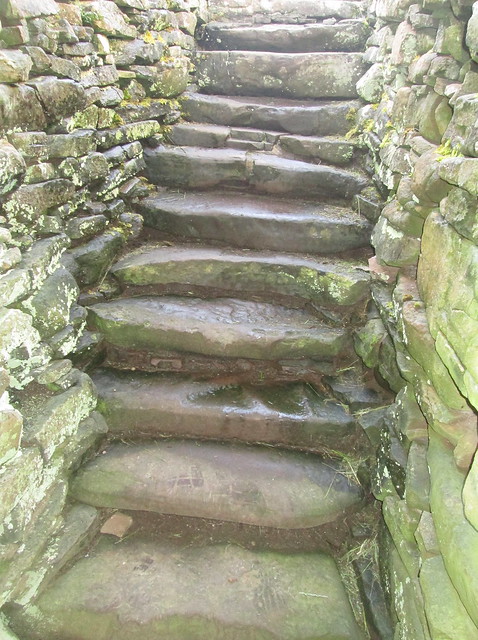
Carn Liath Broch stairs

Carn Liath Broch chamber 1

We had the place all to ourselves and although there’s a main road nearby the cars weren’t visible.

Carn Liath Broch

cows and sea from Carn Liath Broch

The broch was probably built in the last century BC or first century AD. But it was first excavated in the 1800s. Nobody is quite sure about the purpose of brochs, and the ideas range from resource-hungry status symbols to temporary defensive structures for extended families and their livestock. Around 500 were built in Scotland, including good examples at Broch of Gurness in Orkney, Dun Carloway in the Western Isles and Clickimin Broch near Lerwick in Shetland.

I’m so glad I spotted that roadsign.

The Avenue Goes to War by R.F. Delderfield

The Avenue Goes to War cover

The Avenue Goes to War by R.F. Delderfield is of course the sequel to The Dreaming Suburb and in this one the war has well and truly started, no more of that ‘phoney war’ as it was called in the beginning, before the heavy bombing started. Everybody in The Avenue is joining up or war dodging in the case of Archie Carver who is only interested in making as much money as possible. Often it’s the most unexpected people who are most determined to ‘do their bit’.

Delderfield was great at creating interesting characters and in this book he wrote about what was the reality of war for many, with the civilians often ending up taking the brunt of the German attacks.

He shows how society changed completely, sometimes the changes were for the better though, with The Avenue becoming much more socially welcoming for people, friendships being forged by men who had lived next-door to each other for 20 years but had never exchanged more than a ‘hello’ before. It’s not all about The Avenue however, with a few of the former inhabitants ending up in Germany the action moves there occasionally.

I was really sorry when this book came to an end, but the author tied up all the loose ends very satisfactorily and although the writing isn’t poetic, the sentiments are, or philosophical if you prefer.

My copy of this one is a 1958 first edition and it has a nice wee plan of the neighbourhood at the beginning of the book, something which seems to be missing from the modern paperbacks.

Now I intend to start reading A Horseman Riding By (Long Summer Day and Post of Honor in the US) but I don’t have those books yet. I can’t make up my mind whether to buy the modern paperbacks, or just put them on my Kindle, which is a lot cheaper and quicker. But I prefer actual books – although I’m no great fan of modern paperbacks. Decisions, decisions.

Have any of you read his Swann saga?

The Dreaming Suburb by R.F. Delderfield

The Dreaming Suburb cover

The Dreaming Suburb by R.F. Delderfield was first published in 1958 and it’s the first in Delderfield’s ‘Avenue’ books of which there are two.

The book’s first chapter takes place in Spring 1947, but in the next one we’re back in 1919, men are coming back form the trenches and discovering that all the promises they were given by the government meant nothing. Britain isn’t a place fit for heroes, it’s a place of unemployment and poverty for most ordinary people.

The story involves the inhabitants of Manor Park Avenue, it shelters a disparate collection of characters, one of the main ones being Jim Carver who came back from the war to discover that his wife had just died giving birth to her second set of twins. Jim throws himself into trade unionism and is involved in the General Strike.

The Dreaming Suburb leads us up to the beginning of World War 2 just 20 years after the end of the war to end all wars. Jim had been a pacifist after his experiences in the trenches, but he quickly changes his feelings when Hitler begins to rampage across Europe.

The author is a straightforward storyteller, there’s nothing fancy or poetic about his writing, but his characters are so well written, he was obviously a great observer of people. There are several families involved, all very different, and the children usually turn out to be very different from their parents. The strict Methodists have unknowingly brought up manipulative and dishonest children, with Elaine being the opposite of her frigid mother and determined to use her sexual appeal to get everything she wants in life. It was a real page-turner for me and I went straight on to the sequel The Avenue Goes to War. These books would make a great TV series. (Jack’s just told me they have been made for TV, back in 1978 as People Like Us.)

The setting of the suburb is twelve miles from London Stone, (something which I must admit I had never even heard of before) a place that would nowadays be very definitely seen as London itself, so far and wide has London crept.

House of Dun, near Montrose

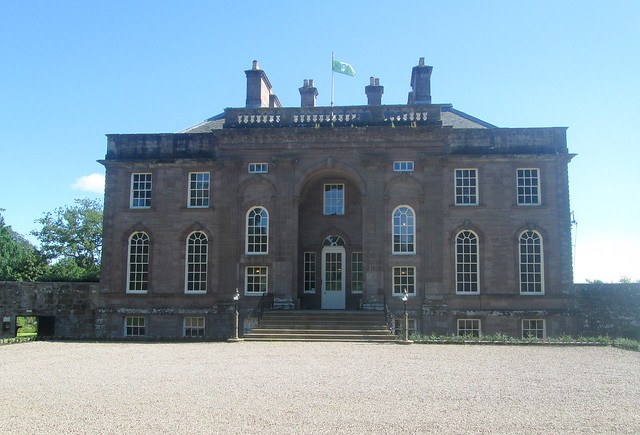
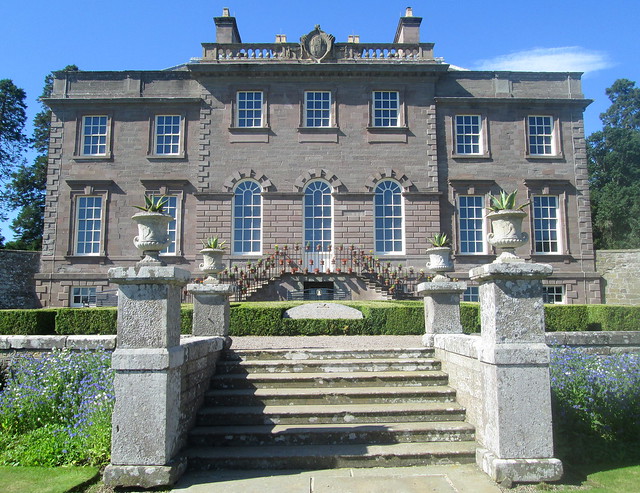
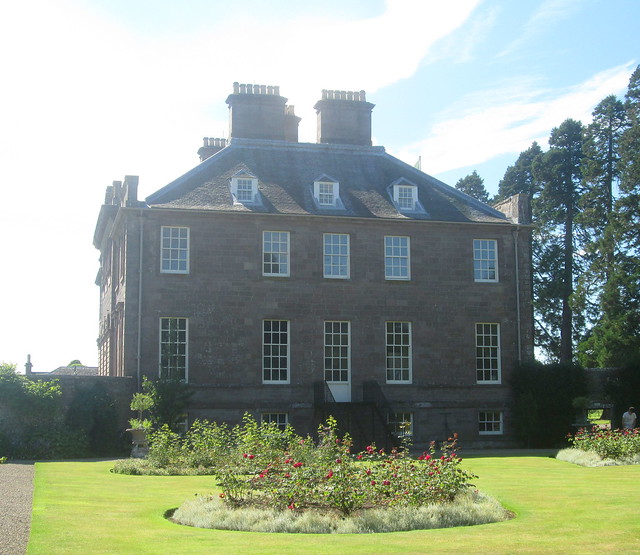
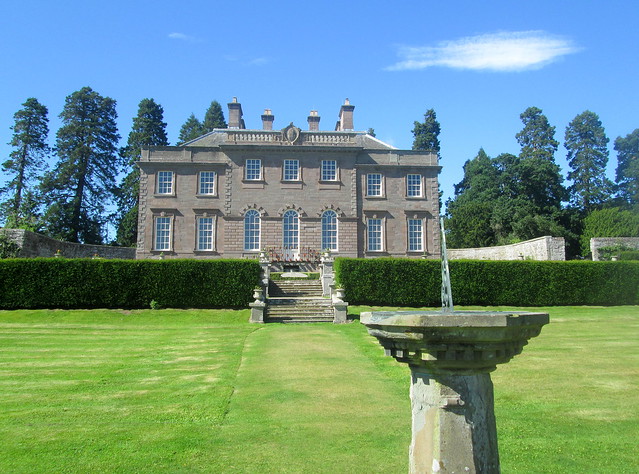
One beautiful day a couple of weeks ago we decided to grab the good weather and drive up to the House of Dun close to Montrose. It’s a Scottish National Trust property that we had never visited before. It’s just over 50 miles away from us. Below are some photographs of the outside from various angles.

House of Dun

The house was originally owned by the Erskine family.

House of Dun, Montrose

House of Dun, Montrose

House of Dun, Montrose

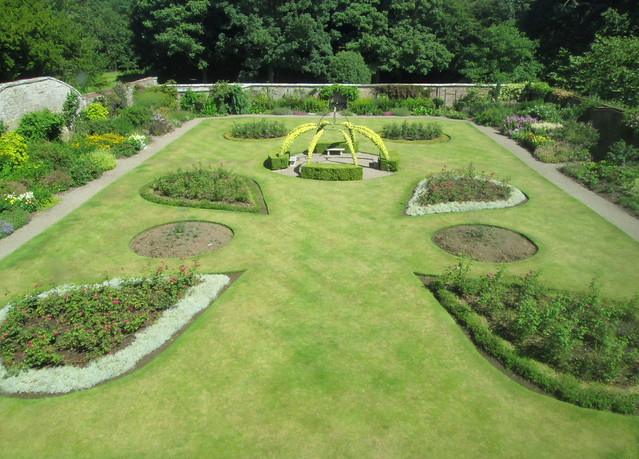
The gardens are meticullously maintained, I hate to think how many hours it all must take.
Garden

Garden , House of Dun, Montrose

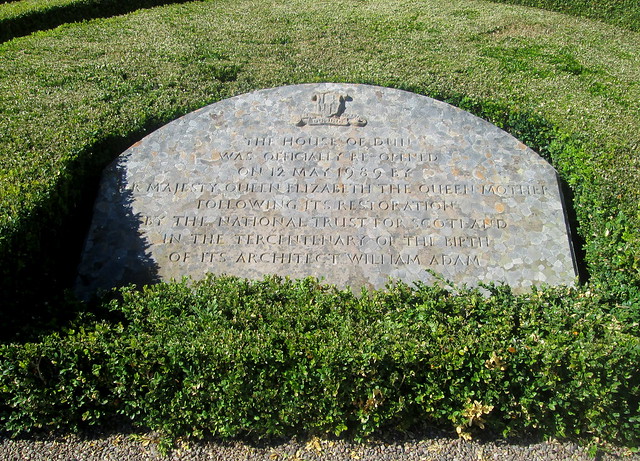
As you can see from the plaque below, it was laid by the Queen Mother to commemorate the 300th anniversary of the birth of the house’s architect William Adam. He was the father of three famous architects, the most famous being Robert Adam.

Box hedging dedication

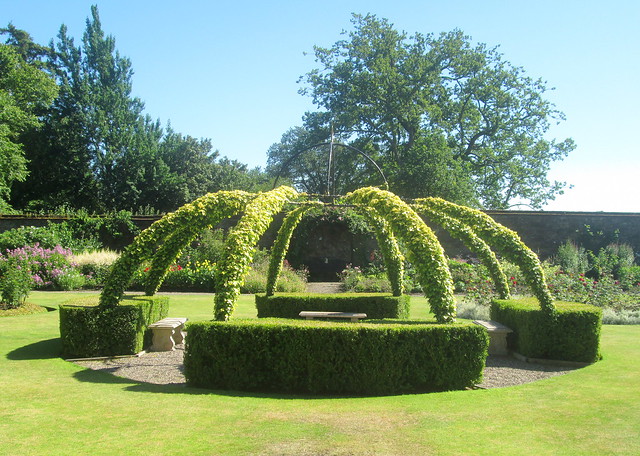
The pergola below looks lovely now but it will look even better when the plants have covered all of the metal support. It is of course in the shape of a crown. The owners of the House of Dun were closet Jacobites and there are various not very well hidden decorations in the house featuring the Scottish crown.
Garden pergola

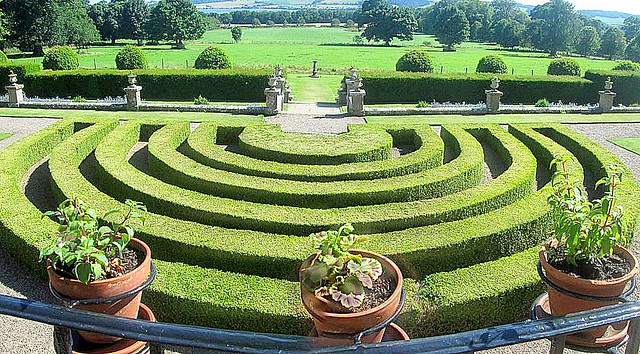
The photo below of the box hedging was taken from the top of the house steps, the back door really. The setting is fantastic with beautiful views from the house.
box hedging pano

You can actually rent holiday cottages and I think apartments in the actual house. It would be great – if the weather behaved itself. Crucially there is a good tea room!

Hurrah! the National Trust now allow people to take photographs of the inside of their properties, but I’ll keep those ones for the next blogpost.

Caithness – sheep and dolphins

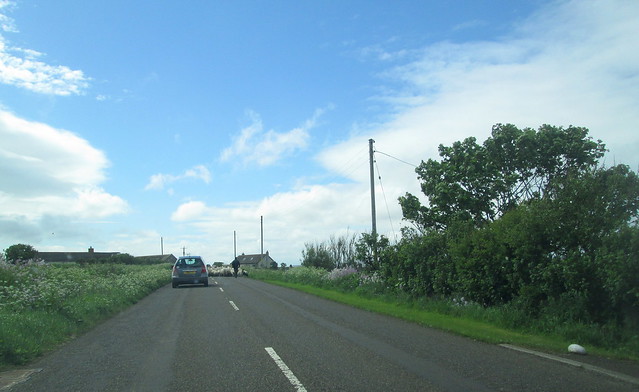
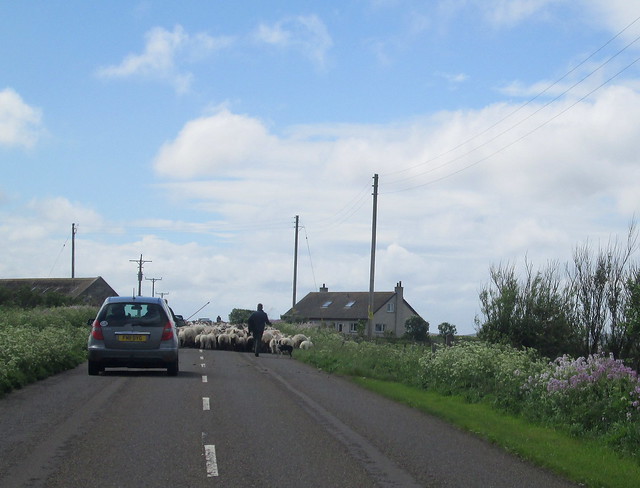
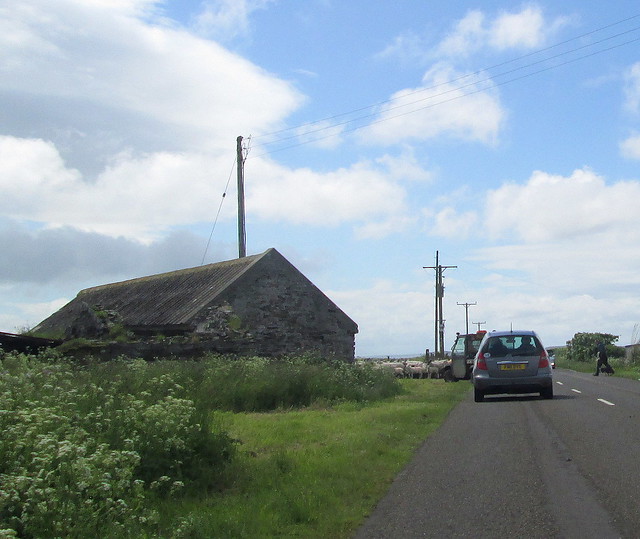
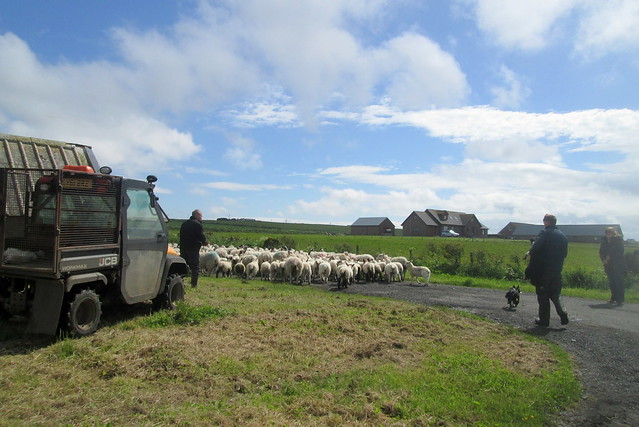
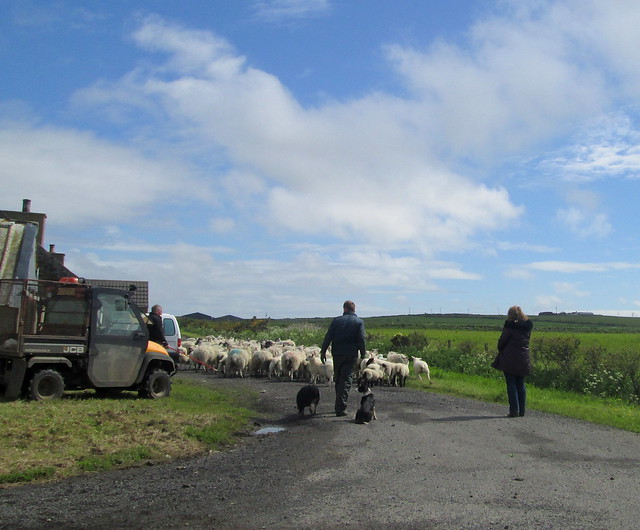
Just after leaving the Castle of Mey we met a traffic jam – Caithness style – sheep. They were being moved from one field to another one down the road a bit.

Sheep
Yes the road ahead was full of sheep.

Sheep

Sheep

Sheep

Sheep

There was a teeny wee Border collie pup dancing on the end of its lead, probably its first outing with the sheep, but it hardly took its eyes off the shepherd.

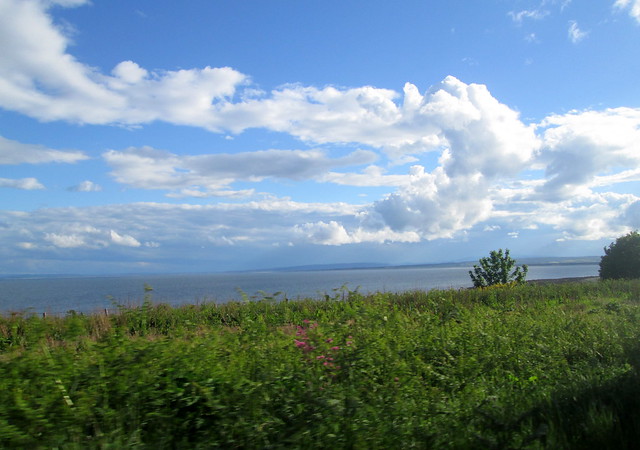
It’s not the most beautiful scenery in Scotland, but just a bit further south you reach the Moray Firth, I’d like to spend some time there to watch the wildlife, it’s famous for dolphins amongst other things.

Moray Firth seascape

I found this You Tube video of the dolphins there, but I’d like to see it in person.

Castle of Mey, Caithness, and Sutherland, Scotland

Castle of Mey

On our way back from Orkney we realised that we would be very close to the Castle of Mey, the Queen Mother’s residence in Scotland. After her husband George VI died in 1952 she obviously had to vacate Balmoral and the other royal residences to make way for the new Queen. She took a fancy to the very remote castle after visiting it as a guest, luckily the owners wanted to move out. After lots of renovations she moved in, and in later years the Royal Yacht Britannia was used to take royal visitors to the castle. The Queen Mother could never persuade Princess Margaret to stay overnight though, Margaret always insisted on going back to sleep on the yacht, the castle was too cold for her apparently, but I suspect she wanted more privacy to get up to her well known shenanigans.

Castle of Mey
Unfortunately you aren’t allowed to take photos of the inside of it for security reasons apparently?! But you can see plenty of photos here.

As castles go it’s quite a cosy one with the rooms being not too big and our guide told us lots of stories about the Queen Mother, who obviously threw herself into the community and got involved with the local primary school children. There were lots of hand made gifts from them ranged around her sitting room, including a shell covered bottle made into a lamp.

I like the way they utilise the big flat stones that are on lots of the local beaches as partitions, it must be a fast way of building walls.

Castle of Mey

Castle of Mey
That was the first time we had been so far north and I thought it was really scenic, although admittedly we were very lucky with the weather, and just about everything looks lovely in the sunshine. You can look here at all the other places of interest in Caithness if you click on the list on the right hand side and here at all the small towns in neighbouring Sutherland if you click on the list on the left.

Castle of Mey garden + Hoy

It was a surprise to me how well things were growing way up north.

I just love old stone walls with wooden gates – what is the secret garden behind it like, most of the time they are locked though so they remain secrets!

East Garden door