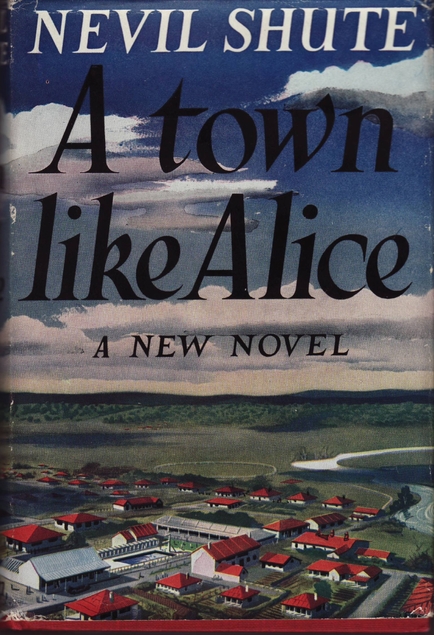
A Town Like Alice by Nevil Shute

A Town Like Alice cover

A Town Like Alice by Nevil Shute was first published in 1950 and I don’t remember ever not knowing about it, such is its fame, but I hadn’t ever really been drawn to actually read it until Lisa @ TBR 313 mentioned it was her favourite. Even then, when I flicked through the old 1956 hardback copy that I managed to buy at a second-hand book-shop, I had misgivings when I saw the Japanese names. Possibly that was why I had avoided it, having had a few chaps in my extended family who had been prisoners of the Japanese during the war. Anyway, it turned out to be a page-turner that I thoroughly enjoyed.

Jean Paget had gone out to Malaya to work before the outbreak of war, she had had family links with the country and was able to speak the language. When the Japanese army so unexpectedly swept the country she had ended up being a prisoner along with the wives and children of the men who had worked out there. The men were all taken prisoner and taken off to build the infamous Burma railway.

Meanwhile the women and children weren’t wanted by anyone, they were shoved from pillar to post having to walk hundreds of miles in search of a women’s prison that didn’t exist, with many of them dying of exhaustion.

Jean’s strength of character is a life-saver for them all and when she gets back to Blighty after the war she settles down to a boring and lonely life as a shorthand typist, until she gets word that she has been left a fortune by an elderly uncle. Jean is the only survivor from her family and the lawyer appointed as a trustee of her inheritance befriends her, he helps her achieve her ambition of digging a well for the women of the village where she had lived and worked during the war.

When Jean discovers that an Australian soldier she had assumed had died had actually survived she sets out to find him and so begins a romance that leads to her settling in Australia’s outback and developing bit by bit a community and better way of life for the people of that remote area.

Nevil Shute was obviously very enamoured of the Australian landscape and the people who scraped a living on farms in the searing heat with practically nothing in the way of comforts. Although the way the aboriginals are portrayed is a bit uncomfortable, I’m sure he was writing an accurate picture of their life. I think perhaps things are in some ways even worse for the aboriginals nowadays.

A Town Like Alice is a great read though and I’ll probably give it five stars on Goodreads.

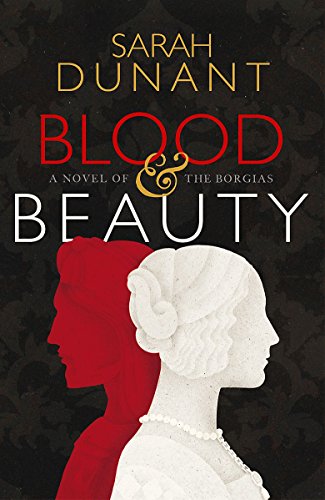
Blood and Beauty by Sarah Dunant

Blood and Beauty cover

Blood and Beauty by Sarah Dunant was a random choice by me from the library. I enjoyed watching/listening to Sarah Dunant when she used to be on TV some years ago when she presented the culture programme The Late Show, so I thought I’d give her writing a whirl.

The setting of Blood and Beauty is mainly Rome, the Vatican and when the book begins it’s 1492 and a new Pope has just been elected. Rodrigo Borgia has got the top job of God’s representative on earth, he’s a politician and worked hard to get what he wanted. Although he has lived in Italy for years he’s still seen as a foreigner, a Spaniard looked down on by many but he has bribed his way to the top job, the other cardinals couldn’t resist his gold. It seems not to have been a problem that he had six children and never had any intention of sticking to his vows of celibacy, but that seems to have been normal for those days. He became Pope Alexander VI.

In essence he used his children as pawns and married them all off to the various important and powerful families in the neighbouring countries. He was a similar type to Henry VIII but of course the pope could just decree any marriage to be dissolved if he became unhappy with his choice of in-laws. So he didn’t have the same problems as King Hal. In fact it might be fairer to say that Rodrigo Borgia resembled Henry VIII’s politicians and advisors as they were the ones keenest to form alliances with other countries.

Anyway Pope Alexander’s son Juan was very much his favourite and he made that obvious to everyone which caused a huge amount of jealousy and resentment especially within the family, particularly where his son Cesare was concerned. But as Juan was spoiled rotten his behaviour was always going to make him plenty of enemies. It isn’t going to end well!

I decided to read this book because I thought it would be a painless way of learning about the history of that era, and so it turned out to be. The only thing that I knew about his daughter Lucrezia Borgia was that she had a reputation as a poisoner, but so far she is a much used and abused daughter, sister and devastated widow. This book has a sequel (I think it’s out in 2017) and I’ll definitely be reading it but I must say that if Lucrezia does resort to poison eventually, I won’t really blame her too much. I don’t think this is a brilliant book, it isn’t in the same sphere as Wolf Hall but it is very readable.

Mind you, I was watching something on TV quite recently and the historian mentioned that although at the time someone was thought to have been poisoned (I can’t remember who) it’s now thought more likely that they died of a burst appendix!

What a thought – there must have been loads of people over the years who were accused of poisoning people who had just died of what we now know as being unfortunate health problems such as appendicitis, peritonitis, perforated stomach ulcers, food poisoning and such.

At the end of the book there is quite a long bibliography and I might read one or two of those books too. Well, I would like to but you know what it’s like – too many books!

The Light Years by Elizabeth Jane Howard

The Light Years cover

The Light Years by Elizabeth Jane Howard was first published in 1990 which is a shocking 26 years ago now – how did that happen? I didn’t read it back then, in fact I think I may be the last woman in the western world to read the book, I’m just thrawn that way, often avoid doing things just because everyone else is doing it. It was Joan of Planet Joan who made me think that it was time I got around to The Light Years, the first book in the Cazalet series, you can read what she thought of it here.

The book is in two parts with the first part starting in 1937 and the second part begins in late summer 1938 but it ends with the run up to World War 2 and Chamberlain’s attempts to avoid war. We meet three generations of Cazalets the Brig and Duchy are the parents, getting on now but the Brig is very much in charge of the family wood/lumber business. Their two elder sons work in the business and as the business is obviously thriving they’re quite well off, but the youngest son has hopes of being an artist and is working as a teacher until he finds success in that field.

The characters are all very different with their different personalities well defined but it was the characters of the children that I was really impressed with. Howard must have been one of those people who perhaps has never really completely grown up herself and has remained close to how it feels to be a child in various circumstances. She wrote about all their fears, problems and worries with great insight. I really didn’t want to leave this family saga and would have gone straight on to the next one Marking Time, if only I had had a copy of it. I’ll need to get my hands on one soon!

I didn’t watch the TV series when it was on either and I’m wondering if it is worth watching or is it one of the many dramatisations that end up being disappointing. If you watched it please tell me what you thought of the series.

Guardian links from the Review

I’ve just finished reading The Light Years by Elizabeth Jane Howard. It’s the first book in the Cazalet series (I’ve yet to blog about it) and I’m trying to get my hands on the second one as I really want to get back to that family. Anyway, I noticed an article about Elizabeth Jane Howard in the Guardian Review section this morning, if you’re interested you can read it here. It’s by Artemis Cooper who has just written a book about Howard.

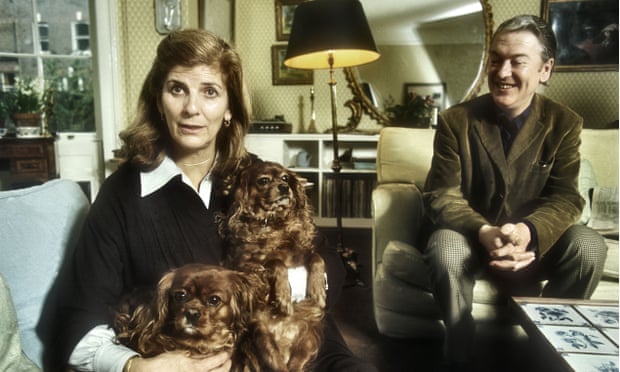
Elizabeth Jane Howard

The photo above is of Elizabeth Jane Howard with her then husband Kingsley Amis. Like many writers she was a bit of a conundrum herself I think. On a frivolous note I wonder if she ever regretted sticking her middle name on her books – I know I would have if I had been her.

There’s an article about the ghost stories that E. Nesbit wrote for adults, it’ll be Halloween before we know it so it might be of interest to anyone reading books for that spooky season. You can read the article here.

I’ve always been interested in children’s books but in recent years I’ve become quite distant from what’s going on, mainly due to having no small people in my life at the moment. I must admit though that I still do buy children’s books if I happen to see any with beautiful illustrations. So I was interested in this Children’s roundup by Imogen Russell Williams.

If Shakespeare is more your cup of tea you might like to read Margaret Atwood’s article on rewriting The Tempest for the 21st century.

James Tait Black Memorial Prize – a personal challenge

I’m sure that like me you will have noticed some books with James Tait Black Memorial Prize in brackets after the title. For a good wee while now I’ve been thinking about trying to work my way through the list of winners of this prize that was set up in 1919. You might be interested in this Edinburgh University link The prizes were founded in 1919 by Mrs Janet Coats Black in memory of her late husband James Tait Black, a partner in the publishing house of A & C Black Ltd.

1919 Hugh Walpole, The Secret City
1920 D. H. Lawrence, The Lost Girl
1921 Walter de la Mare, Memoirs of a Midget
1922 David Garnett, Lady into Fox
1923 Arnold Bennett, Riceyman Steps
1924 E. M. Forster, A Passage to India
1925 Liam O’Flaherty, The Informer
1926 Radclyffe Hall, Adam’s Breed
1927 Francis Brett Young, Portrait of Clare
1928 Siegfried Sassoon, Memoirs of a Fox-Hunting Man
1929 J. B. Priestley, The Good Companions
1930 E. H. Young, Miss Mole
1931 Kate O’Brien, Without My Cloak
1932 Helen de Guerry Simpson, Boomerang
1933 A. G. Macdonell, England, Their England
1934 Robert Graves, I, Claudius and Claudius the God
1935 L. H. Myers, The Root and the Flower
1936 Winifred Holtby, South Riding
1937 Neil M. Gunn, Highland River
1938 C. S. Forester, A Ship of the Line and Flying Colours
1939 Aldous Huxley, After Many a Summer Dies the Swan
1940 Charles Morgan, The Voyage
1941 Joyce Cary, A House of Children
1942 Arthur Waley, Translation of Monkey by Wu Cheng’en
1943 Mary Lavin, Tales from Bective Bridge
1944 Forrest Reid, Young Tom
1945 L. A. G. Strong, Travellers
1946 Oliver Onions, Poor Man’s Tapestry
1947 L. P. Hartley, Eustace and Hilda
1948 Graham Greene, The Heart of the Matter
1949 Emma Smith, The Far Cry
1950 Robert Henriques, Through the Valley
1951 Chapman Mortimer, Father Goose
1952 Evelyn Waugh, Men at Arms
1953 Margaret Kennedy, Troy Chimneys
1954 C. P. Snow, The New Men and The Masters
1955 Ivy Compton-Burnett, Mother and Son
1956 Rose Macaulay, The Towers of Trebizond
1957 Anthony Powell, At Lady Molly’s
1958 Angus Wilson, The Middle Age of Mrs. Eliot
1959 Morris West, The Devil’s Advocate
1960 Rex Warner, Imperial Caesar
1961 Jennifer Dawson, The Ha-Ha
1962 Ronald Hardy, Act of Destruction
1963 Gerda Charles, A Slanting Light
1964 Frank Tuohy, The Ice Saints
1965 Muriel Spark, The Mandelbaum Gate
1966 Christine Brooke-Rose, Such/Aidan Higgins, Langrishe, Go Down
1967 Margaret Drabble, Jerusalem the Golden
1968 Maggie Ross, The Gasteropod
1969 Elizabeth Bowen, Eva Trout
1970 Lily Powell, The Bird of Paradise
1971 Nadine Gordimer, A Guest of Honour
1972 John Berger, G
1973 Iris Murdoch, The Black Prince
1974 Lawrence Durrell, Monsieur: or, The Prince of Darkness
1975 Brian Moore, The Great Victorian Collection
1976 John Banville, Doctor Copernicus
1977 John le Carré, The Honourable Schoolboy
1978 Maurice Gee, Plumb
1979 William Golding, Darkness Visible
1980 J. M. Coetzee, Waiting for the Barbarians
1981 Salman Rushdie, Midnight’s Children
Paul Theroux, The Mosquito Coast
1982 Bruce Chatwin, On The Black Hill
1983 Jonathan Keates, Allegro Postillions
1984 J. G. Ballard, Empire of the Sun/Angela Carter, Nights at the Circus
1985 Robert Edric, Winter Garden
1986 Jenny Joseph, Persephone
1987 George Mackay Brown, The Golden Bird: Two Orkney Stories
1988 Piers Paul Read, A Season in the West
1989 James Kelman, A Disaffection
1990 William Boyd, Brazzaville Beach
1991 Iain Sinclair, Downriver
1992 Rose Tremain, Sacred Country
1993 Caryl Phillips, Crossing the River
1994 Alan Hollinghurst, The Folding Star
1995 Christopher Priest, The Prestige
1996 Graham Swift, Last Orders/
Alice Thompson, Justine
1997 Andrew Miller, Ingenious Pain
1998 Beryl Bainbridge, Master Georgie
1999 Timothy Mo, Renegade, or Halo2
2000 Zadie Smith, White Teeth
2001 Sid Smith, Something Like a House
2002 Jonathan Franzen, The Corrections
2003 Andrew O’Hagan, Personality
2004 David Peace, GB84
2005 Ian McEwan, Saturday
2006 Cormac McCarthy, The Road
2007 Rosalind Belben, Our Horses in Egypt
2008 Sebastian Barry, The Secret Scripture
2009 A. S. Byatt, The Children’s Book
2010 Tatjana Soli, The Lotus Eaters
2011 Padgett Powell, You and I
2012 Alan Warner, The Deadman’s Pedal
2013 Jim Crace, Harvest
2014 Zia Haider Rahman, In the Light of What We Know
2015 Benjamin Markovits, You Don’t Have to Live Like This

I’ve only read seven of them so I have a long way to go before completing this challenge. The winner is selected by the Professor of English Literature at Edinburgh University, assisted by PhD students. The absence of critics or any so called ‘celebrity’ judges, and the fact that this is the oldest literary prize in Britain make them among the most respected awards in publishing. There is a prize each year for fiction and also biography but I’m going to be concentrating on the fiction, although I am interested in reading some of the biographies – sometime.

The books that I’ve already read are in bold but those ones were read before I started blogging. Click the blue titles to see what I thought of them. As you can see I have a lot to get stuck into, I may just have bitten off more than I can chew, especially as there are some authors there that I’ve tried before and not liked, but I’m going to have a good go at it. It’s a long term reading plan obviously!

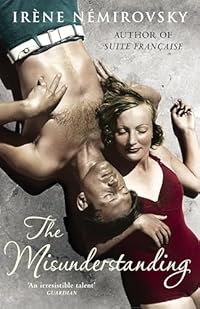
The Misunderstanding by Irene Nemirovsky

 The Misunderstanding cover

The Misunderstanding by Irene Nemirovsky was first published in France in 1926 and it was her first novel.

Yves Harteloup is a young man, an only child who had been brought up by his very wealthy parents to expect a very comfortable life, never needing to work or do anything for himself. The Great War put paid to all that, Yves had been a soldier and had survived in one piece, although nothing was ever going to be the same after his experiences. By the end of the war his parents were dead and as most of their investments had been in Germany and Belgium – their money was all gone. Yves finds himself having to work in an office, something he hates.

He looks forward to his summer holiday, deciding to go back to Hendaye a resort where he was very happy on childhood holidays with his parents. There he has a dalliance with Denise, a young mother with a wealthy husband, she has never had to think about money. When they begin their affair it comes as something of a shock to her to realise that Yves isn’t in the same financial situation, he still has the veneer of money about him because of his upbringing.

Back in Paris they continue to see each other, with Denise being clingy and obsessive. She’s a demanding woman, spoiled and self obsessed and Yves can’t ever satisfy her need for adoration.

He’s still socialising with Denise and her husband – in Paris nightclubs and restaurants, always paying his way and so getting deeper and deeper in debt. It’s all going to end in tears.

The Misunderstanding was being written at the same time as The Great Gatsby and so the era and types of people are similar, that generation that went a bit crazy after the First World War, it was a time of extreme poverty for some, and obscene wealth for others.

Irene Nemirovsky was only 23 when this book was published, it’s just as beautifully written as her later books. Tragically her life was cut short when she was murdered by the Nazis in Auschwitz when she was 39.

Scottish Highland Book Purchases

books 2

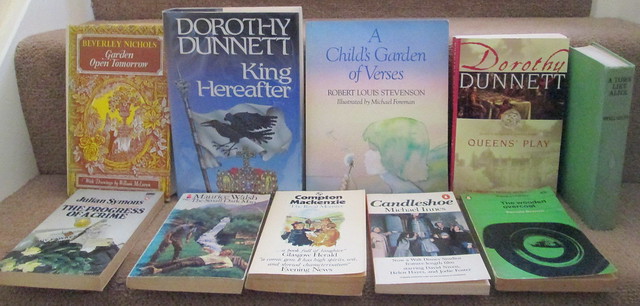
The photo above is of the books that I managed to buy on our brief jaunt up to the Highlands with Peggy. Some were bought at the Pitlochry railway station, a local charity has turned an old waiting room into a bookshop, and they have some great books at very reasonable prices. There’s also another second-hand bookshop just off the high street, well worth a look. I think it’s called Priory Books. I bought two there I believe.

Others I bought in Fort William in a second-hand bookshop just off the main street. It’s not that big but I’m always lucky there.

A few of these books jumped right to the top of my queue so I’ve already read three of them, but only managed to blog about one of them so far – Candleshoe.

Garden Open Tomorrow by Beverley Nichols
The Small Dark Man by Maurice Walsh
The River Monster by Compton Mackenzie
The Progress of a Crime by Julian Symons
The Wooden Overcoat by Pamela Branch
King Hereafter by Dorothy Dunnett (about Macbeth)
Quenn’s Play by Dorothy Dunnett
A Town Like Alice by Nevil Shute
Candleshoe by Michael Innes
A Child’s Garden of Verses by R.L. Stevenson (illustrated by Michael Foreman)

A decent haul I think but it is a wee bit worrying that within less than two weeks I bought 24 books, apart from anything else I need another bookcase now, or maybe I should perform a book cull, but I’ve done that before and ended up regretting getting rid of some books. I might have a six months cooling off period for them in the garage and see how I feel about them after that.

Have you bought many books recently?

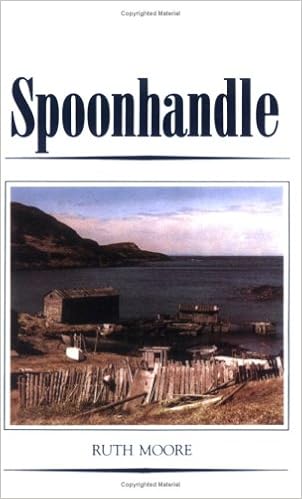
Spoonhandle by Ruth Moore

spoonhandle

Spoonhandle by Ruth Moore was first published in 1946 and this is one of the books that Peggy brought from the US for me to read. I think that it’s probably quite difficult to find in the UK. Spoonhandle was made into a film called Deep Waters in 1948 and was made on location at Vinalhaven, Maine. I know that I read about this book on a blog but sadly I can’t remember which one, I really should write down the blog somewhere when I decide to actually read a recommended book.

Although the setting is Maine in the US I think that the themes will be recognisable in lots of places, especially those on scenic coastlines. The author dedicated it To Any American Town. Presumably because the so called march of progress always changes a way of life, or maybe I should say wrecks a way of life.

The main island is Big Spoon Island but there’s also Little Spoon Island and The Spoonhandle. Most of the land has been held in the same families for generations, ever since the place was first settled. Like any small communities there are prominent families who tend to rule the roost by way of owning more land or businesses and it’s the older members of the Stilwell family who are in that position. The two older siblings Agnes and Pete have money as they’re god. Pete owns the local store and takes every opportunity to short change his customers. Their two younger brothers Horace and Willie are so disgusted with Agnes and Peter that they have taken themselves off to live together on a small island, it was the only thing given to Willie by his father in his lifetime and Willie was left out of his father’s will. Pete has refused to give Horace what he is due from the will, and Willie and Horace (Hod) are having a very tough life, fishing in a rotting boat and in dire need of new fishing gear. They can barely afford to eat.

The ‘summer people’ have ‘discovered’ the area and one of them is determined to buy Willie’s island as a gift for his wife so they can build a home on it. But Willie is determined not to sell at any price.

Ann has grown up in the area but she’s been living in the city recently where she has been writing with some success, she’s come home to finish her second book. Her father is a bit of a macho man and his word is law within the family. He’s unimpressed with his daughter and really thinks that daughters should just get married, he sees her as a failure as apparently no man is interested in her.

This is the story of a changing way of life with the original landowners being duped out of their land by people richer than them and the locals ending up becoming employees of the incomers, losing their independence and way of life.

That all sounds quite depressing but it’s an enjoyable read with some great characters and lovely writing, and although I’ve never been to Maine, or even the US there are similarities with the Scottish fishing communities. I suppose I should say ex-fishing communities as most of the fishing villages in Fife are now at least 50 % owned by people renting out the properties for holiday lets and young people who have grown up there can’t possible afford the house prices nowadays.

I’ll definitely read more books by Ruth Moore in the future if I get the chance.

Wigtown Bookshops

bookshop 1

It’s a few weeks now since we visited the book town Wigtown, Scotland’s answer to Hay-on-Wye and I now can’t remember if these photos were all taken in the same bookshop. I think Jack took most of these photos, maybe all of them. And I think they were mainly taken in THE Book Shop.

bookshop

Anyway, you get the idea, lovely places to rake around in if you’re of a bookish type.

a bookshop

One of the bookshops did have a cat that sauntered out to meet us as we came through the front door, but quickly disappeared, obviously we weren’t of great interest to it – just more of those strange people completely ignoring it to stare at walls full of books.

a bookshop

It’s a remote part of Scotland and if you do decide to travel there don’t expect too much. I was very lucky and bought quite a few of books there but there’s very little else in the town apart from a few cafes and a couple of gift shops. As you can see in the photo below, it’s not exactly bustling.

Wigtown Street 3

The Land the Ravens Found by Naomi Mitchison

The Land the Ravens Found cover

The Land the Ravens Found by Naomi Mitchison was published in 1955 it is a children’s book and I’ve given it three stars on Goodreads. It’s the story of how some people in a Viking community based in Caithness, the far north of Scotland, decide that they are tired of the violent life in Caithness. There’s constant fighting and raiding going on. It’s decided that Iceland is the place to travel to and some of the people who are chosen to go are thralls, Scots and Irish who have been taken prisoner on earlier raids. They’ll be doing a lot of the rowing.

It’s a time when Christianity was beginning to get a toehold on the people and some were giving up the Norse gods for the new religion, causing some tension between those who wanted to keep to the old ways.

Aud the Deep Minded is a wise and respected woman, wealthy too, she’s one of the older women and is a Christian, she decides to organise the building of a ship that will sail them across the sea to Iceland where she hopes to settle down to a more peaceful way of life in her old age. After a scary voyage with the boat piled high with cattle and everything needed to build a new community, they reach Iceland and in time everyone is allotted some land and people pair up to start families. The few Icelandic people seem happy to have the incomers moving in, life has been harder for them and they have very little in the way of luxuries. It seems that their way of life might be improved by the foreigners and they can learn from each other.

My copy of this book is really nice, I suspect that it has never been read as the pages are pristine, lovely thick paper and I think that might be because at the beginning of the book the author throws so many characters at the reader, all with outlandish names, it makes it quite a confusing read to begin with.

However, this book has made me think that I would really like to read the original Icelandic sagas that Naomi Mitchison based this book on.

This is another book read for the Read Scotland 2016 Challenge, number 22.

Naomi Mitchison was an amazing woman who lived to the age of 101. You can read an obituary by Elizabeth Longford here. This one is more personal than the Guardian one below.

You can read her Guardian obituary here.

I’ve had a Virago copy of her book The Corn King and the Spring Queen (1931) for years and it’s about time I got around to reading it. Elizabeth Longford describes it as possibly the best historical novel of the 20th century. What an amazing thing to say, I’m now really looking forward to reading it and hoping I won’t be disappointed.