20 Books of Summer 2017 update

I’m doing quite well with my 20 Books of Summer 2017 list this year although I had meant to do a bit of a half-way roundup before now. I have veered slightly from the list for various reasons, but I’m still hopeful of finding my copy of Sir Walter Scott’s Redgauntlet before September. I did a fatal tidy up before some visitors arrived and now that book is lost in the stacks which is very annoying as before that I knew exactly where it was – on the floor!

1. London Match by Len Deighton
2. I Claudius by Robert Graves
3. Highland River by Neil M. Gunn
4. The Demon in the House by Angela Thirkell
5. The Dove of Venus by Olivia Manning
6. City of the Mind by Penelope Lively
7. The Progress of a Crime by Julian Symons
8. Antidote to Venom by Freeman Wills Crofts
9. This Rough Magic by Mary Stewart
10. Flowers for the Judge by Margery Allingham
11. Claudius the God by Robert Graves
12. Pied Piper by Nevil Shute
13. Miss Ranskill Comes Home by Barbara Euphan Todd
14. Katherine Wentworth by D.E. Stevenson
15. The Bertie Project by Alexander McCall Smith
16. A Memorial Service by J.I.M. Stewart
17. The Madonna of the Astrolabe by J.I.M. Stewart
18. Redgauntlet by Sir Walter Scott
19. High Rising by Angela Thirkell
20. Wild Strawberries by Angela Thirkell

My garden update

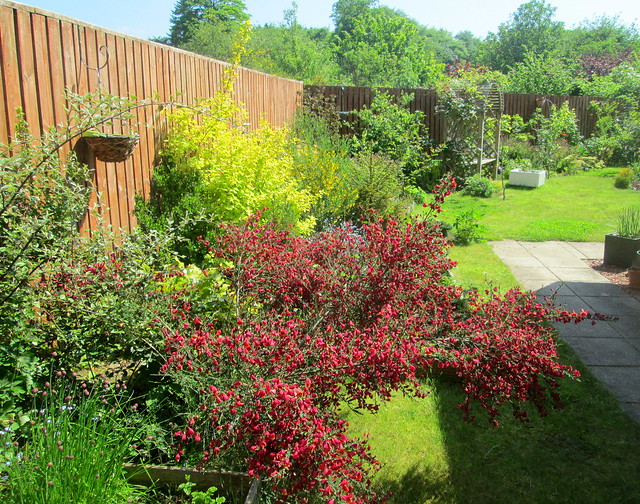
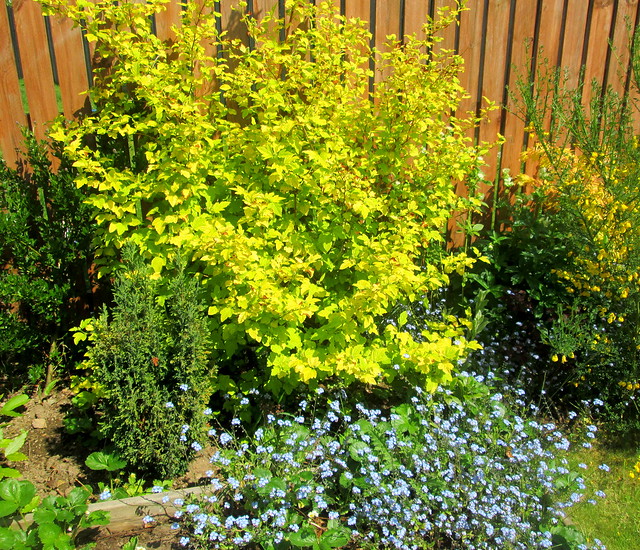
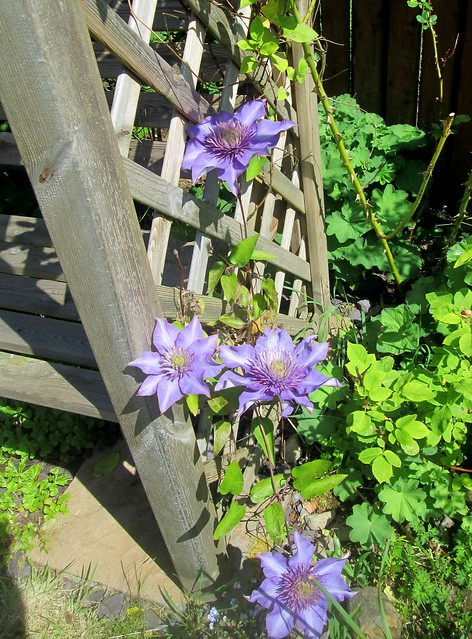
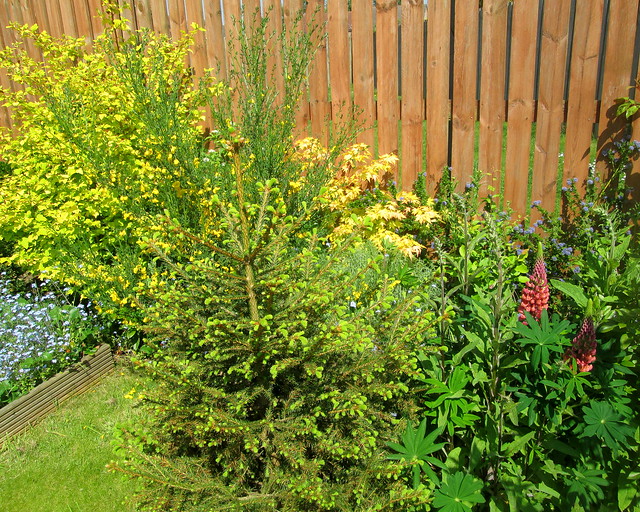
A few friends have asked me how my garden is getting on, and I have been taking photos of it over the past couple of months, but just haven’t got around to blogging about it. It has been a weird year weather wise. The spring weather was quite late in getting here, then we had a very dry period, particularly while we were away in Belgium and Holland in early May. My garden was gasping when we got back home.

But since then we’ve had a lot of rain and wind to contend with. In Scotland we didn’t get the really hot weather that they had in England and Wales earlier in July, we’ve been getting one good day of weather followed by three or four bad days, sometimes feeling more like November.

The plants are coping though.

red broom

physocarpus and forget-me-nots

clematis

fir tree

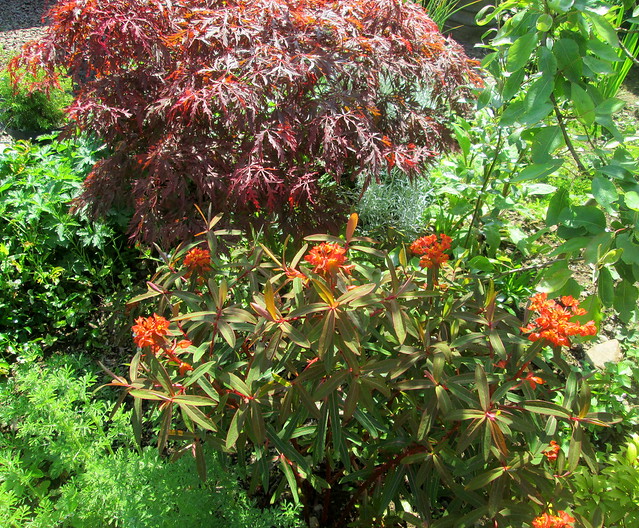
acer and euphorbia

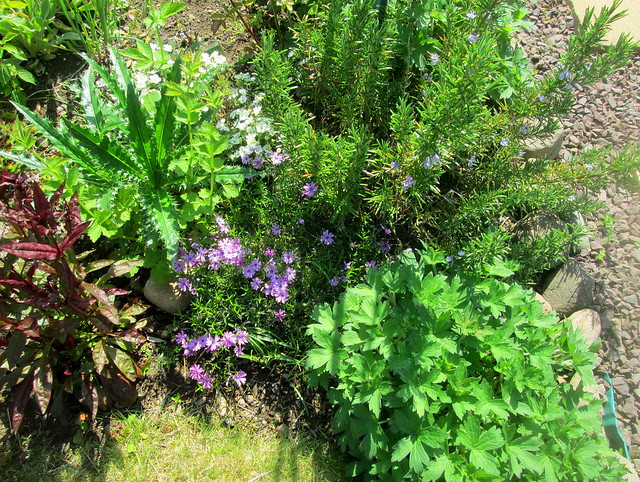
rosemary and geraniums

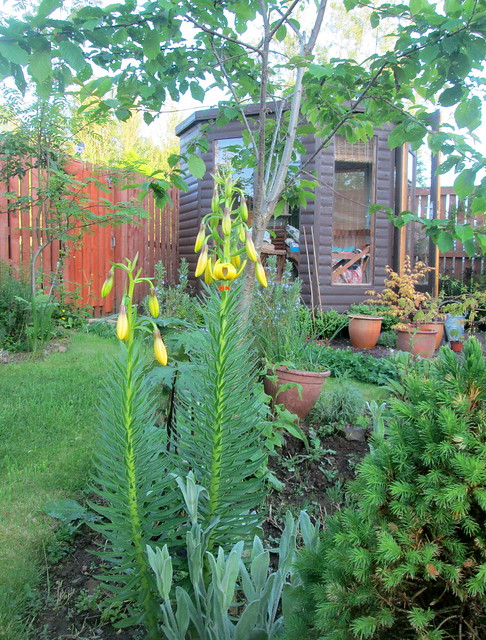
turk's cap lily

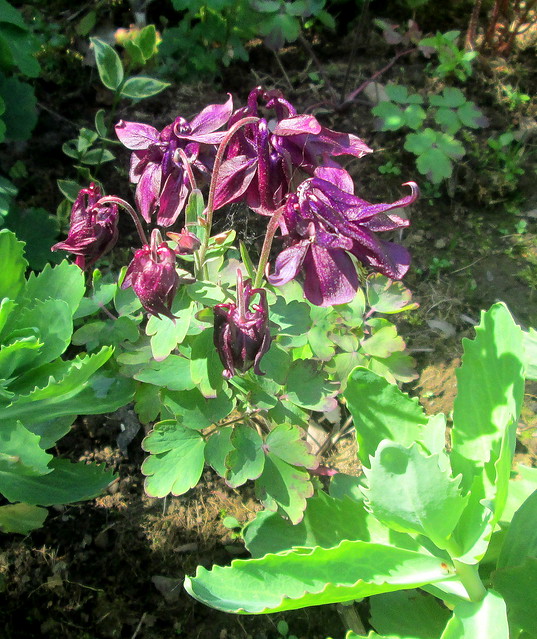
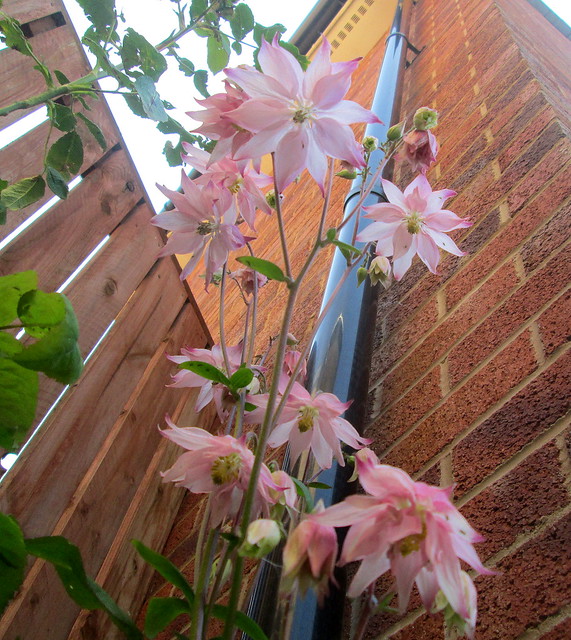
aquilegias

aquilegia

Most of those photos were taken in May so the garden looks quite different now, but I’ll leave those photos for another post!

Dutch dog walk – part 2

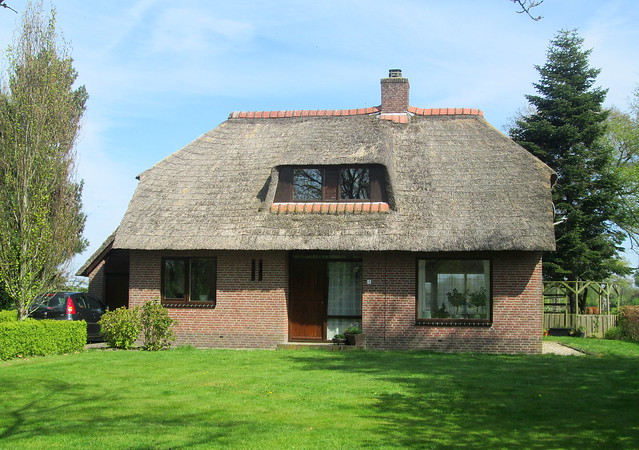
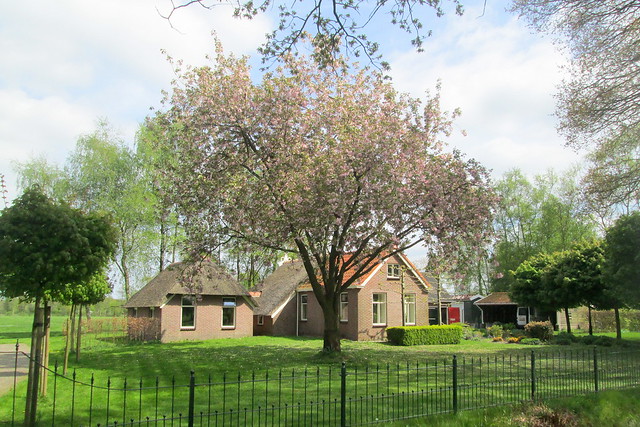
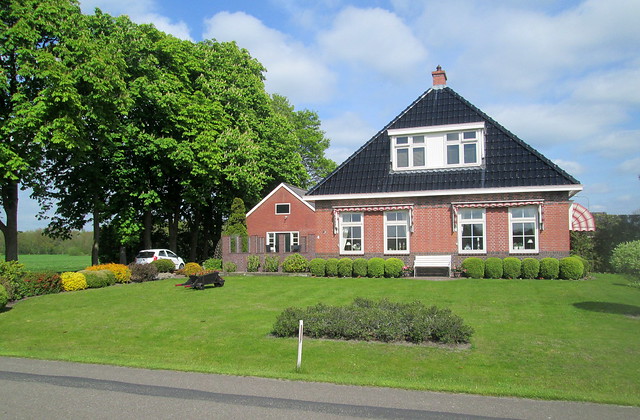
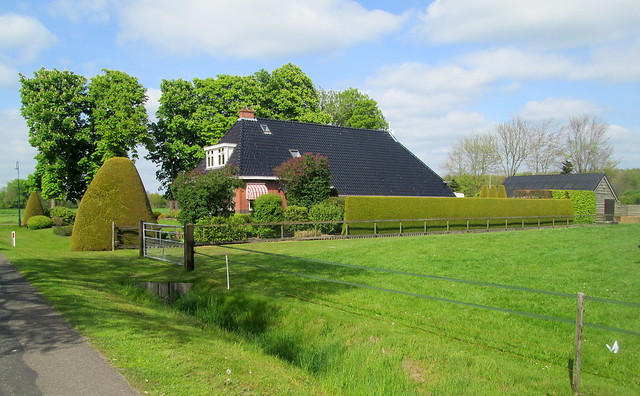
Back to that long walk we had with the dogs and family in Holland – one of the things I love about that area is that most of the houses are very individual, generally designed by the original owners and built by a local builder. So below are a few of the rural houses we passed whilst walking the dogs.

Thatched House

Dutch House

Dutch house + topiary

The hedge and trees in the photo below look like they’ve been trimmed by manicure scissors, and apparently the man who cuts it does it all by eye, no guide string required.
Dutch House + Hedge

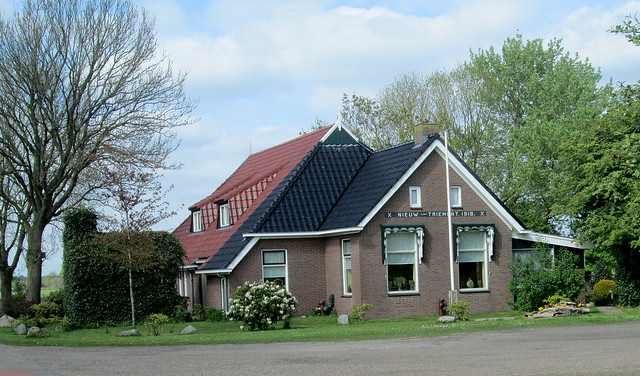
The house below has ‘built in 1918’ on it, it looks fairly modern to me though. I find it difficult to judge how old the houses are as they are all built of the same sort of bricks as nowadays. I haven’t seen any stone built houses there at all. It’s rare to see an unkempt house and garden, Dutch people seem to be very houseproud.
Dutch house 1918

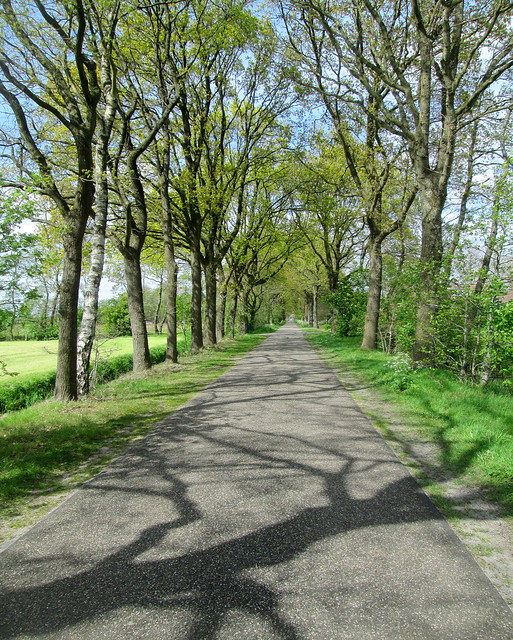
The photo below is one of the roads we were walking on, amazingly straight. If you have no hills to manouever roads around then there’s no reason not to have straight lines I suppose.
Dutch road

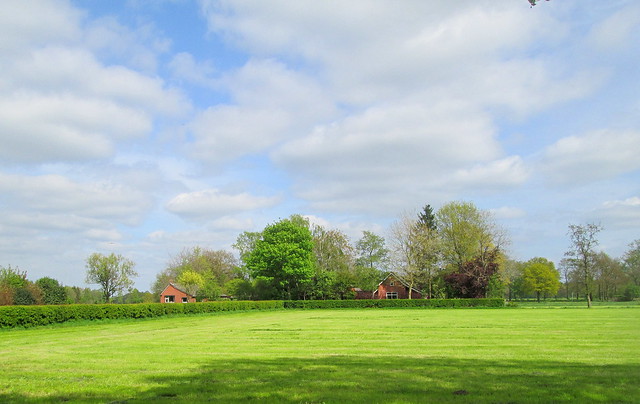
We were there in early May, the spring was late, so lots of the trees were just beginning to get their leaves.
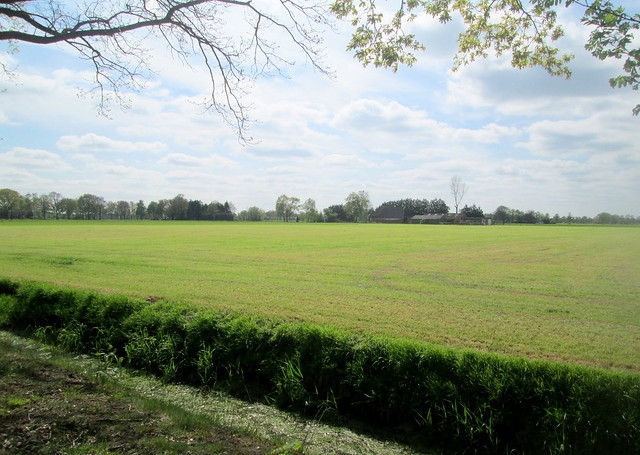
Dutch view

Dutch view

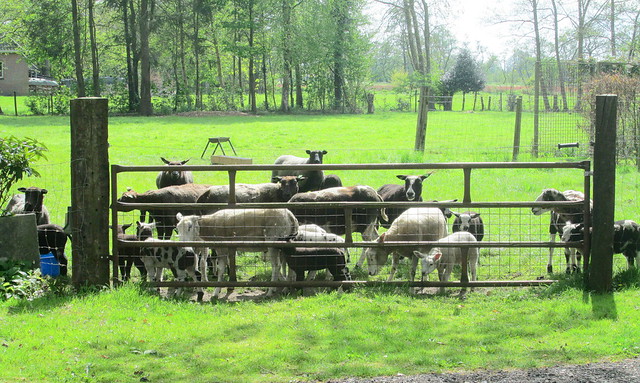
The sheep were gathered expectantly at the gate for some reason, but we had to disappoint them, we had nothing for them.
Dutch sheep
We walked round in a big circle and must have gone about four or five miles on what turned out to be the hottest day we had there. Well it keeps you fit!

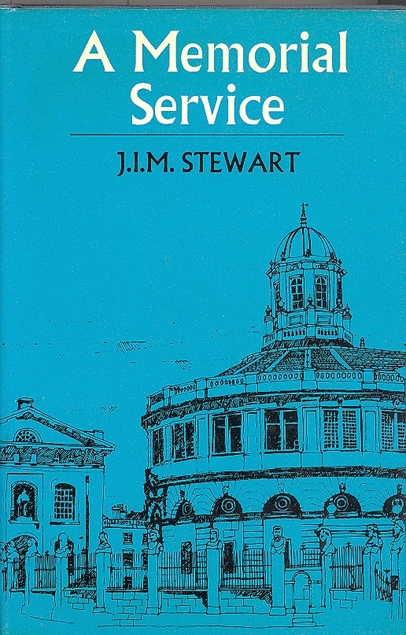
A Memorial Service by J.I.M. Stewart

A Memorial Service cover

A Memorial Service is the third book in the A Staircase in Surrey quintet and it continues the story of Duncan Pattullo who is now middle-aged and a successful playwright, but he has been given a fellowship at his old Oxford college, Surrey. Now he is living on the ground floor of his old student college staircase, involved in the lives of the students. His old friend Tony Mumford’s son Ivo has the room above his and Ivo is trouble, especially as Tony is now a member of the British cabinet and doesn’t see why Ivo should have to pass exams and generally stick to the rules. To make matters worse Ivo’s outrageous grandfather Cedric may be able to stop a large amount of money being allocated to the college so it’ll be sensible to keep in his good books – but that’s easier said than done.

I enjoyed being back in Oxford and although J.I.M. Stewart obviously liked his readers to know that he himself was a fellow of a prestigious college, he enjoys using unusual words, in fact the previous owner of my copy of this book had written the words he had to look up in the back of the book, but usually it is quite obvious by the context what the word means. I looked up maieutic which means helping birth – especially of thoughts.

I enjoyed reading this article containing anecdotes about Stewart from The Oxford Times. Mind you at no point is it mentioned that Stewart/Innes was actually Scottish.

I read this one for the 20 Books of Summer 2017 and The Read Scotland 2017 Challenge.

Dunkirk – the film

This afternoon we went to see the new film Dunkirk. It has been getting rave reviews but we would have gone to see it anyway as Jack’s father George was one of the soldiers lucky enough to be rescued from the beaches. Which is just as well because if he hadn’t been then there would have been no Jack!

The film is very tense, there’s no preamble, it begins with soldiers running through French streets under fire then switches to one of the small rescue boats being kitted out for the journey over to France – to save the British army. The action keeps cutting between that boat, the beach at Dunkirk and the battle going on in the air. There’s really very little dialogue, compared with most films anyway and that probably adds to the atmosphere. Mark Rylance is particularly good as the small boat owner but all the acting is good.

The only thing that sort of annoyed me was that there seemed to be a distinct lack of soldiers on the beach. I’ve seen photographs of it and it was absolutely packed out, as you would expect with up to 330,000 British men waiting to be evacuated, and later 150,000 or so French soldiers. If they didn’t want to pay for so many actors they could have computer generated them easily.

The Guardian film critic wasn’t impressed by the film although he was mainly annoyed by it focusing on one small boat rather than on some of the more dashing real life stories involved, but I don’t agree.

You can see the official film trailer here.

The photo below is of my in-laws George and Nancy on their wedding day which was arranged very quickly when George thought that he was going to be part of the D-Day invasion force four years later. I suppose they thought that the odds were against him surviving and as they had been going out with each other for years and years it might be now or never.

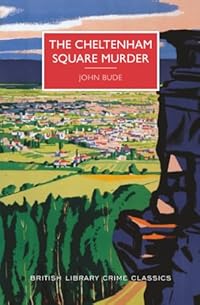
The Cheltenham Square Murder by John Bude

 The Cheltenham Square Murder cover

The Cheltenham Square Murder by John Bude was first published in 1937 but as you can see I read a British Library Crime Classics reprint. It has an introduction by Martin Edwards.

This is the second book by John Bude which I’ve read and I did enjoy it although it is a bit long-winded with all the possibilities gone into in depth. I’ve previously read his Cornish Coast Murder and you can read what I thought of that one here.

Cheltenham has a number of squares that are really cul-de-sacs with the houses only being on three sides and in Regency Square the inhabitants of the ten houses that it comprises are at loggerheads over whether a tree should be cut down or not. They are a disparate group of people ranging from well-heeled to just managing to scrape along financially. When one of the neighbours ends up being killed as he sat by a window Superintendent Meredith is asked to investigate. Was it an accident or murder?

I’ve found these British Library Crime Classic reprints to be a bit hit and miss, for me this one was a hit, although I still think that 1930s male crime writers in general concentrated too much on the minutiae of a mystery at the expense of the characters.

A Dutch dog walk

Back in May we were in Holland, visiting relatives, and although for once the weather there wasn’t great, we did have a few good days. On one of them we went on a long walk with the dogs and as the area in the north-west (Frisian) part of the Netherlands is mainly rural, we were walking around farmland.
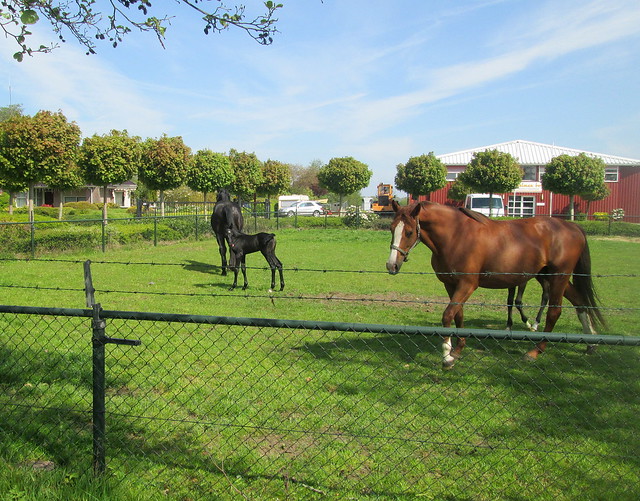
Foals and horse in Holland

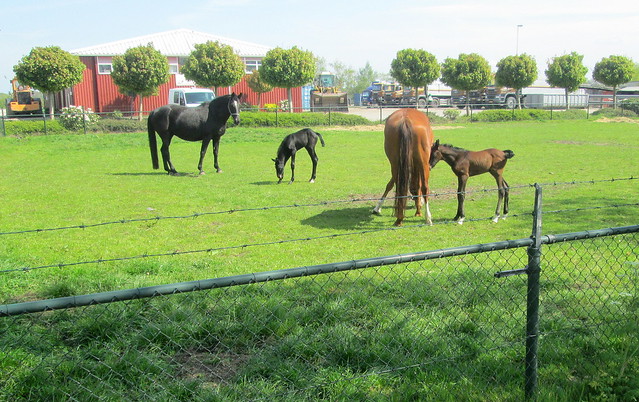
Foals and horses

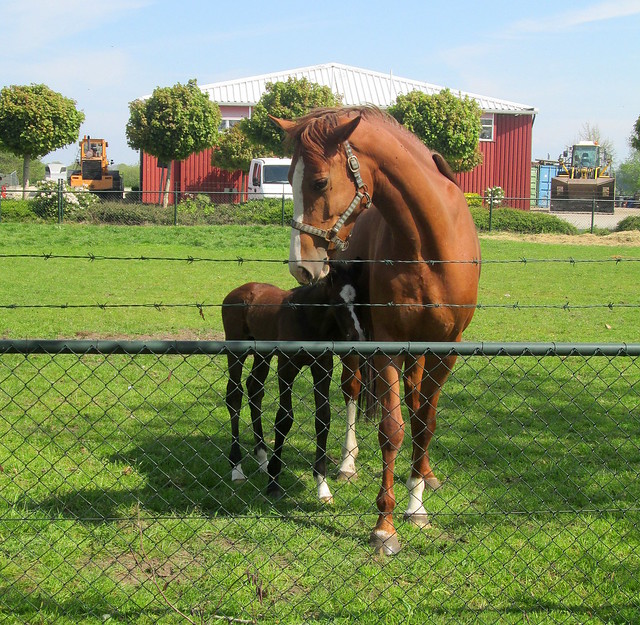
Unfortunately it isn’t like in the UK where you can get up close to any animals in fields. Most of the fields are surrounded by wide drainage ditches, I really wanted to get nearer this mare with her foal, but unless I waded over mud it wasn’t possible.

Foal and mare

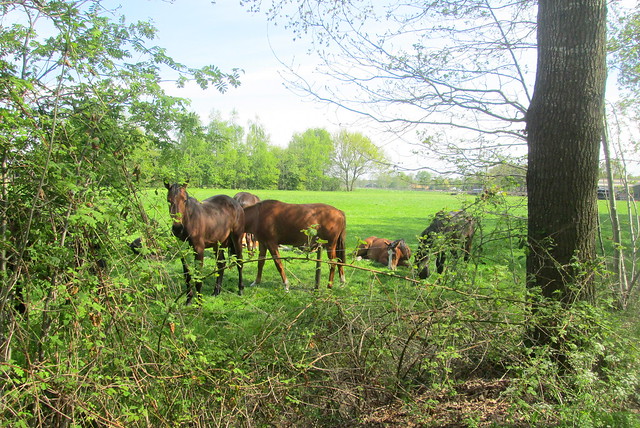
There are horses all over the place, a real paradise for horsey people, apart from the fact that you usually can’t get close enough to pat them. They were always interested to see us though.

horses

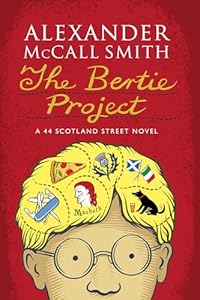
The Bertie Project by Alexander McCall Smith

 The Bertie Project cover

The Bertie Project is the latest offering from Alexander McCall Smith’s Scotland Street series. I was in two minds whether to read this one or not despite the fact that I’ve read all the others but as I recall I didn’t enjoy the previous one so much, mainly because life for Bertie is moving so slowly – it’s not getting any faster.

Bertie is still on a treadmill of his mother’s making such as – Italian conversazione lessons, yoga, weekly visits to a psychologist (it’s Irene his mother who needs those).

Stuart, Bertie’s father is just about at the end of his tether. He has been completely emasculated by Irene who it transpires even made him walk down the aisle to her when they got married and insisted that Stuart promised to obey her.

So when a chance meeting with a pleasant woman in Henderson’s vegetarian cafe leads to him realising that not all women are obnoxious like Irene – the inevitable happens and Stuart falls for her.

Hallelujah! (I said anyway) and Stuart’s mother said something similar when she found out as it hasn’t been easy for her to watch her son being bossed and bullied by Irene. Honestly I thought Irene was going to get her comeuppance – but not for long. I suppose the ghastly Irene is just too good a character for McCall Smith to think of getting rid of her permanently – I live in hope of it though.

Jack read the first Scotland Street book as it appeared in a ‘must read’ list of Scottish books, but he was less than impressed by it, mainly I think because it was so obviously meant for throwaway publication in a newspaper. You can read what he thought of it here.

McCall Smith’s own attitudes are really beginning to annoy me though. He’s labeling Irene a fascist, well she’s definitely intolerant of anyone different from her, but she’s also apparently (shock horror) a Guardian reader, something that the author seems to despise. Also I’m a bit fed up that the only time he veers away from wealthy Edinbuggers as characters was to ‘slum’ it in Glasgow where the characters were criminals!

I’m beginning to think that these books will be looked back on in years to come as being terrifically snobby, even more so than say Angela Thirkell’s books are nowadays. I suppose though he is just writing about the Edinburgh that he has experience of.

An amendment on the inside flap of this book says: Oops! On page 1 of this book and elsewhere, the Turner Prize, as Bertie would be quick to point out to us, has been misprinted as the Turner Prise; no disrespect to the prize was intended. The problem is due to a computer error whereby words ending in – ize e.g. size or seize have been changed to -ise endings.

Oops indeed, especially as there are quite a few mentions of Turner Prise due to the author having a bit of a bee in his bonnet about it.

I read this one for 20 Books of Summer 2017 and the Read Scotland 2017 Challenge.

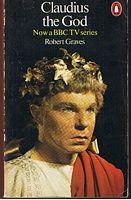
Claudius the God by Robert Graves

Claudius the God cover

Claudius the God by Robert Graves was first published in 1934 and is of course the sequel to I,Claudius. You can read what I thought about that one here.

I think inevitably Claudius the God wasn’t as gripping a read as I, Claudius probably because that one featured so many power crazy emperors, executions, murders and poisonings were constants so it was all go.

The story is of course being told by Claudius and when he reluctantly dons the purple robes of emperor (he wanted to bring back the Roman republic) he tries to put the country on an even keel by melting down all the gold statues that Caligula had had made when he was completely mad. Claudius is very popular amongst soldiers and ordinary people, but the senators aren’t so keen on him and a few of them had already tried to grab power before the army declared him emperor.

This book is Claudius’ account of what he did and why he did it. In some cases he behaved just as badly as previous emperors although he acknowledged his mistakes, the end result was still miscarriages of justice. The worst mistake he made though was to trust his wife Messalina. Despite the fact that he had seen how his grandmother Livia had abused the power given to her by her husband Emperor Augustus, Claudius gave Messalina just as much power as he had, giving her a duplicate of his seal so she could and did do whatever she wanted. As she was just as evil as Livia, she caused mayhem but poor Claudius had no idea of her real character at all.

Herod Agrippa features quite a lot and of course it was Claudius who invaded Britain so that is very interesting although I have no idea how true that account is. Did they use elephants and camels in the invasion terrifying the British who had never seen such animals before?

It seems that Claudius was wise in many ways, or maybe it was just that he was well read and ‘stood on the shoulders of giants’. But in many ways he was completely naive.

This book was one of my 20 Books of Summer and also counts towards my James Tait Black Memorial Prize Challenge as it won that prize in 1934.

St Magnus Cathedral, Kirkwall, Orkney

St Magnus Cathedral

After a few decent days of weather on Orkney a storm rolled in, terrible high winds and torrential rain, so we decided to drive to Kirkwall which is the main town on Orkney. We dashed from shop to shop in a bid to avoid the worst of the rain, not that there are that many shops in Kirkwall.

St Magnus Cathedral beckoned us over the road and although there were quite a lot of people inside – that didn’t detract from the beauty of the place. I usually much prefer the atmosphere in small churches (not that I am at all religious) as some large places of worship often have that ‘fear of God’ about them, but this cathedral felt like a place of peace.

St Magnus Cathedral back towards door

The floor is particularly lovely.

St Magnus Cathedral Floor

As is the font which is encrusted with semi-precious polished stones.
St Magnus Cathedral Font

St Magnus Cathedral altar

St Magnus Cathedral Wall

I love this model of a Viking ship.

St Magnus Cathedral Viking Ship

There are more images of the cathedral here.